 Save to Pinterest
 There's something almost meditative about building a soup from scratch on a gray afternoon. I was restless one November, surrounded by farmers market produce I'd bought with more enthusiasm than a plan, when I started chopping vegetables almost without thinking. The rhythm of the knife, the way each vegetable released its own particular sweetness into the pot—carrot, celery, the earthiness of parsnip—it all came together into something that felt less like cooking and more like solving a puzzle I didn't know I'd been working on.
I made this soup for a friend who was recovering from a cold, and watching her face light up when that warm spoonful hit her lips reminded me why I cook at all. It wasn't fancy or complicated, just honest and nourishing—the kind of meal that wraps around you like kindness.
Ingredients
- Olive oil: Just enough to get everything started without heaviness, about a tablespoon.
- Onion and garlic: These are your flavor foundation; don't skip them or rush this step.
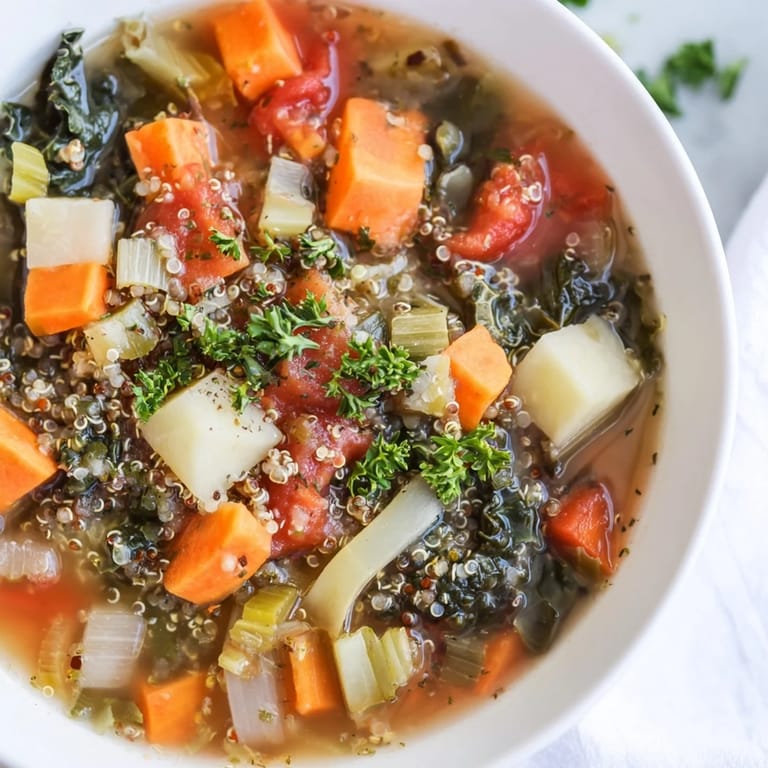
- Carrots, celery, and parsnip: The holy trinity of soup aromatics, with parsnip adding an unexpected sweetness that catches people off guard in the best way.
- Sweet potato: Adds natural creaminess and a hint of warmth without needing any cream at all.
- Kale or Swiss chard: Choose whichever you have or feel drawn to; both add an earthiness that grounds the brighter vegetables.
- Cabbage: Brings a quiet substance that makes the soup feel more substantial.
- Tomatoes: Canned work just fine and actually concentrate the flavor better than fresh in a slow-simmering soup.
- Quinoa, rinsed: This little grain cooks right in the broth and turns the whole thing into a complete meal.
- Vegetable broth: Low-sodium lets the vegetables speak for themselves.
- Thyme and oregano: Dried herbs work beautifully here; add them early so they fully bloom into the broth.
- Bay leaf: One leaf is all you need—remember to fish it out before serving.
- Fresh parsley and lemon: These finishing touches turn a good soup into one you'll remember.
Tired of Takeout? 🥡
Get 10 meals you can make faster than delivery arrives. Seriously.
One email. No spam. Unsubscribe anytime.
Instructions
- Start with warmth:
- Heat your olive oil until it shimmers slightly, then add the onion and garlic. You're listening for that gentle sizzle and watching for the onion to turn from opaque to translucent and soft, which takes about 2–3 minutes. The kitchen will smell like it's getting ready for something good.
- Build your foundation:
- Add the carrots, celery, parsnip, and sweet potato all together. Stir them around in that fragrant oil and let them cook for 5–6 minutes, stirring now and then. You want them to start softening and sweetening at the edges, but not get soft all the way through yet.
- Add the greens:
- Throw in the kale (or chard), cabbage, and tomatoes. This part happens fast—just 2 minutes of gentle cooking to let everything relax and get comfortable together in the pot.
- Bring it all together:
- Add the rinsed quinoa, pour in the broth, then sprinkle in your thyme, oregano, bay leaf, and a generous pinch of salt and pepper. Stir everything until it's all mingling together, then turn up the heat until you see bubbles breaking the surface.
- The gentle simmer:
- Once it's boiling, turn the heat down low and cover the pot partially. Let it bubble quietly for 25–30 minutes, until the vegetables are soft enough to fall apart on your spoon and the quinoa has plumped up and become translucent. You can peek occasionally to stir, but mostly just let it do its thing.
- The final flourish:
- Fish out the bay leaf, then stir in the fresh parsley and squeeze of lemon if you're using it. Taste a spoonful and adjust the salt and pepper until it tastes like home to you. This is your moment to make it yours.
 Save to Pinterest
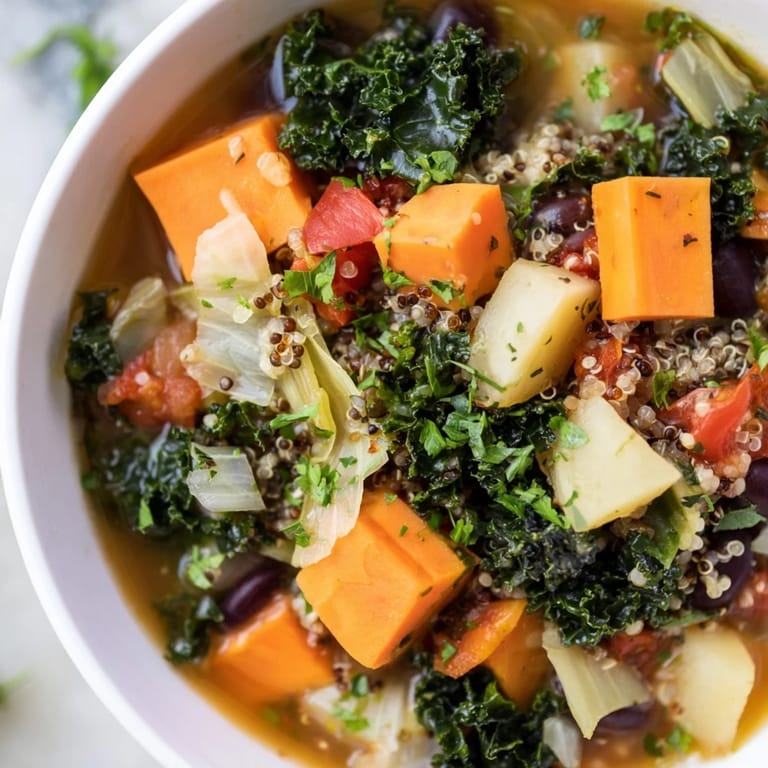
 This soup has this quiet power—it doesn't announce itself loudly, but it fills you up in ways that have nothing to do with calories. I keep a pot of it in my fridge through January and February, and somehow it tastes a little different each time I heat it up, like it's deepening and getting to know itself.
Why This Soup Works in Winter
Winter vegetables are built differently than summer ones—they're denser, sweeter, and they were meant for slow cooking in broth. Carrots, parsnips, and root vegetables have this quiet intensity that gets unlocked by heat and time. This soup isn't about being light or trendy; it's about being exactly what your body needs when it's cold outside. The warmth of it, the smell of it, the way it settles in your stomach—it's all part of the medicine.
Making It Your Own
One of the gifts of soup is how forgiving it is, how much it wants to work with what you have. If you have chickpeas in your pantry, throw them in. If you prefer spinach to kale, nobody will know but you. I've made this soup in dozens of small variations, and it's been good every single time. The structure holds; the warmth comes through. What matters is that you're paying attention and tasting as you go.
Serving and Storage
This soup is good hot from the pot, but I promise you it's even better the next day, when all the flavors have woven themselves together overnight. Store it in the fridge for up to four days, or freeze it in portions if you want to stretch it further. A slice of crusty bread on the side, maybe a small green salad to cut through the warmth—that's a meal that feels generous without asking too much of you. The soup actually improves as it sits, so making a bigger batch is always worth it.
- Reheat gently on the stove rather than blasting it in the microwave; the flavors stay more coherent that way.
- If the soup gets thick sitting in the fridge, just add a splash of broth or water when you reheat it.
- A crack of fresh black pepper and a pinch of sea salt right before serving makes it taste restaurant-quality.
 Save to Pinterest
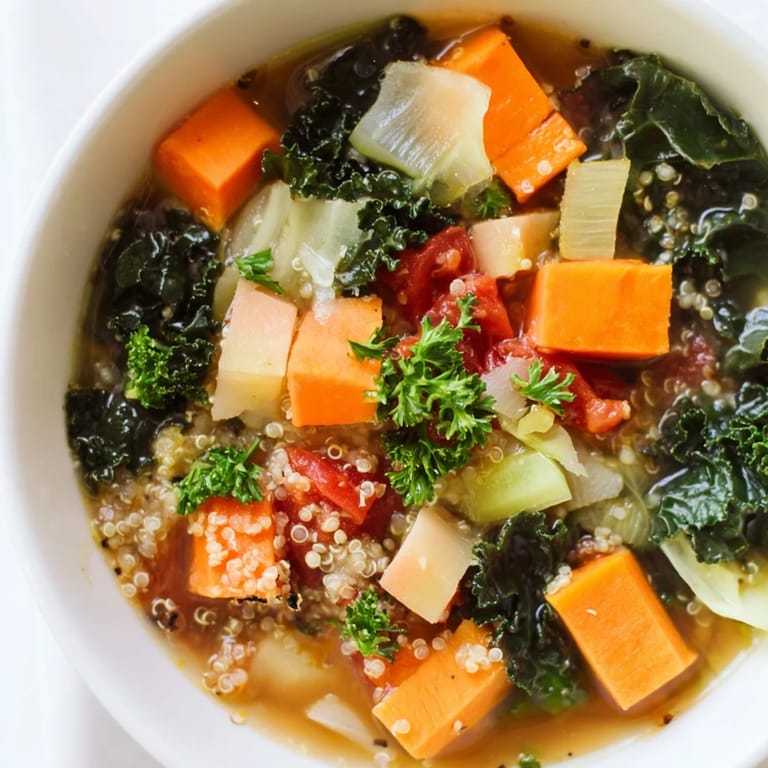
 Soup like this reminds us that feeding ourselves well doesn't have to be complicated. It just has to be warm, honest, and made with the vegetables that are calling to you today.
Your Questions Answered
- → Can I substitute quinoa with other grains?
Yes, barley or brown rice can be used, but adjust cooking times accordingly to soften properly.
- → How can I make the broth more flavorful?
Simmering with bay leaf, thyme, oregano, and fresh parsley infuses the broth with aromatic layers, enhancing overall taste.
- → What vegetables are best to use for this dish?
Root veggies like carrots, parsnip, and sweet potato combined with hearty greens such as kale or cabbage work well to create depth and texture.
- → Can I prepare this soup ahead of time?
Yes, flavors deepen when chilled and reheated. Store in airtight container for up to 3 days.
- → Is lemon juice necessary?
Lemon adds a bright, fresh note but can be omitted or adjusted to taste without impacting the core flavors.