 Save to Pinterest
 The kitchen window was fogged up completely, snow piling against the sill, when I decided to empty the crisper drawer into one pot. I had no plan, just cold hands and a hunch that anything warm would be perfect. What came out of that pot an hour later tasted better than anything I'd followed from a book. That soup became my snow day ritual, the kind of thing I now make without measuring, just feeling my way through with whatever vegetables are waiting to be used.
I made this for my neighbor once after she shoveled my driveway without asking. She stood in my doorway holding the warm bowl, snowflakes melting in her hair, and said it reminded her of her grandmother's kitchen. I hadn't been aiming for nostalgia, just wanted to say thank you. But that's what this soup does, it finds its way into the moments that matter without trying too hard.
Ingredients
- Onion: The sweet base that makes everything else taste deeper, diced small so it melts into the broth.
- Garlic: Just two cloves, but they fill the whole kitchen with warmth the second they hit the oil.
- Carrots: Slice them evenly so they cook at the same pace and add that slight natural sweetness.
- Celery: It might seem plain, but it brings an earthy backbone that balances the cream.
- Bell pepper: Any color works, I usually grab whatever looks brightest at the store.
- Potatoes: They thicken the soup just enough without needing flour or cornstarch.
- Corn kernels: Frozen is easiest, but fresh off the cob in summer makes this feel like a different recipe entirely.
- Green beans: Chop them into bite sized pieces so every spoonful has a little bit of everything.
- Broth: Vegetable keeps it light, chicken makes it richer, either way use good quality if you can.
- Heavy cream: This is what makes it feel like a hug, stir it in gently at the very end.
- Thyme and rosemary: Dried herbs work perfectly here, they bloom slowly in the simmering broth.
- Bay leaf: Don't skip it, it adds a subtle woodsy note you'll miss if it's not there.
- Olive oil: Just enough to start the vegetables without making anything greasy.
- Fresh parsley: A handful chopped over the top makes it look like you meant for this to be special.
Tired of Takeout? 🥡
Get 10 meals you can make faster than delivery arrives. Seriously.
One email. No spam. Unsubscribe anytime.
Instructions
- Start with the aromatics:
- Heat the olive oil in your largest pot and add the onion, letting it cook until it turns soft and see through, about 3 to 4 minutes. Toss in the garlic and stir for just a minute until the smell makes you lean over the pot.
- Build the vegetable base:
- Add the carrots, celery, and bell pepper, stirring them around every so often. Let them cook for 5 to 7 minutes until they start to give up their crunch and smell sweet.
- Add the heartier vegetables:
- Stir in the potatoes, corn, and green beans, mixing everything so it's coated in the flavors already in the pot. This is when it starts looking like real soup.
- Simmer everything together:
- Pour in the broth, add your thyme, rosemary, and bay leaf, then bring it all to a boil. Lower the heat and let it bubble gently for 20 to 25 minutes until the potatoes are fork tender.
- Finish with cream:
- Fish out the bay leaf and pour in the heavy cream, stirring slowly as it swirls through the soup. Let it warm through for another 5 minutes, then taste and add salt and pepper until it feels just right.
- Serve it up:
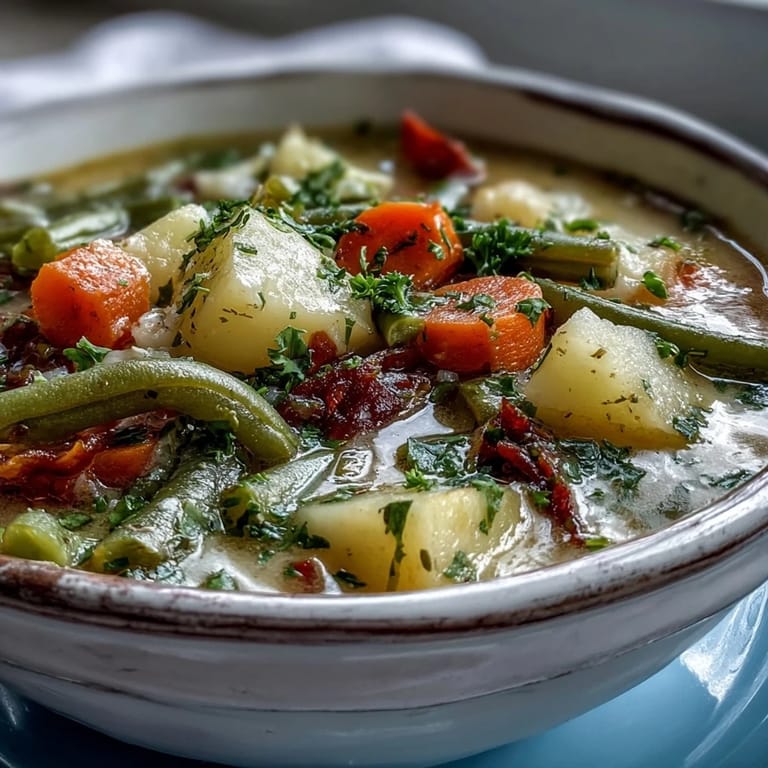
- Ladle the soup into bowls and scatter fresh parsley over the top. Serve it hot with bread if you have it.
 Save to Pinterest
 One winter I made a double batch and froze half in old yogurt containers. Weeks later, on a night when I had no energy to cook, I pulled one out and remembered why I'd bothered. It tasted like care I'd given to my future self, which sounds dramatic but felt true while I ate it alone at the counter, snow falling outside again.
Making It Your Own
This soup doesn't ask for precision. I've made it with parsnips instead of potatoes, zucchini instead of green beans, even a handful of spinach thrown in at the end. If you have leftover roasted vegetables, chop them up and stir them in. If you want protein, shredded rotisserie chicken or sliced sausage fits right in. The bones of this recipe are forgiving enough to handle whatever your kitchen has to offer.
Storing and Reheating
Let the soup cool completely before you pack it away, then it'll keep in the fridge for four or five days. It freezes beautifully for up to three months, though I usually portion it into smaller containers so I can thaw just what I need. When you reheat it, do it gently on the stove and add a splash of broth or water if it's thickened up too much. The cream might look a little separated after freezing, but a good stir brings it back together.
Serving Suggestions
I almost always serve this with something crusty to dip, a baguette or sourdough torn into rough pieces. Sometimes I'll set out a little bowl of grated Parmesan or a drizzle of good olive oil for people to add themselves. On really cold nights, I'll toast thick slices of bread, rub them with garlic, and float one right in the bowl.
- A simple green salad with lemon vinaigrette balances the richness.
- Oyster crackers or saltines if you want that classic soup and crackers feeling.
- A sprinkle of red pepper flakes for anyone who likes a little heat.
 Save to Pinterest
 This soup doesn't need a special occasion, it just needs a cold day and a little time. Keep the ingredients on hand and you'll always have something warm to offer, whether it's for yourself or someone who needs it.
Your Questions Answered
- → Can I make this soup ahead of time?
Yes, this soup stores beautifully in the refrigerator for up to 4 days. The flavors actually deepen overnight. You can also freeze it for up to 3 months - just cool completely before transferring to freezer-safe containers.
- → What can I substitute for heavy cream?
For a dairy-free version, use unsweetened coconut cream, cashew cream, or any plant-based heavy cream alternative. Half-and-half or whole milk can work too, though the soup will be less rich and creamy.
- → Can I add meat to this soup?
Absolutely! Shredded rotisserie chicken, diced cooked ham, or sliced smoked sausage make excellent additions. Stir them in during the last 10 minutes of cooking to heat through.
- → What vegetables can I substitute or add?
This soup is very flexible. Try adding peas, zucchini, cauliflower, or mushrooms. You can swap sweet potatoes for regular potatoes or use whatever seasonal vegetables you have on hand.
- → How do I prevent the cream from curdling?
Add the cream at the end after reducing the heat to low. Never let the soup boil once the cream is added. If reheating, warm gently over low heat, stirring frequently.
- → Can I make this in a slow cooker?
Yes! Sauté the onions and garlic first, then transfer everything except the cream to your slow cooker. Cook on low for 6-7 hours or high for 3-4 hours. Stir in the cream during the last 15 minutes.