 Save to Pinterest
 There's something about the smell of butternut squash roasting that makes an ordinary Tuesday feel like fall, even if it's nowhere near October. I discovered this soup on a whim one chilly evening when my kitchen felt too quiet and I needed something warm in my hands. The first spoonful was a revelation—sweet without being dessert-like, creamy without cream if you want it that way, and ready in under an hour. It's become my go-to when I want to feel like I've accomplished something in the kitchen without fussing endlessly.
I made this for my sister on a lazy Sunday afternoon, and watching her face light up when she tasted it was worth every bit of prep work. She asked for the recipe before she'd even finished the bowl, which is always the highest compliment someone can pay a home cook.
Ingredients
- 1 large butternut squash (about 2 lbs), peeled, seeded, and cubed: This is where the magic starts—the roasting caramelizes the natural sugars and gives the soup its golden depth. Buy one that feels heavy for its size and has no soft spots.
- 1 medium yellow onion, chopped: Yellow onions break down into silky sweetness, creating the base flavor that ties everything together.
- 2 garlic cloves, peeled: Just two cloves keeps the garlic subtle and supportive rather than loud—this soup doesn't need to shout.
- 1 medium carrot, peeled and chopped: Carrots add a gentle sweetness and a hint of earthiness that makes the squash feel more complex.
- 1 stalk celery, chopped: Celery might seem humble, but it's the quiet backbone that rounds out the vegetable flavor.
- 2 tbsp olive oil: Use a good quality oil you'd actually want to taste—it shows in the finished soup.
- 2 tbsp unsalted butter (optional, for richness): Skip it if you're going vegan, but if you're not, it adds a luxurious mouthfeel that makes people ask what's your secret.
- 4 cups vegetable broth (low sodium preferred): Low sodium matters here because you control the salt level and the squash's natural flavor shines.
- 1/2 tsp ground cinnamon: Cinnamon whispers rather than shouts—it enhances the squash's sweetness in a way people often can't quite identify.
- 1/4 tsp ground nutmeg: A quarter teaspoon is the exact amount where nutmeg becomes magic instead of medicinal.
- 1/2 tsp ground black pepper: Fresh cracked pepper adds a gentle bite that prevents the soup from tasting one-dimensional.
- 1 tsp kosher salt (or to taste): Start with this amount and taste as you go—every broth brand is different.
- 1/4 cup heavy cream or coconut milk: For drizzling at the end—a small amount transforms the presentation and adds richness without making it heavy.
- Toasted pumpkin seeds and fresh thyme leaves: These are optional but they add texture and a fresh note that makes the whole dish feel finished.
Tired of Takeout? 🥡
Get 10 meals you can make faster than delivery arrives. Seriously.
One email. No spam. Unsubscribe anytime.
Instructions
- Get your oven ready and prep the squash:
- Preheat to 400°F and line a baking sheet with parchment paper to save yourself from scrubbing later. Toss your cubed squash with 1 tablespoon olive oil, a pinch of salt, and pepper, then spread it out in a single layer—don't overcrowd the pan or it'll steam instead of roast.
- Let the squash work its magic:
- Roast for 25 to 30 minutes, until the pieces are tender and the edges turn golden brown. You'll know it's done when a fork slides through easily and you can smell that caramelized sweetness filling your kitchen.
- Build the flavor base while squash roasts:
- In a large pot, heat the remaining olive oil and butter over medium heat. Add your chopped onion, carrot, and celery, and let them soften for 5 to 7 minutes, stirring occasionally—you're not looking for color here, just gentle softening.
- Add the garlic and breathe in:
- Toss in the garlic cloves and cook for just one more minute until fragrant. Don't walk away at this point—garlic burns quickly and bitterness is the enemy.
- Bring everything together:
- Add your roasted butternut squash, vegetable broth, cinnamon, nutmeg, salt, and pepper to the pot. Bring it to a boil, then lower the heat and let it simmer gently for 10 to 15 minutes so all the flavors get to know each other.
- Transform it into velvet:
- Using an immersion blender, puree the soup until it's completely smooth—this takes about a minute or two of steady blending. If you're using a regular blender, work in batches and be careful with the hot liquid by removing the center cap from the lid.
- Taste and adjust:
- This is the moment that separates good soup from your soup. Taste a spoonful and decide if it needs more salt, more spice, or a touch more broth if it feels too thick.
- Serve it right:
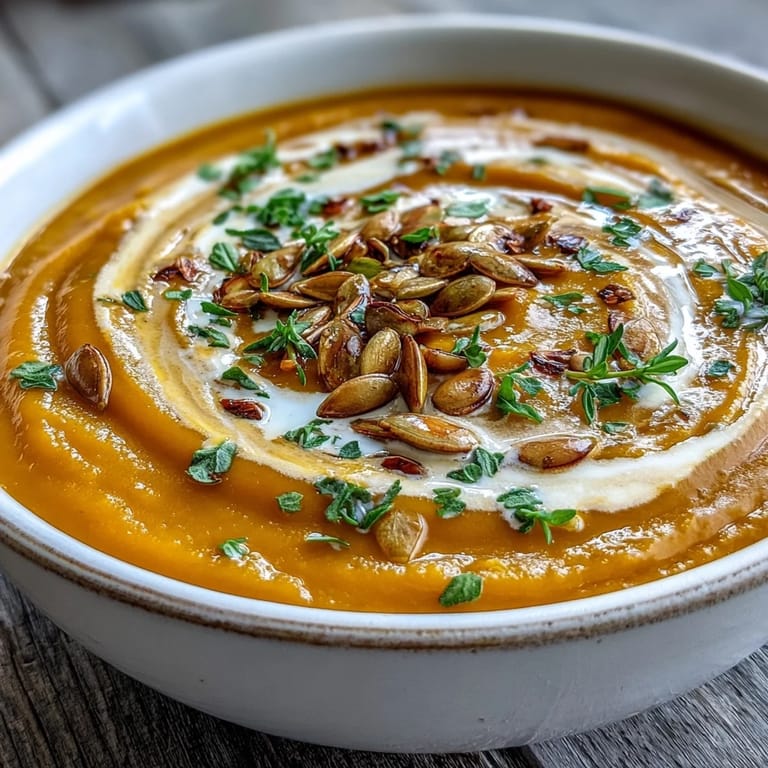
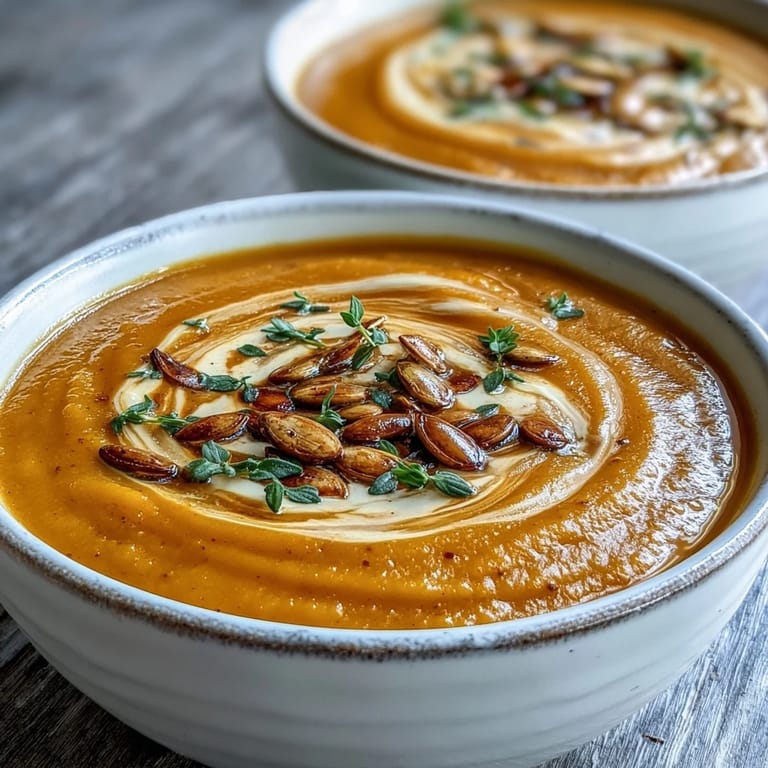
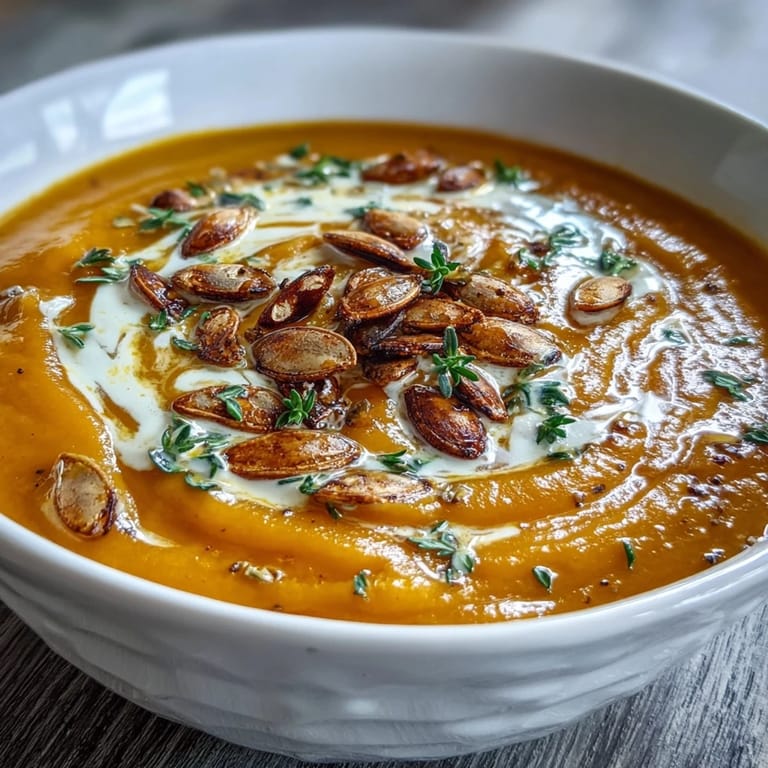
- Ladle into bowls and drizzle with a small amount of cream or coconut milk, then scatter pumpkin seeds and fresh thyme over the top if you have them on hand.
 Save to Pinterest
 The first time someone asked me to make this soup for a dinner party, I nearly panicked thinking it was too simple to serve to guests. But watching six people get quiet and just eat, asking for seconds without hesitation, taught me that elegance isn't about complexity—it's about doing one thing perfectly.
Why This Soup Feels Like Self-Care
There's something deeply satisfying about making soup from whole vegetables and broth. No cream-of-something cans, no mystery ingredients hiding on the back label—just honest food that tastes like it was made with intention. The warmth stays with you longer than you'd expect, and your kitchen smells like a place where good things happen.
The Roasting Secret Nobody Talks About
Most people think roasted vegetables are just a way to make them taste better, but really it's about concentrating the sweetness and creating those caramelized edges that add depth to the finished soup. I learned this the hard way by trying to rush the process with a quick sauté instead of a proper roast, and the difference between that attempt and this version was night and day. Patience with roasting is patience that pays dividends in your bowl.
Variations and How to Make It Yours
This soup is forgiving enough to play with once you've made it the traditional way once. I've added a pinch of cayenne when I wanted something with a whisper of heat, and I've swapped in coconut milk for the cream when I wanted it to feel lighter and slightly exotic. Some evenings I blend it completely smooth, and other times I blend it only partially and leave some texture because I'm feeling less refined and more rustic.
- A tiny pinch of cayenne or smoked paprika adds complexity without heat if you want to experiment.
- Ginger or a touch of curry powder transforms this into something entirely different but equally delicious.
- Serve it chilled on warm days with a cilantro garnish for a completely different dish.
 Save to Pinterest
 This soup is the kind of recipe that becomes part of your regular rotation, not because it's complicated, but because it delivers every single time. Make it once and it's yours forever.
Your Questions Answered
- → Can I make this soup ahead of time?
Absolutely. This soup actually tastes better the next day as flavors have time to meld. Store in an airtight container in the refrigerator for up to 4 days. Reheat gently over medium-low heat, adding a splash of broth if needed to adjust consistency.
- → How do I get the smoothest texture?
Roasting the squash until completely tender is key. Use an immersion blender directly in the pot for convenience, or work in batches with a countertop blender. If using a regular blender, be careful with hot liquids—vent the lid and cover with a kitchen towel.
- → Can I freeze this soup?
Yes, freeze for up to 3 months. Let cool completely before transferring to freezer-safe containers. Thaw overnight in the refrigerator, then reheat gently. Note that cream or coconut milk may separate slightly when frozen—add fresh after reheating for best results.
- → What can I serve with this soup?
Crusty bread, garlic knots, or focaccia make perfect accompaniments. A simple green salad with vinaigrette balances the richness. For protein, consider grilled cheese sandwiches or roasted chickpeas sprinkled on top.
- → How do I choose a ripe butternut squash?
Look for squash that feels heavy for its size with matte, cream-colored skin. Avoid green spots or shiny skin, which indicates immaturity. The stem should be firm and intact. Store whole squash in a cool, dark place for up to a month.
- → Can I use other winter squash?
Delicata, acorn, or kabocha squash work beautifully. Adjust roasting time as needed—smaller varieties may cook faster. Each brings slightly different sweetness and texture, but the roasting method remains the same.