 Save to Pinterest
 Last November, I was standing in my kitchen on a gray afternoon when the smell of roasting squash drifted from the oven, and suddenly my whole mood shifted. That golden, caramelized aroma pulled me back to a farmers market trip where I'd grabbed a butternut squash almost on impulse, unsure what I'd do with it. What started as an experiment became this soup—one that now feels like comfort in a bowl, especially when the weather turns and you need something warm that actually nourishes you.
I made this for a friend who'd just moved into a new apartment with a kitchen that barely worked, and we laughed as steam fogged up her windows while we talked about starting fresh. When she tasted it, something shifted—she got quiet for a moment, then asked for the recipe. Sometimes the simplest food becomes the most meaningful, especially when shared during a transition.
Ingredients
- Butternut squash (1 medium, about 2 lbs, peeled, seeded, and cubed): Roasting it first brings out natural sweetness and creates that velvety texture when blended; don't skip this step or your soup will taste flat.
- Red lentils (3/4 cup, rinsed): These dissolve completely into the soup, thickening it beautifully without any grittiness, and they cook in about 20 minutes flat.
- Carrots (2 medium, peeled and sliced): They soften quickly and add subtle sweetness that balances the spices perfectly.
- Onion (1 large, chopped): The aromatics are your foundation—take time to let it soften before adding spices so they bloom properly.
- Garlic (3 cloves, minced): Fresh is always better here; the smell when it hits the hot pan tells you exactly when to add your spices.
- Vegetable broth (4 cups) and water (1 cup): The broth carries flavor while water keeps things balanced; always use low-sodium if you can so you control the salt.
- Ground cumin (1 tsp): This is the backbone spice that makes people ask what's in your soup.
- Ground coriander (1/2 tsp): A subtle citrusy note that lifts everything without dominating.
- Smoked paprika (1/2 tsp): Adds color and a gentle smokiness that deepens the flavor.
- Ground cinnamon (1/4 tsp): Just enough to hint at warmth without making it taste sweet.
- Cayenne pepper (1/4 tsp, optional): Keep this optional unless you like a gentle kick; I add it when I'm feeling a bit bolder.
- Olive oil (2 tbsp total): One tablespoon for roasting the squash, one for sautéing the vegetables—good oil makes a real difference here.
- Salt and black pepper: Taste as you go; you'll need more seasoning than you think once everything is blended.
- Fresh cilantro or parsley, coconut cream or plant-based yogurt (for garnish): These toppings add brightness and richness that make each bowl feel special.
Tired of Takeout? 🥡
Get 10 meals you can make faster than delivery arrives. Seriously.
One email. No spam. Unsubscribe anytime.
Instructions
- Get your oven ready and prep the squash:
- Preheat to 400°F and line a baking sheet with parchment. Toss your cubed squash with 1 tablespoon olive oil, a pinch of salt, and pepper, then spread it out in a single layer. You want it to roast evenly, so don't overcrowd the pan.
- Roast until golden and caramelized:
- Pop it in for 25 to 30 minutes—you'll know it's ready when the edges turn golden and a fork slides through easily. This is when the magic happens, flavor-wise.
- Start building your soup base:
- While the squash roasts, heat 1 tablespoon olive oil in a large pot over medium heat. Add your chopped onion and sliced carrots, letting them soften for about 5 to 7 minutes, stirring occasionally.
- Wake up the spices:
- Once the onion and carrots are soft, add your minced garlic, then the cumin, coriander, paprika, cinnamon, and cayenne if you're using it. Stir constantly for just about a minute—you'll smell when it's right, that toasted, fragrant moment.
- Bring everything together:
- Add the roasted squash to the pot, followed by the rinsed red lentils, vegetable broth, and water. Bring it all to a boil, then lower the heat and let it simmer uncovered for about 20 minutes until the lentils have completely broken down and the vegetables are very soft.
- Blend into silky smoothness:
- This is where it transforms—use an immersion blender right in the pot (careful with the steam) or carefully transfer in batches to a countertop blender. Blend until it's completely smooth and creamy, with no gritty bits.
- Taste and adjust:
- Return the soup to low heat, then taste it carefully. You'll almost always need more salt than you think, and maybe a grind of fresh pepper. If it's thicker than you like, add a bit more water or broth until it reaches your perfect consistency.
- Serve with style:
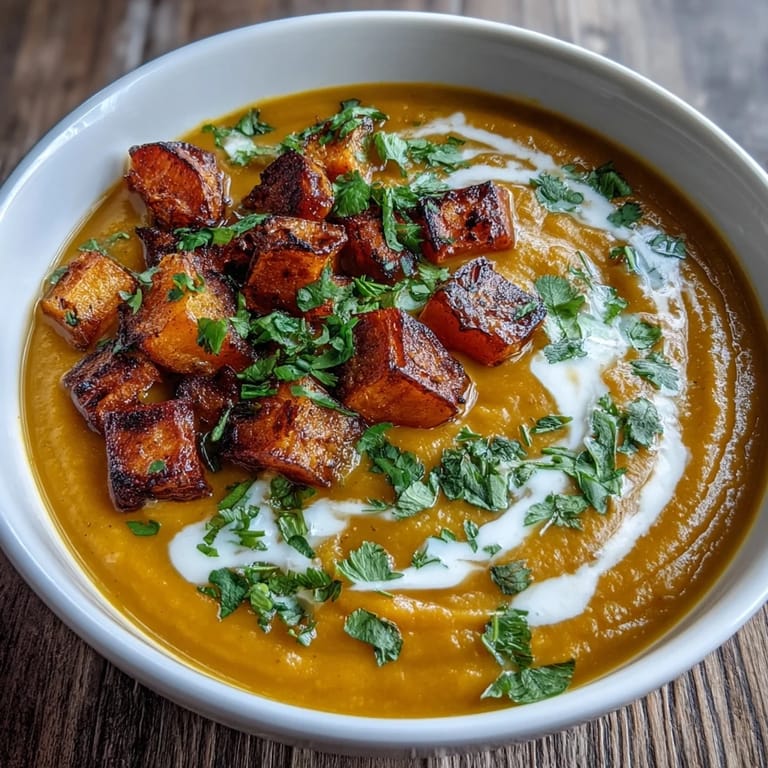
- Ladle into bowls and top with fresh cilantro or parsley and a swirl of coconut cream or yogurt if you have it. The contrast between the warm soup and cool garnish is one of the best parts.
 Save to Pinterest
 There's a moment, right after you blend everything, when you take a spoon and taste it warm—and suddenly it clicks. All those separate flavors snap into one harmonious thing, and you realize you just made something that feels restaurant-quality in your own kitchen. That's when I know it's going to be one of those recipes that sticks around.
Why Roasting Changes Everything
I learned this the hard way by making the soup two ways in one afternoon—one with roasted squash and one with boiled. The roasted version had this caramelized sweetness and depth that made people lean forward with their spoons, while the boiled version tasted like I'd rushed. Roasting takes 30 minutes but gives you flavor that simmer time alone could never match. It's the single decision that separates good from memorable.
The Spice Blend Explained
What makes this soup feel warm and comforting is the spice combination—cumin and coriander together hit this earthy, slightly sweet note, the paprika adds color and subtle smoke, and the cinnamon just whispers in the background. I discovered this blend by accident, trying to recreate a soup I had at a market café, and it took a few tries to get the ratios right. Now I make it the same way every time because it works—nothing here is random, and every spice has a job.
Making It Your Own
The base recipe is solid, but this is the kind of soup that lets you play. Some days I add a squeeze of lemon juice right before serving to brighten everything, other times I pour in a splash of coconut milk for richness. A friend of mine adds fresh ginger during the sauté step, and it's brilliant. The formula stays the same, but the final taste can shift based on your mood and what you have on hand.
- A squeeze of fresh lemon or lime juice at the end makes it taste more alive and cuts through the richness beautifully.
- For extra creaminess without dairy, stir in a splash of coconut milk during the last few minutes—it melts right in and adds silky depth.
- Serve it with crusty bread or naan for dipping; you'll want something to soak up every last drop.
 Save to Pinterest
 This soup sits somewhere between comfort and nutrition, the kind of dish that feels indulgent but is actually really good for you. Make it when you need warmth, when you're cooking for someone who matters, or just because October turned cold and your kitchen deserves to smell like caramelized squash.
Your Questions Answered
- → Can I make this soup ahead of time?
Absolutely. This soup actually tastes better the next day as flavors have time to meld. Store in an airtight container in the refrigerator for up to 5 days, or freeze for up to 3 months.
- → Do I have to roast the squash first?
Roasting enhances the natural sweetness and adds depth, but you can skip it. Simply add raw cubed squash directly to the pot with the lentils and increase simmering time by 10-15 minutes until tender.
- → Can I use green or brown lentils instead of red?
Red lentils work best because they break down easily and create a smoother texture. Green or brown lentils hold their shape and will result in a chunkier soup rather than the velvety consistency described.
- → How can I make this soup more protein-rich?
Stir in a can of drained chickpeas or white beans during the last 10 minutes of cooking. You can also serve with a dollop of Greek yogurt or add a scoop of protein powder when blending.
- → What can I serve with this soup?
Crusty bread, naan, or warm focaccia are perfect for dipping. A simple green salad with vinaigrette balances the richness. For a heartier meal, serve alongside a grain bowl or roasted vegetables.
- → Is this soup spicy?
The cayenne is optional and adds mild warmth. Without it, the soup has gentle heat from the smoked paprika and cinnamon but isn't spicy. Adjust spices to your preference for a milder or bolder flavor.