 Save to Pinterest
 Last October, I stood in my kitchen watching the early afternoon light turn everything golden, and I realized the farmers market bag sitting on my counter held the entire season. There was this beautiful butternut squash, still warm from the sun, and a handful of apples that smelled like October itself. I'd never made this soup before, but something about that combination felt inevitable, like the recipe was already written in how those ingredients wanted to be together. Two hours later, my kitchen was filled with a smell so good that my neighbor knocked on the door asking what I was making.
My sister came over that same afternoon, the house still warm and fragrant, and she tasted it straight from the pot with a wooden spoon before I'd even finished blending. She closed her eyes in that way people do when something surprises them, and that's when I knew this recipe belonged in the regular rotation. Now whenever she visits in fall, she asks if I'm making it, which means I actually have to pace myself so it doesn't become predictable.
Ingredients
- Butternut squash (1 medium, about 2 lbs), peeled and cubed: This is your foundation, the part that makes the soup velvety and substantial. Buy one that feels heavy for its size, and don't be intimidated by peeling it; a sharp vegetable peeler makes it almost easy.
- Apples (2 medium, Granny Smith or Honeycrisp), peeled and chopped: The tartness cuts through the richness and prevents the soup from tasting one-dimensional. Honeycrisp apples are sweeter if you want a gentler flavor, while Granny Smith gives you that bright, slightly tangy edge.
- Onion (1 medium), diced: This becomes almost invisible once blended, but it builds the savory base that keeps the sweetness from becoming cloying.
- Garlic (2 cloves), minced: Just enough to add depth without announcing itself; you want people asking what makes it taste so good, not identifying garlic right away.
- Vegetable broth (4 cups): Use good broth here because you can actually taste it; this isn't a situation where the cheap stuff disappears into the background.
- Apple cider or apple juice (1/2 cup): The cider adds a subtle fermented warmth that juice alone can't match, but juice works fine if that's what you have.
- Olive oil (2 tbsp): Don't skip this or cut back; it carries flavor and helps build that creamy texture.
- Cinnamon (1/2 tsp): Ground cinnamon is your secret weapon here, making people wonder what's making this taste so autumn-perfect.
- Nutmeg (1/4 tsp): Just a whisper; too much and you're in dessert territory.
- Salt and black pepper: Taste at the end and season properly, because a properly seasoned soup tastes like magic and an under-seasoned one tastes like health food.
- Heavy cream or coconut cream (1/4 cup, optional): For swirling on top, which is how you make a simple soup feel like a celebration.
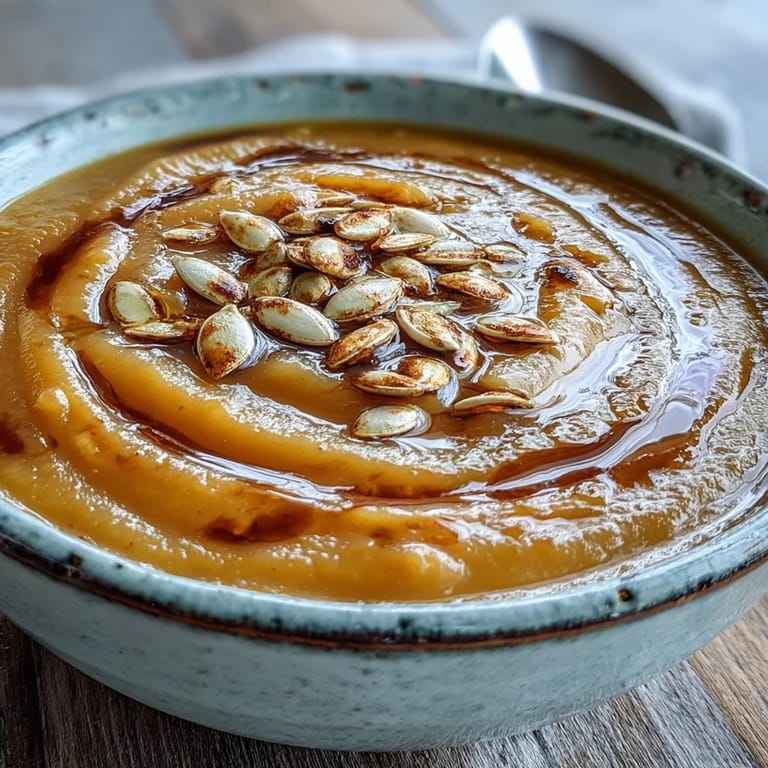
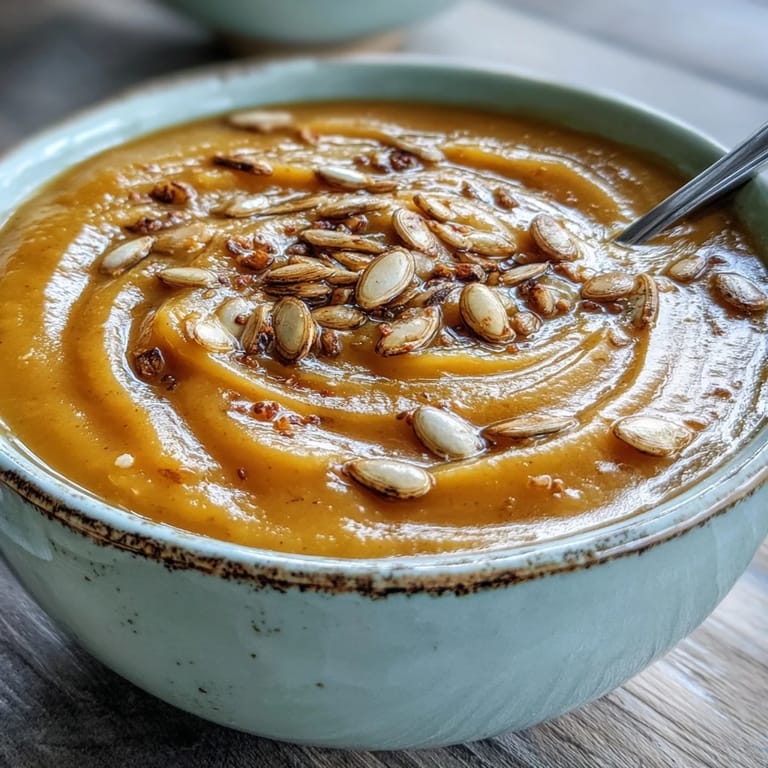
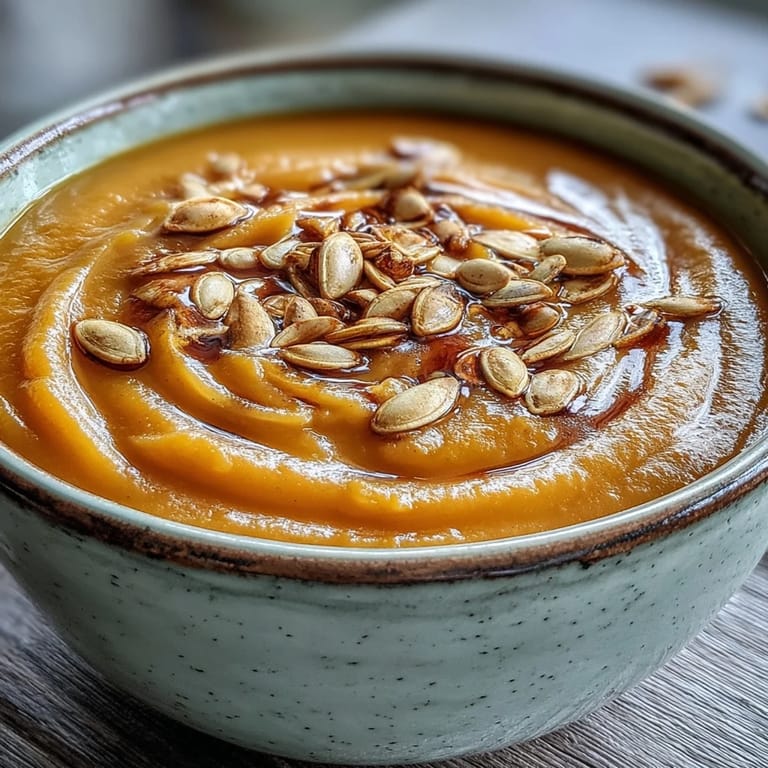
- Toasted pumpkin seeds or fresh thyme (optional garnish): These add a textural contrast that makes each spoonful interesting.
Tired of Takeout? 🥡
Get 10 meals you can make faster than delivery arrives. Seriously.
One email. No spam. Unsubscribe anytime.
Instructions
- Start your flavor base with aromatic vegetables:
- Warm the olive oil in your pot over medium heat until it smells rich and fragrant, then add the onion and garlic. Listen for that gentle sizzle, and let them cook until they turn translucent and slightly soft, about three minutes. This is when your kitchen starts to smell like something is happening.
- Introduce the squash and apples:
- Add both to the pot and let them cook for another five minutes, stirring occasionally so everything gets a little caramelized at the edges. You'll notice the squash starting to soften slightly and the apples beginning to release their juice.
- Build warmth with spices:
- Sprinkle in the cinnamon, nutmeg, salt, and pepper, then stir everything together so the spices coat all the vegetables evenly. The smell that rises up is the whole point of autumn cooking.
- Simmer until everything is tender:
- Pour in the broth and apple cider, bring it to a boil, then lower the heat, cover the pot, and let it simmer for twenty-five to thirty minutes. The squash should be so tender that a spoon breaks through it easily, and the apples should have essentially dissolved into the liquid.
- Transform everything into velvet:
- Using an immersion blender, carefully blend the soup right in the pot, working in sections if you need to, until it's completely smooth and creamy. If you prefer, work in batches with a regular blender, which gives you a chance to really examine the texture. The whole thing should look like pourable silk.
- Taste and adjust:
- Dip a spoon in and actually taste it, then add more salt, pepper, or even a tiny bit more cinnamon if it needs it. Seasoning at the end is where most soups either become forgettable or memorable.
- Finish with presence:
- Ladle it into bowls and add a swirl of cream if you're using it, along with a scatter of pumpkin seeds or fresh thyme. This is the moment where something functional becomes something special.
 Save to Pinterest
 There's a moment in cooking this soup where you stop thinking about recipes and start thinking about why we make food for people we care about. When my nephew tasted it for the first time, he asked if it was magic, which is the highest compliment a seven-year-old can give. That's when soup becomes more than sustenance.
The Texture is Everything
The magic of this soup lives in that smooth, almost butter-like consistency that makes each spoonful feel luxurious without any cream if you don't want it. The immersion blender is genuinely your friend here; blending directly in the pot means you control the texture and there's less to clean. I learned the hard way that over-blending can make soup feel gluey, so stop when it's smooth and creamy but still has body to it.
Timing and Seasoning Strategy
The entire process takes about fifty minutes from start to finish, which makes this perfect for a weeknight when you want something that feels special without demanding your attention. The spices need time to infuse into the broth, which is why the simmering step is non-negotiable; rushing through it means missing out on that deep, warm flavor. I've learned to taste periodically during cooking so I'm not scrambling to fix seasoning at the very end.
Variations and Leftovers
This soup tastes even better the next day when flavors have settled into each other, so make extra if you can and tuck some in the freezer for moments when you need comfort food that's already half-prepared. The optional garnishes matter more than they seem; they're what turns a spoonful from warm and soft to something that has contrast and interest. If you want to experiment, a pinch of cayenne pepper adds a subtle warmth, or freshly grated ginger gives it a different kind of sophistication.
- For a vegan version, swap the cream for coconut milk or a good cashew cream and nobody will miss the dairy.
- Leftover soup freezes beautifully for up to three months, and it reheats gently on the stove with a splash of broth if it thickens up.
- Serve it alongside crusty bread or a simple green salad to make a meal that feels complete and intentional.
 Save to Pinterest
 This soup has become one of those recipes I make when I want to feel like I'm taking care of people, because there's something about offering someone something warm and good that says more than words. It's simple enough that you won't stress about it, but thoughtful enough that people will remember it.
Your Questions Answered
- → What apples work best in this soup?
Granny Smith provides tartness while Honeycrisp adds sweetness. Any firm apple that holds its shape during cooking works well—avoid very soft varieties that might break down too quickly.
- → Can I make this ahead of time?
Absolutely. The soup actually improves after refrigerating overnight as flavors meld together. Store in an airtight container for up to 4 days and reheat gently on the stove, adding a splash of broth if needed.
- → How do I get the smoothest texture?
Blend thoroughly with an immersion blender or regular blender in batches. For ultra-smooth results, pass the purée through a fine-mesh sieve before serving. Hot soup should be vented when blended to prevent pressure buildup.
- → What can I substitute for heavy cream?
Coconut cream adds richness and makes it vegan. Greek yogurt stirred in off-heat provides tangy creaminess. For a lighter version, simply omit the cream—the soup stands beautifully on its own.
- → Can I freeze this soup?
Yes, freeze for up to 3 months in freezer-safe containers. Leave out the cream until reheating. Thaw overnight in the refrigerator and warm slowly on low heat, stirring occasionally.
- → What spices complement this flavor profile?
Beyond cinnamon and nutmeg, try adding fresh ginger for warmth, a pinch of cayenne for subtle heat, or cardamom for floral notes. Each spice subtly shifts the aromatic profile while maintaining the autumn essence.