 Save to Pinterest
 The steam rising from the pot hit me first, carrying that distinctive smoky richness that only comes from bacon and Andouille dancing together. My grandmother never measured anything when making black-eyed peas, she just knew by smell and instinct when the broth was right. Standing over that Dutch oven for the first time on my own, watching the peas swell and soften, I finally understood her patience. This isnt just food, it is a slow conversation between fire and time that you cannot rush.
New Years Day dawned gray and cold, exactly the kind of weather that demands something hearty in the slow cooker. My apartment filled with the smell of simmering peas and bacon, drawing neighbors to my door who swore they were just passing by. We ate standing up in the kitchen, laughter mixing with the clinking of spoons against bowls, and somewhere in that warmth I knew good things were coming.
Ingredients
- Smoked Sausage: Andouille brings that authentic Cajun kick but Kielbasa works beautifully too, just slice thick so they do not disappear into the pot
- Thick-cut Bacon: The foundation of your flavor base, diced small so every bite gets that smoky richness
- Dried Black-eyed Peas: Dried peas give you better texture and absorb more flavor than canned, plus they hold their shape through that long slow simmer
- The Holy Trinity: Onion, bell pepper, and celery form the backbone of Southern cooking, creating aromatic depth that develops as they cook down
- Chicken Broth: Low-sodium lets you control the salt level while building a flavorful foundation
- Smoked Paprika: This is your secret weapon, adding deep smoky notes without needing a smoker
- Bay Leaves: They work quietly in the background, lending subtle herbal complexity to the broth
Tired of Takeout? 🥡
Get 10 meals you can make faster than delivery arrives. Seriously.
One email. No spam. Unsubscribe anytime.
Instructions
- Start Your Soak:
- Spread the dried peas on a white plate and pick out any small stones or wrinkled ones, then cover them with plenty of water and let them sleep overnight.
- Build Your Flavor Base:
- Cook the bacon in your Dutch oven until it is crispy and has released all its golden fat, then scoop it out and brown the sausage in those same juices.
- Sauté The Trinity:
- Toss in the onions, peppers, and celery, letting them soften until they are fragrant and translucent, then add the garlic for just sixty seconds so it does not burn.
- Bring It All Together:
- Pour in the peas, broth, and spices, then return the meats to the pot and let everything come to a gentle bubble before lowering the heat.
- The Long Simmer:
- Keep it at a bare simmer with the lid slightly askew, giving it an occasional stir, until the peas are creamy and the broth has thickened.
- Finish With Love:
- Fish out those bay leaves, taste the broth, and adjust the salt before sprinkling fresh parsley over the top.
 Save to Pinterest
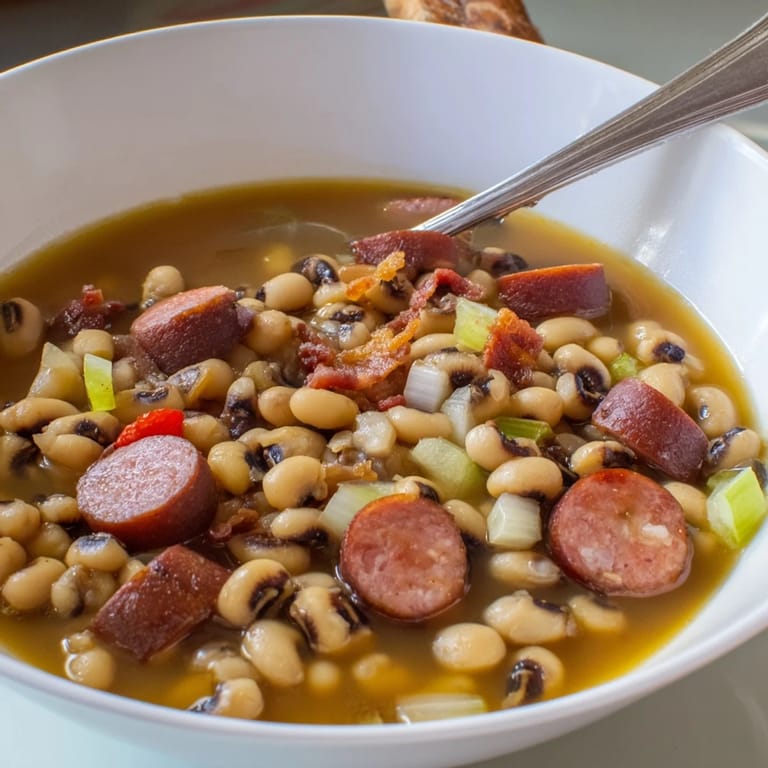
 That first spoonful stopped all conversation at the table. The broth was rich and silky, coating the spoon just right, with bits of smoky meat tucked between tender creamy peas. Someone reached for the hot sauce while another went back for seconds, and in that moment I understood why this recipe has fed generations through cold winters and hopeful new beginnings.
Make It Your Own
Some days I throw in diced collards during the last twenty minutes, letting them wilt into the broth until they are silky and tender. Other times a can of diced tomatoes joins the pot, adding brightness that cuts through all that rich smoky goodness. The beauty of this dish is how it welcomes whatever you have in the crisper drawer.
The Rice Question
Purists might tell you black-eyed peas stand alone, but a bed of fluffy white rice never hurt anyone. The grains soak up that spiced broth like tiny sponges, turning each bite into something complete and satisfying. Just do not tell my grandmother I said that.
Leftovers Get Better
This is one of those magical dishes that tastes even better the next day, as the peas continue to drink up the broth and the spices deepen into something extraordinary. Make a double batch and thank yourself later.
- Store in an airtight container for up to five days
- The broth will continue to thicken in the refrigerator
- Reheat slowly with a splash of water or broth to loosen it up
 Save to Pinterest
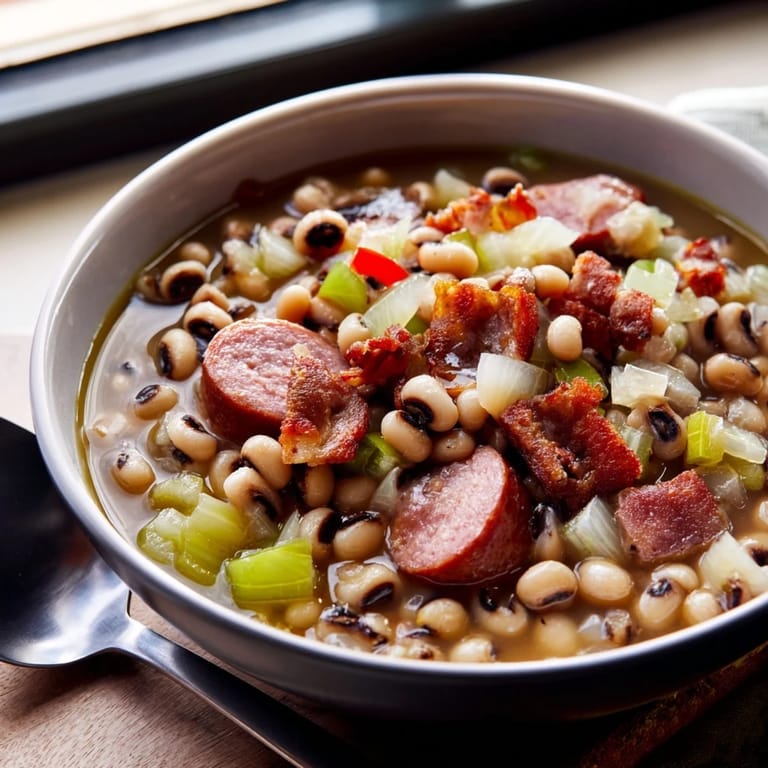
 A bowl of these black-eyed peas is more than just good luck, it is comfort you can taste in every spoonful. Here is to new beginnings and full bellies.
Your Questions Answered
- → Do I need to soak the black-eyed peas before cooking?
Yes, soaking dried black-eyed peas overnight helps them cook evenly and tenderize. You can also use the quick soak method by covering them with boiling water for one hour before draining and proceeding with the dish.
- → Can I make this vegetarian?
Absolutely. Simply omit the bacon and sausage, use vegetable broth instead of chicken broth, and add extra smoked paprika or a few drops of liquid smoke to maintain that rich, smoky depth of flavor.
- → What's the best way to serve black-eyed peas?
Traditional Southern serving suggestions include spooning them over steamed white rice, alongside buttery cornbread, or with sautéed collard greens. They also shine as a standalone bowl with a drizzle of hot sauce.
- → How long do leftovers keep in the refrigerator?
Stored in an airtight container, these black-eyed peas will keep well for 4-5 days in the refrigerator. The flavors often improve after a day or two as the seasonings continue to meld together.
- → Can I use canned black-eyed peas instead of dried?
You can substitute canned peas, though the texture will be softer. Use about 4-5 cans (drained and rinsed) and reduce the simmering time to 30-40 minutes just to let flavors develop. Adjust seasonings accordingly.
- → Why are black-eyed peas traditionally eaten on New Year's?
In Southern tradition, black-eyed peas symbolize luck and prosperity for the coming year. Their round shape represents coins, and when cooked, they swell, symbolizing growing wealth. This custom dates back to Civil War times and remains a cherished ritual.