 Save to Pinterest
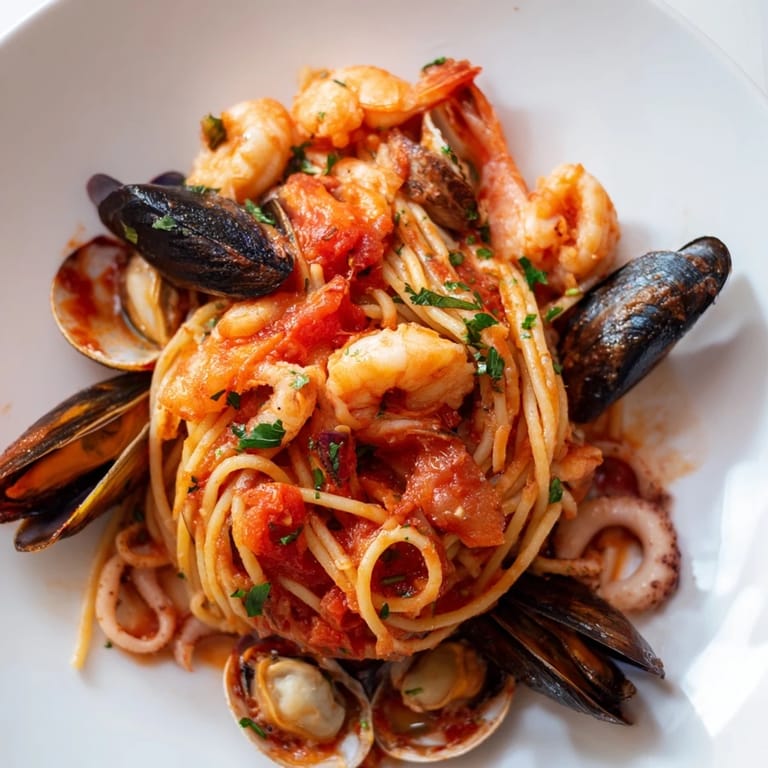
 The first time I truly understood marinara was standing in a tiny kitchen in Rome, watching a neighbor stir a pot with the casual confidence of someone who'd made this sauce a thousand times. She added her seafood without fanfare—shrimp, mussels, squid—and suddenly the whole room smelled like the sea and summer at once. That moment stuck with me, and now whenever I make this dish, I'm transported back to that kitchen, trying to capture that same unhurried magic.
I made this for my sister on a random Tuesday when she was stressed about work, and watching her face light up at that first forkful reminded me why cooking for people matters. She asked for the recipe immediately, and now it's become her go-to when she wants to impress someone—or just feel a little less scattered. Food has a way of doing that.
Ingredients
- Large shrimp, peeled and deveined (200 g): They cook in minutes, so start with the biggest you can find—they hold their shape better and feel luxurious on the plate.
- Mussels, cleaned and debearded (200 g): Buy them the day you cook if possible; the fresher they are, the sweeter they taste, and they'll open reliably without any stragglers.
- Squid rings (150 g): Thin rings cook in seconds and add a tender chew that balances the firmer shrimp and scallops perfectly.
- Sea scallops (150 g): Pat them dry before cooking so they caramelize instead of steam, giving you that delicate golden edge.
- Spaghetti or linguine (350 g): Cook it a hair under the package time—it'll finish cooking slightly in the warm sauce and stay silky.
- Olive oil (2 tbsp): Use a good one you actually enjoy tasting; it's a foundation flavor here, not just cooking medium.
- Onion, finely chopped (1 small): Let it turn translucent and soft; this is where the sauce starts building its sweetness.
- Garlic cloves, minced (3): Don't let it brown or it'll taste bitter—keep the heat medium and your attention sharp.
- Red pepper flakes (1/2 tsp, optional): A whisper of heat wakes everything up without making it spicy; taste as you go.
- Canned crushed tomatoes (800 g): San Marzano tomatoes make a difference if you can find them, but quality canned is better than fresh and watery.
- Tomato paste (2 tbsp): This is your sauce's backbone—stir it in early so it melts into the oil and develops flavor.
- Dry white wine (100 ml): The kind you'd actually drink; its acidity brightens everything and the alcohol cooks off, leaving just complexity.
- Dried oregano and basil (1 tsp each): Don't skip these—they're essential to that authentic Italian flavor, though fresh basil at the end elevates it further.
- Sugar (1/2 tsp): Just enough to balance the tomato's acidity without making the sauce taste sweet.
- Sea salt and black pepper: Taste constantly and adjust; every tomato can is slightly different.
- Fresh parsley, chopped (2 tbsp): Add it right before serving so it stays bright green and herbal.
- Lemon wedges: A squeeze over the plate ties everything together and cuts through the richness beautifully.
Tired of Takeout? 🥡
Get 10 meals you can make faster than delivery arrives. Seriously.
One email. No spam. Unsubscribe anytime.
Instructions
- Start the pasta water:
- Fill a large pot with salted water—it should taste like the sea—and bring it to a rolling boil while you prep everything else.
- Build the sauce base:
- Heat olive oil in a large, deep skillet over medium heat, add chopped onion, and let it soften and turn translucent, about 2-3 minutes. The kitchen will smell wonderful already.
- Awaken the garlic:
- Stir in minced garlic and red pepper flakes, cooking for just 1 minute until fragrant—you want that sweet garlic moment, not the burnt bitter one.
- Deglaze with wine:
- Pour in the white wine and let it sizzle and reduce for 2 minutes, which mellows the alcohol and concentrates the flavor.
- Add the tomato foundation:
- Stir in the crushed tomatoes, tomato paste, oregano, basil, sugar, salt, and pepper, then let everything simmer uncovered for 10 minutes, stirring now and then so nothing sticks to the bottom.
- Time the pasta:
- About halfway through the sauce simmering, add the pasta to that boiling salted water and cook according to package instructions, aiming for al dente—it should have a slight resistance when you bite it.
- Introduce the seafood:
- First go the squid and scallops—they need just 2 minutes before the shrimp and mussels join the party. Cover the skillet and let everything steam together for 3-4 minutes until the shrimp turn pink and the mussels crack open.
- Marry pasta and sauce:
- Drain the pasta, reserving a cup of that starchy water, then gently toss it into the seafood and sauce, adding pasta water as needed to loosen everything into a silky, glossy finish.
- Taste and adjust:
- This is your moment—add salt, pepper, or a squeeze of lemon juice until it tastes exactly right to you.
- Plate and serve:
- Divide among bowls, scatter fresh parsley over the top, and place lemon wedges on the side so everyone can squeeze to taste.
 Save to Pinterest
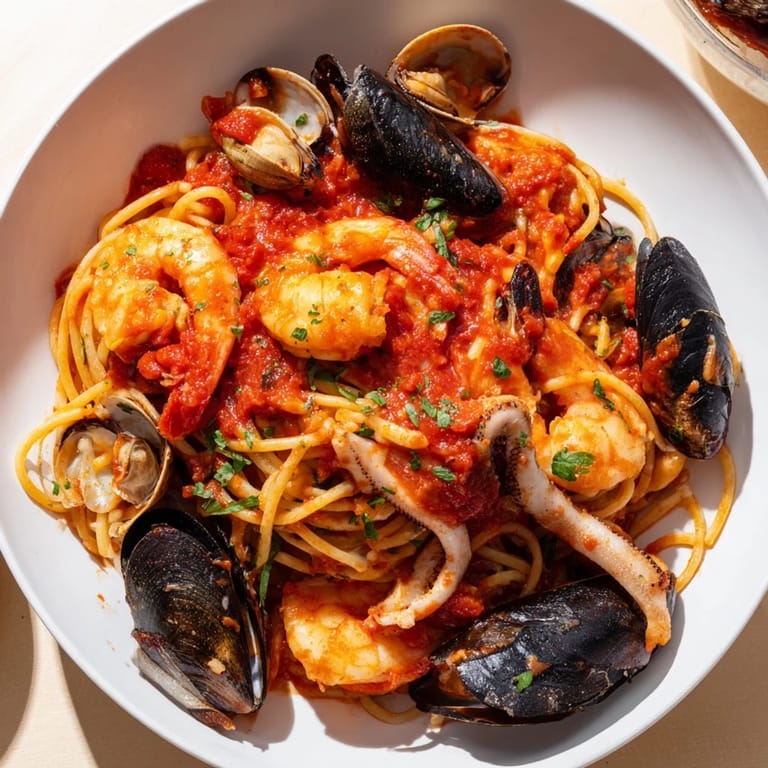
 I learned the hard way that this dish needs an audience to truly shine—I made it once for just myself on a quiet evening, and while it was delicious, it felt incomplete without someone to share those briny, garlicky bites with. There's something about watching someone's face when they taste it, that moment of realization that you've captured something special on a plate.
Choosing Your Seafood
The mix I've given you is more of a starting point than a rule. I've used clams instead of scallops when the fishmonger didn't have them, and honestly, it was just as good—clams add their own briny sweetness that mingles beautifully with the shrimp and mussels. The key is balance: you want a range of textures and sizes so each forkful is interesting. If you spot pristine squid at your market, grab it; if mussels look questionable, swap them out for extra shrimp or some white fish cut into bite-sized pieces.
Making Marinara Taste Like Summer
The secret to a marinara that doesn't taste canned or flat is patience with the base—letting that onion and garlic develop slowly in good olive oil before you add the tomatoes makes all the difference. I sometimes add a small splash of seafood stock if I have it, which deepens the flavor without changing the essential character of the dish. Some cooks swear by a tiny pinch of sugar (which I include), and others add a splash of cream at the very end, but I find that the seafood and its juices provide all the richness you need.
Timing and Temperature
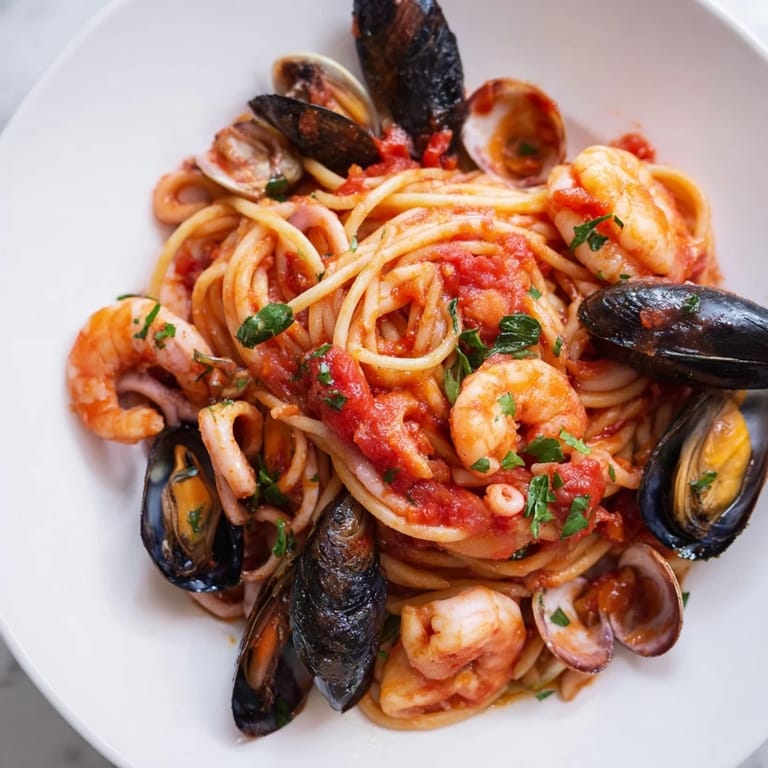
The beautiful thing about this dish is that everything comes together in about 45 minutes, but none of that time involves fussy multitasking. Get your pasta water boiling first, then start the sauce while you wait; by the time the pasta is almost done, your sauce is ready to meet the seafood. This isn't a dish that benefits from sitting around—cook, taste, adjust, and serve immediately while everything is still steaming and the flavors are at their brightest.
- If your sauce looks too thick after tossing with pasta, add pasta water a splash at a time until it flows like silk.
- Seafood continues cooking slightly off the heat, so pull everything from the stove when the mussels just open, not after they've been gaping for a minute.
- Lemon isn't optional—it's the final note that makes this dish sing and feel alive on the tongue.
 Save to Pinterest
 This dish reminds me that the best meals aren't the ones that take all day, but the ones made with real attention and genuine care. Serve it with a crisp Pinot Grigio, some crusty bread to soak up the sauce, and good company.
Your Questions Answered
- → What types of seafood are best for this dish?
Large shrimp, mussels, squid rings, and sea scallops offer a balanced mix of textures and flavors, making the dish vibrant and fresh.
- → Can I use a different pasta instead of spaghetti or linguine?
Yes, any long pasta like fettuccine or bucatini pairs nicely, as they hold the marinara sauce well and complement the seafood.
- → How can I ensure the seafood stays tender?
Cook seafood gently and avoid overcooking by adding squid and scallops first, then shrimp and mussels later, simmering until just done.
- → Is it important to reserve pasta water?
Yes, reserved pasta water can be added to loosen the sauce, helping it cling better to the pasta for a cohesive dish.
- → What herbs enhance the marinara sauce flavor?
Dried oregano and basil provide classic Italian herbal notes that deepen the richness of the tomato-based sauce.