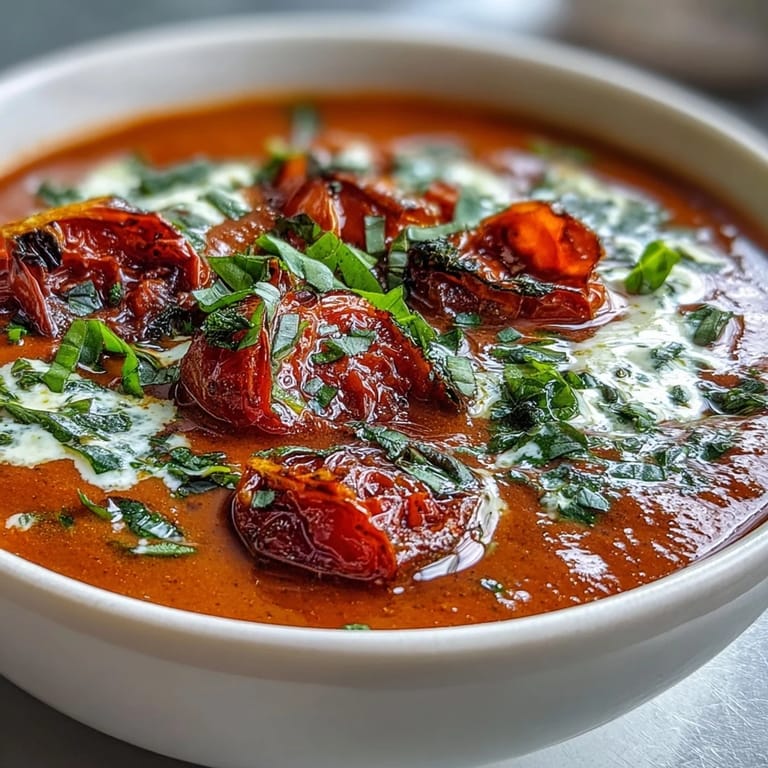
 Save to Pinterest
 There's something almost magical about the moment you pull a tray of roasted tomatoes from a hot oven—the kitchen fills with this sweet, concentrated aroma that makes you pause and just breathe it in. I discovered this soup entirely by accident one summer evening when I had too many tomatoes ripening on the counter and a craving for something warm despite the heat outside. Roasting them first changed everything, turning ordinary tomatoes into something sophisticated and deeply flavored, the kind of thing you'd expect to find at a small Italian restaurant tucked away on a quiet street.
I made this for my neighbor after her surgery, and watching her face light up when she tasted it—that quiet moment of genuine pleasure—reminded me why cooking for people matters. She asked for the recipe but then admitted she'd probably just ask me to make it again, which felt like the highest compliment. Now whenever I roast tomatoes, I think of her sitting at that kitchen table, spoon in hand, asking for seconds.
Ingredients
- Ripe tomatoes (1.5 kg): Use the ripest ones you can find—their natural sugars will caramelize during roasting and become the soul of your soup, creating that deep, complex flavor that makes people ask what your secret ingredient is.
- Yellow onion (1 large): The sweetness of yellow onions balances the tomato's acidity in ways white onions never could, and roasting them until they're almost jammy is non-negotiable.
- Garlic cloves (6): Roasting softens garlic into something mellow and nutty rather than sharp, so don't skip this step or you'll lose half the magic.
- Extra-virgin olive oil (2 tbsp): This is your flavor foundation, so quality matters here more than anywhere else in the recipe.
- Kosher salt and black pepper: Season generously before roasting since the vegetables will concentrate as they cook, and you want that seasoning built in, not added at the end.
- Vegetable broth (2 cups): Low-sodium broth lets the roasted vegetables shine without competing flavors, and you can always adjust salt later.
- Fresh basil (1/2 cup): Add this after blending, not before, so the heat doesn't destroy its delicate flavor and bright green color.
- Butter and sugar (optional): A teaspoon of butter adds richness that feels indulgent, while a tiny pinch of sugar rounds out acidity without making the soup taste sweet.
- Cream or crème fraîche: A swirl of this on top isn't just decoration—it creates little pockets of richness with each spoonful that make the whole experience feel luxurious.
Tired of Takeout? 🥡
Get 10 meals you can make faster than delivery arrives. Seriously.
One email. No spam. Unsubscribe anytime.
Instructions
- Heat your oven and prepare:
- Preheat to 220°C and line a baking sheet with parchment paper so cleanup is easier and nothing sticks to the pan. Having everything ready before you start means you can move quickly once those tomatoes are cut.
- Arrange and season the vegetables:
- Halve your tomatoes and quarter the onion, then scatter them with whole garlic cloves on the sheet. Drizzle with olive oil and season generously with salt and pepper, tossing everything until it's evenly coated and glistening.
- Roast until caramelized:
- Pop it in the oven for 35–40 minutes, until the tomato edges are dark and the onions are tender and slightly shriveled. You'll know it's ready when the kitchen smells almost sweet and concentrated, and a fork slides through the tomato flesh easily.
- Build your soup base:
- Transfer everything to a large pot along with any precious juices stuck to the pan, then add vegetable broth and bring to a gentle simmer. This is where the roasted flavors start waking up and mingling with the broth.
- Infuse with basil:
- Tear in fresh basil leaves, add a small piece of butter if you want richness, and a tiny pinch of sugar to balance any sharpness. Let it simmer for 5 minutes so the basil flavor seeps throughout.
- Blend until silky:
- Use an immersion blender right in the pot if you have one—it's faster and creates less mess—or carefully blend in batches and return to the pot. Keep blending until the texture is completely smooth and velvety, with no grainy bits.
- Taste and adjust:
- Take a spoonful and really taste it, then decide if it needs more salt, a whisper of pepper, or perhaps a drop of balsamic vinegar for depth. For an even silkier texture, strain through a fine sieve, though I often skip this step and enjoy the rustic feel.
- Serve with flourish:
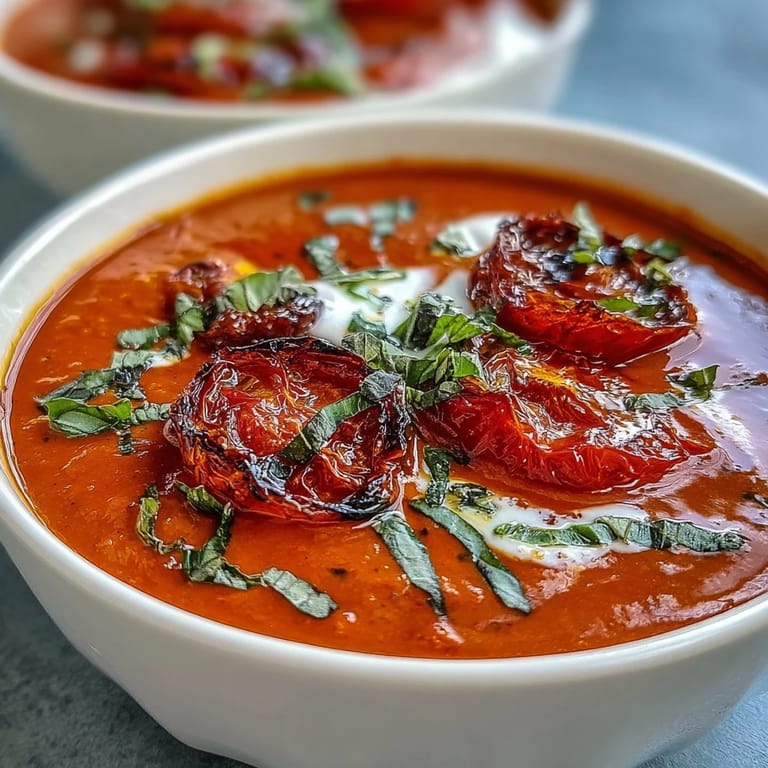
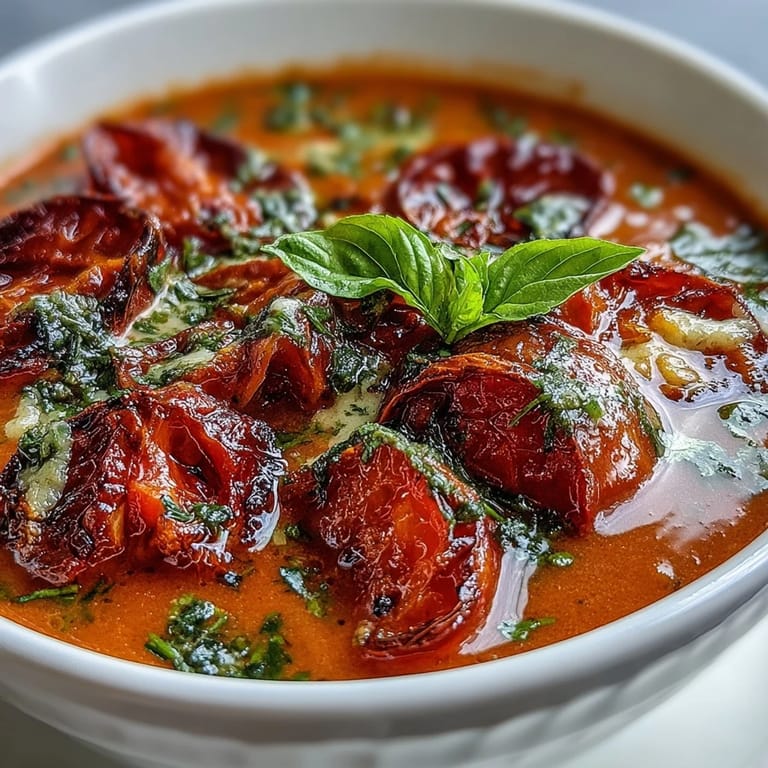
- Ladle into warm bowls and drizzle with cream, scatter fresh basil on top, and add croutons or toasted bread if you want something to break the smoothness. This is where it stops being soup and becomes an experience.
 Save to Pinterest
 I realized this soup had become something special the night my partner came home from a difficult day and I'd made it without being asked—they took one sip and their whole body seemed to soften. Good food has this quiet power to communicate care in ways words sometimes can't, and this soup does exactly that.
When to Roast Extra Tomatoes
I've started roasting tomatoes whenever I have the oven on for something else, then freezing them in containers because they transform so much more than just soup. Toss them into pasta, spread them on bruschetta, or blend them into a quick sauce for fish—roasted tomatoes are the gift that keeps giving.
Customizing for Your Taste
This recipe is honestly a starting point, not a rulebook. I've added a splash of balsamic vinegar when I wanted earthiness, stirred in fresh thyme because I had it on hand, and once even added a teaspoon of tomato paste because I wanted the flavor even deeper and more intense. The roasted foundation is so solid that you can build on it without anything falling apart.
Making It Ahead and Serving
This soup actually gets better the next day as flavors settle and meld together, so making it in advance for a dinner party removes stress from your evening. You can also freeze it for up to three months, which means you're always a quick reheat away from something that tastes like you spent hours in the kitchen.
- Reheat gently over medium heat and stir often so it doesn't scorch on the bottom, adding a splash of broth if it's thickened too much.
- Make a big batch when tomatoes are at their peak in late summer and freeze portions for winter comfort.
- Serve with crusty bread, a green salad, and something crisp to drink for a complete, satisfying meal.
 Save to Pinterest
 This soup reminds me that the simplest recipes, made with intention and attention, often bring the most satisfaction. There's something about roasted tomatoes and fresh basil that feels both completely ordinary and deeply elegant at the same time.
Your Questions Answered
- → Can I make this soup ahead of time?
Absolutely. This soup actually tastes better the next day as flavors have time to meld. Store in an airtight container in the refrigerator for up to 4 days. Reheat gently on the stovetop, adding a splash of broth if needed to thin the consistency.
- → Can I use canned tomatoes instead of fresh?
While fresh tomatoes yield the best flavor, you can substitute with high-quality canned whole tomatoes when they're out of season. Drain them well and roast as directed, though reduce roasting time to about 25 minutes since they're already softer.
- → How do I make this soup vegan?
Simply omit the butter and cream, or replace with your favorite plant-based alternatives. Coconut cream adds lovely richness, while cashew cream provides a neutral flavor profile. The soup is delicious even without any creamy finish.
- → Why is my soup too acidic?
Some tomatoes are naturally more acidic than others. The optional sugar helps balance acidity, but you can also add a pinch of baking soda while simmering, which neutralizes acid without affecting taste. A splash of balsamic vinegar surprisingly helps too.
- → Can I freeze this soup?
Yes, this soup freezes beautifully for up to 3 months. Cool completely before transferring to freezer-safe containers, leaving space for expansion. Thaw overnight in the refrigerator and reheat on the stovetop. If you added cream, freezing may slightly affect texture, but it will still be delicious.