 Save to Pinterest
 There was a moment in late October when my farmer's market haul sat on the counter looking almost too beautiful to turn into soup—those deep orange butternut squash halves catching the afternoon light next to an impossibly green broccoli head. My roommate wandered in asking what smelled so good, and I realized the oven hadn't even warmed up yet. That's when I knew this soup had something special: it could seduce you before it even finished cooking.
I made this for a dinner party on a chilly November evening, and watching my guests wrap their hands around warm bowls while snow started falling outside felt like the kind of small magic that happens when food timing aligns perfectly with weather. One guest asked for seconds before finishing her first bowl, which I took as the highest compliment—no one asks for more soup out of politeness alone.
Ingredients
- Butternut squash (1 medium, about 2 lbs): The backbone of this soup, and peeling it raw is honestly a bit of a workout—buy pre-cubed if you're short on time and patience, nobody will judge you.
- Broccoli (1 large head, about 4 cups florets): Don't discard those stems; they're delicious roasted and add substance to the final blend.
- Yellow onion (1 medium, chopped): Roasting mellows it into something almost sweet, which balances the earthiness beautifully.
- Garlic (3 cloves): Leave them whole during roasting so they turn soft and almost creamy rather than sharp.
- Vegetable broth (4 cups): This is your baseline flavor, so use something you actually like drinking on its own.
- Coconut milk or heavy cream (1 cup): Coconut milk keeps it vegan and adds subtle sweetness; cream makes it richer and more decadent—pick based on what your body or ethics are asking for that day.
- Olive oil (2 tablespoons): Good olive oil matters here since you're tasting it, not hiding it under other flavors.
- Kosher salt, black pepper, ground cumin, ground nutmeg: The cumin adds warmth and earthiness during roasting, while nutmeg in the finished soup brings everything into focus.
Tired of Takeout? 🥡
Get 10 meals you can make faster than delivery arrives. Seriously.
One email. No spam. Unsubscribe anytime.
Instructions
- Get your oven ready and prep your vegetables:
- Preheat to 425°F and line a baking sheet with parchment paper so cleanup is painless later. Chop everything into roughly bite-sized pieces—uniform sizing helps everything roast at the same pace.
- Coat and spread on the sheet:
- Toss your prepped vegetables with olive oil, salt, pepper, and cumin until everything glistens. Spread them out in a single layer and don't crowd the pan; they need breathing room to brown properly.
- Roast until everything turns golden:
- After 15 minutes, give everything a stir so it caramelizes evenly. You're looking for deep browning on the edges and tender centers, which usually takes 25 to 30 minutes total. The kitchen will smell incredible—this is the hardest part, waiting.
- Build the soup base:
- Transfer your roasted vegetables to a pot, pour in the vegetable broth, and bring to a gentle simmer. Let it bubble quietly for about 10 minutes so the flavors really get to know each other.
- Blend until silky:
- An immersion blender is your friend here—just be careful of the steam. If using a countertop blender, work in batches and let the soup cool slightly first so you don't risk splattering hot liquid everywhere.
- Finish with cream and spice:
- Stir in your coconut milk or cream and a pinch of nutmeg. Taste it and adjust salt and pepper until it sings—this final tasting step matters.
- Serve warm with whatever toppings make you happy:
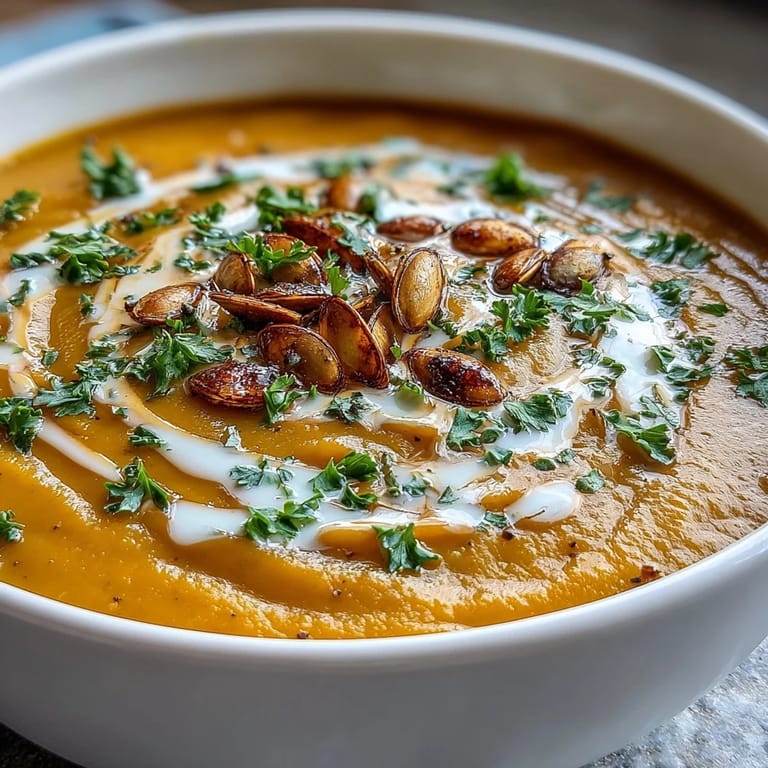
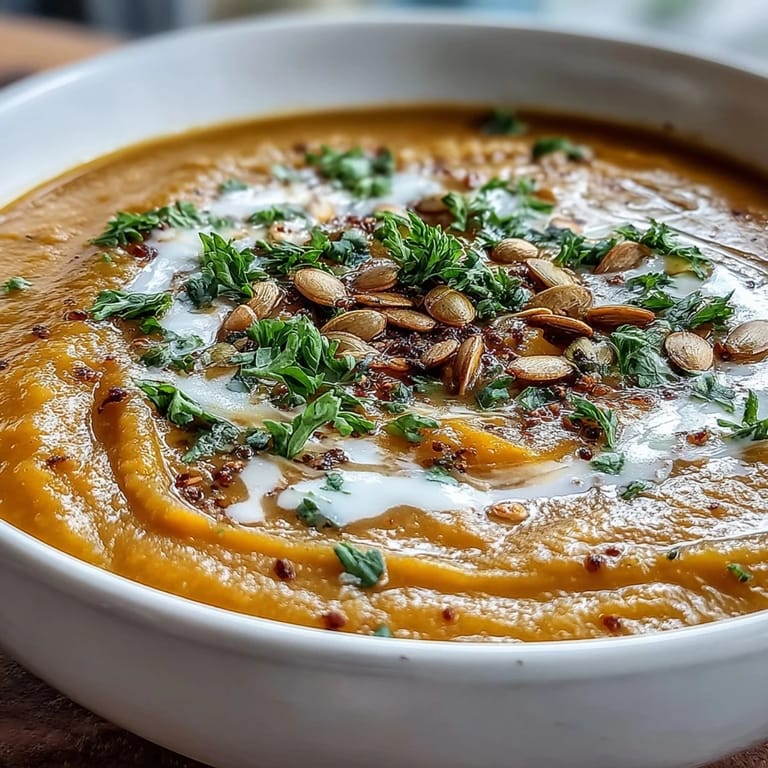
- A handful of toasted pumpkin seeds adds crunch, fresh parsley brings color and brightness, and an extra swirl of cream makes it feel fancy without any extra effort.
 Save to Pinterest
 There's something about creamy vegetable soup that feels like eating health and indulgence at the same time, especially when you know every ingredient by name. My partner used to avoid anything vegetable-forward until I made this, and now it's one of the few things they request by name.
Roasting is Everything
I made a version of this soup once without roasting, just threw everything raw into the pot with broth, and it was watery and one-dimensional compared to this version. The Maillard reaction—that fancy chemistry term for browning—transforms humble vegetables into something with real presence and complexity. It's not extra work, just a shift in approach.
Texture and Creaminess
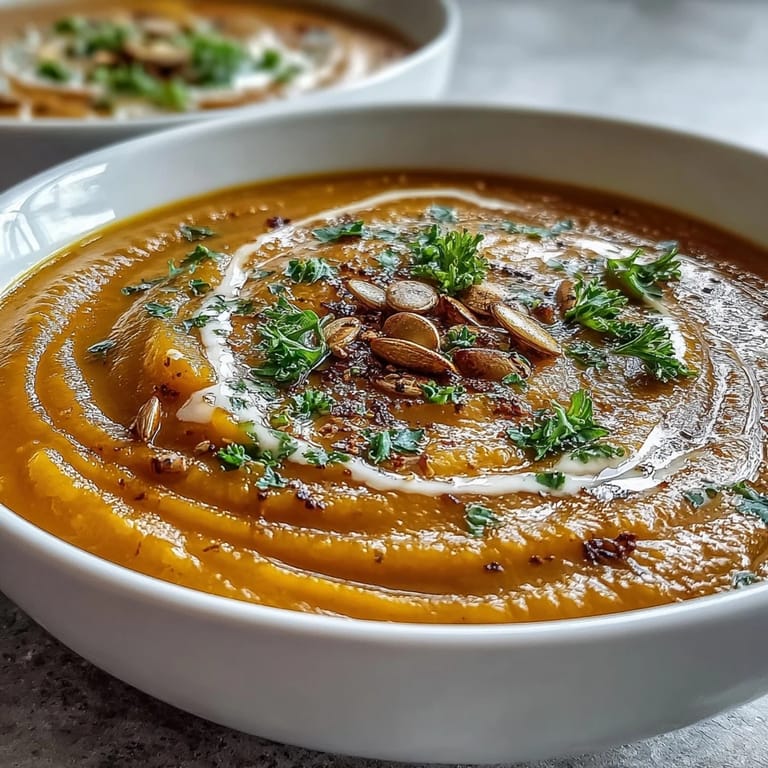
The blending process determines whether you get something silky or something with body—I prefer it completely smooth, but if you like a bit of texture, pulse the immersion blender rather than going all the way. The cream or coconut milk should go in after blending, never before, or you'll end up with a grainy, broken sauce rather than a velvety base.
Variations and Seasonings
This soup is forgiving enough to bend toward your preferences without losing its soul. A squeeze of lemon juice right before serving wakes everything up, while a tiny pinch of cayenne adds heat for those who want it. I once added a splash of apple cider vinegar on a whim and it became my preferred version, so don't be afraid to experiment once you've made it the traditional way.
- For extra richness, brown your diced onion and garlic in the pot with olive oil before adding everything else after roasting.
- If you have fresh sage or thyme, scatter it on the vegetables before roasting for an herbal layer you can't buy pre-blended.
- Leftovers keep beautifully in the fridge for four days and freeze even better, so make a double batch without guilt.
 Save to Pinterest
 This soup reminds me that the best meals are often the simplest ones, built on technique rather than complexity. Make it once and you'll have a recipe you return to, the kind that becomes a quiet anchor in your cooking routine.
Your Questions Answered
- → Can I make this soup ahead of time?
Absolutely. The flavors actually improve overnight. Store in an airtight container for up to 4 days or freeze for up to 3 months.
- → What can I use instead of coconut milk?
Heavy cream works beautifully for extra richness. For dairy-free options, try cashew cream or oat milk, though the texture will be slightly lighter.
- → How do I get the smoothest texture?
Roast vegetables until fully tender, then blend with an immersion blender for 2-3 minutes. A high-speed blender creates the silkiest results.
- → Can I add protein to this dish?
Stir in white beans during the final simmer, or serve with grilled chicken or chickpeas on the side for a complete meal.
- → What's the best way to reheat leftovers?
Gently warm over low heat, stirring frequently. Add a splash of broth if needed to restore creamy consistency.
- → Can I use frozen squash or broccoli?
Fresh vegetables work best for roasting. Frozen options release excess moisture and won't develop the same caramelized flavors.