 Save to Pinterest
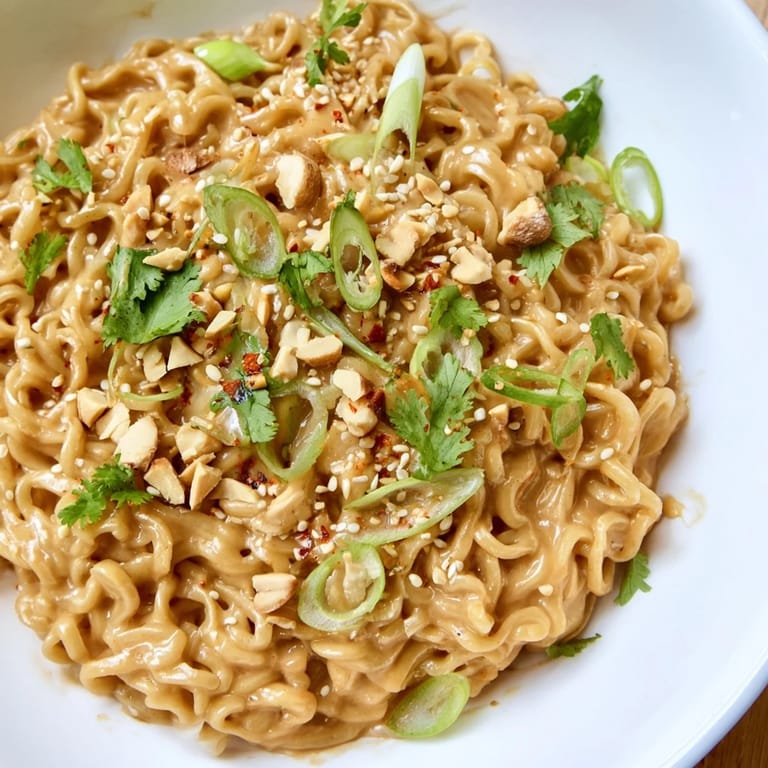
 There's something almost magical about the speed of this dish—one moment you're standing at the stove feeling like you want takeout, and five minutes later you're twirling noodles coated in this glossy, silky peanut sauce that tastes like someone spent an hour developing it. I discovered this recipe on a weeknight when I was too tired to order delivery but too hungry to settle for plain ramen, and instead of reaching for those flavor packets, I grabbed what I had in the pantry: peanut butter, soy sauce, a jar of chili crisp someone had left behind. The smell alone—toasted sesame oil curling into the steam—made me pause and actually appreciate the meal I was making.
I made this for my roommate without warning one evening—just tossed two bowls together and slid one across the counter—and watched their skeptical expression transform into genuine surprise with that first bite. They kept asking what restaurant I'd ordered from, and when I told them it took ten minutes total, they immediately asked for the recipe. Now it's become our go-to when we're both tired but don't want to spend money, and somehow it feels more thoughtful than anything we could have ordered.
Ingredients
- Instant ramen noodles (2 packs): Don't throw away the flavor packets yet—save them in case you want to add a pinch of saltiness later, but for this recipe the sauce is all the seasoning you need.
- Creamy peanut butter (3 tablespoons): The foundation of everything; use something you'd actually eat from a spoon, not the oil-separated kind.
- Soy sauce (2 tablespoons): This brings umami and saltiness—taste as you go since brands vary in intensity.
- Chili crisp (1 tablespoon): The heat source with texture; start with less if you're sensitive to spice.
- Rice vinegar (1 tablespoon): Cuts through the richness and brightens the whole sauce with subtle tang.
- Honey or maple syrup (1 tablespoon): A touch of sweetness that rounds out the sharp and spicy elements.
- Toasted sesame oil (2 teaspoons): Use the toasted kind—the regular is too mild—and don't skip this; it's what makes it taste authentically Thai.
- Garlic clove (1, minced): Fresh garlic adds a sharpness that keeps the sauce from being one-dimensional.
- Hot water (3–4 tablespoons): Reserved noodle water works best, but plain hot water works too if you haven't saved it.
Tired of Takeout? 🥡
Get 10 meals you can make faster than delivery arrives. Seriously.
One email. No spam. Unsubscribe anytime.
Instructions
- Boil the noodles:
- Fill a medium saucepan with water and bring it to a rolling boil, then add both packs of instant ramen and cook until tender, about 3 minutes. Before draining, scoop out and reserve a few tablespoons of that starchy cooking water—this is your secret weapon for a silky sauce.
- Build the sauce:
- In a medium bowl, add your peanut butter, soy sauce, chili crisp, rice vinegar, honey, sesame oil, and minced garlic all at once. Start whisking and watch as it transforms from clumpy to creamy; if you don't have a whisk, a fork works fine and honestly gives you more control.
- Thin it out:
- Add your reserved noodle water one tablespoon at a time, whisking as you go, until the sauce reaches that perfect consistency—thick enough to coat but loose enough to pour. This step is where patience matters; rushing it leaves you with broken-up sauce instead of something cohesive.
- Coat the noodles:
- Drain your noodles thoroughly, then tip them straight into the bowl of sauce and toss until every strand is glossy and evenly covered. Use tongs or two forks to really work the noodles through the sauce.
- Divide and top:
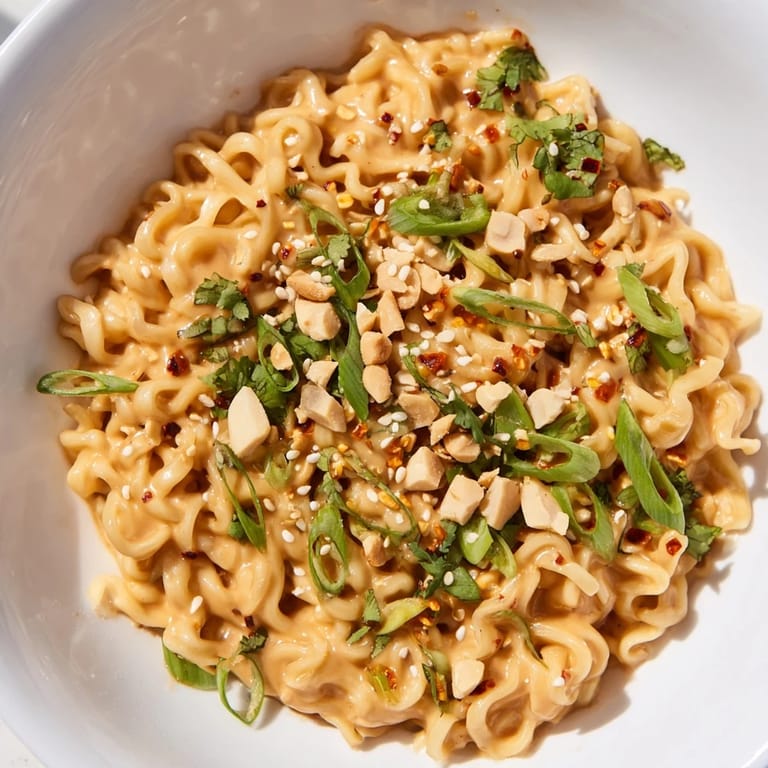
- Distribute the sauced noodles between two bowls and scatter your toppings over top—the crunch of peanuts and sesame seeds against the soft noodles is what makes this feel intentional. A squeeze of lime wedge brightens everything right before you eat.
 Save to Pinterest
 What struck me most about this dish was watching someone who usually eats standing up at the kitchen counter actually sit down and savor it bowl in hand, asking to make it again the next week. Food doesn't have to be complicated to feel like care, and somehow a ten-minute sauce became proof of that.
Making It Feel Like More
This sauce is a canvas waiting for whatever protein you have around—a soft-boiled egg sliced on top adds richness and makes it feel like an actual meal rather than a quick fix, and if you have leftover chicken or can quickly sear some tofu, the noodles transform into something restaurant-worthy. Even just roasted chickpeas from a can will add substance and keep you fuller longer. I've also stirred in a handful of steamed broccoli or snap peas on nights when I need vegetables, and the sauce coats them beautifully.
Variations Worth Exploring
Once you get comfortable with the base recipe, the riffs become intuitive—swap almond butter if peanut allergies are a concern, trade the chili crisp for sriracha if that's what you have, or add a tablespoon of ginger paste for earthiness. Some nights I add a splash of coconut milk to make it richer, and other times a squeeze of fresh lime juice right into the sauce before tossing ties everything together differently. The beauty is that the ratios are forgiving enough that small swaps don't derail the whole thing.
Storage and Leftovers
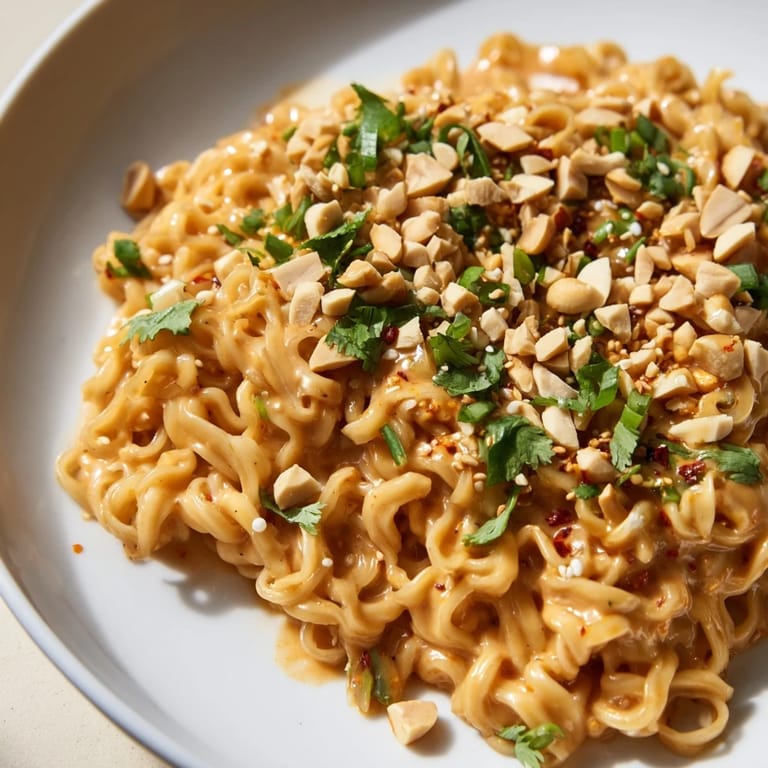
This is best eaten fresh while the noodles are still warm and the sauce clings properly, but if you do have leftovers, keep the sauce and noodles separate—store them in different containers in the fridge and reheat gently when you're ready to eat, adding a splash of water to loosen the sauce back up. The toppings won't stay crispy, so add those fresh right before serving. It's not the kind of dish that improves in the fridge, but it reheats decently and still tastes significantly better than any packet version.
- Reheat in a microwave or on the stovetop with a touch of water, stirring often to prevent sticking.
- Fresh toppings matter most, so don't skip them even if you're eating leftovers.
- Make this as often as you want—it's inexpensive and hard to mess up once you understand the sauce consistency.
 Save to Pinterest
 This recipe proved to me that the best meals aren't always the ones that take time or require special ingredients, but the ones you actually make when hunger strikes. Now it lives in permanent rotation in my kitchen.
Your Questions Answered
- → How can I adjust the spiciness of this dish?
Modify the amount of chili crisp added to control the heat level. Start small and increase gradually to suit your preference.
- → What alternatives exist for peanut butter in this sauce?
You can substitute almond or sunflower seed butter to create a nut-free version while maintaining creaminess.
- → How should the noodles be cooked for best results?
Cook instant ramen noodles according to package instructions and drain well while reserving some cooking water for blending the sauce smoothly.
- → Can I add vegetables to enhance this dish?
Yes, steamed or stir-fried vegetables blend well and add nutritional value and texture diversity.
- → What proteins pair well with this peanut Thai sauce?
Pan-seared tofu, grilled chicken, or a soft-boiled egg complement the dish by adding protein and richness.