 Save to Pinterest
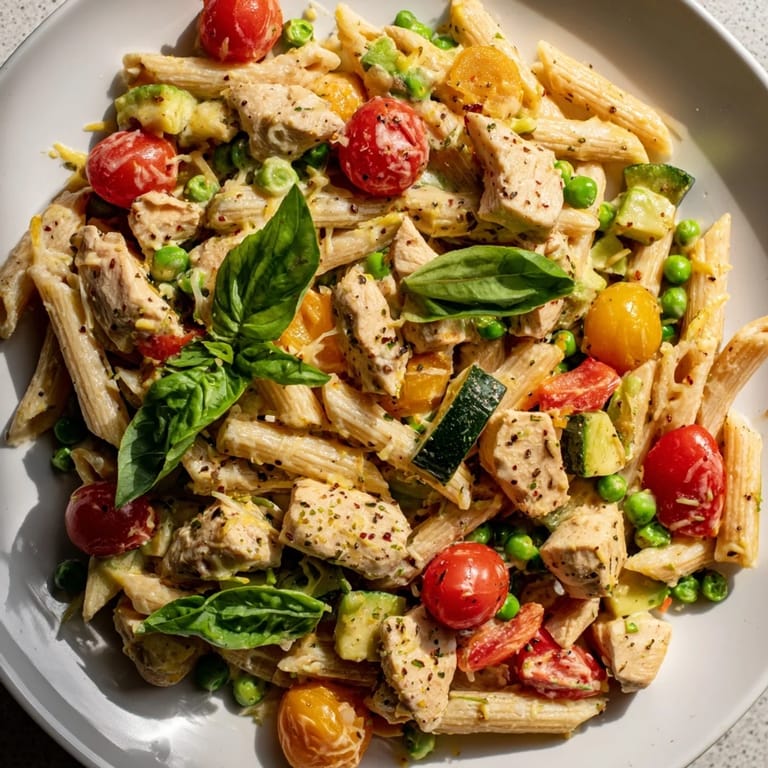
 There's a particular magic that happens when you're staring at your fridge on a Wednesday night, half-empty and uninspiring, and suddenly realize you have exactly what you need to make something that tastes like you actually planned it. That's when I discovered this chicken pasta—not from a cookbook, but from pure necessity and a stubborn refusal to order takeout again. The 5-4-3-2-1 formula became my secret weapon: five vegetables, four pantry staples, three dairy ingredients, two garnishes, and one final flourish that transforms everything from good to unforgettable. What started as pantry archaeology became my most-requested weeknight dinner.
I made this for my sister when she showed up exhausted after a brutal workday, and I watched her take that first bite and actually stop mid-conversation. She didn't say anything fancy, just set her fork down for a second like she was trying to figure out what just happened in her mouth. That's when I realized this wasn't just a way to use up vegetables—it was the kind of meal that quietly reminds you why home cooking matters. Now whenever she's having a rough week, she texts me asking if I'm making 'that pasta' soon.
Ingredients
- Large chicken breast: Dice it yourself rather than buying pre-cut; you'll get better texture and it only takes two minutes with a sharp knife.
- Dried pasta: Penne or fusilli work beautifully because the sauce catches in all those ridges and spirals—it's not just about taste, it's about texture.
- Cherry tomatoes: Halve them just before cooking so they release their brightness without getting mushy and bitter.
- Frozen peas: Keep these on hand; they're already blanched and add sweetness that balances the cream and herbs perfectly.
- Bell pepper: Any color works, but red or yellow give you a subtle sweetness that grounds the whole dish.
- Zucchini: Slice thin rather than chunking it so it actually softens and melds with the sauce instead of staying stubborn.
- Fresh spinach: Add it at the very end so it stays bright and tender rather than turning into something that looks defeated.
- Olive oil: Don't skimp here; this is where you build your base flavor for everything that follows.
- Garlic: Mince it fine and let it bloom in the oil for just a moment before the vegetables go in—that's your flavor anchor.
- Dried Italian herbs: If you have fresh, use about three times the amount; if you only have dried, trust the measurement because it's more concentrated.
- Canned diced tomatoes: The acidity here cuts through the cream and keeps the dish from feeling heavy, which is essential.
- Grated Parmesan: Grate it fresh if you can; the pre-shredded stuff has anti-caking agents that prevent it from melting as smoothly into your sauce.
- Shredded mozzarella: This is your sauce builder—it melts silky and creates that creamy texture that makes people think you used way more cream than you actually did.
- Heavy cream: The luxe ingredient that ties everything together; half-and-half works if you want something lighter, but you'll notice the difference.
- Fresh basil: Tear it by hand rather than chopping so you don't bruise it and lose those fragrant oils right before serving.
- Lemon zest: This is your secret weapon—a tiny spark of brightness that makes people say 'something tastes amazing but I can't place it.'
Tired of Takeout? 🥡
Get 10 meals you can make faster than delivery arrives. Seriously.
One email. No spam. Unsubscribe anytime.
Instructions
- Boil your pasta with intention:
- Salt your water until it tastes like the sea, then cook the pasta until it still has a slight resistance when you bite it. Reserve a mug of that starchy water before draining—you'll need it to loosen your sauce later.
- Get your chicken golden and ready:
- Heat olive oil in your largest skillet until it shimmers, then add the diced chicken. Don't move it around constantly; let it sit for a minute on each side so it develops that golden exterior. You're looking for cooked through and lightly caramelized, about five to six minutes total.
- Build your aromatics layer:
- In the same pan with all those browned bits stuck to the bottom, add your minced garlic and diced bell pepper. Two minutes is all you need—just enough time for the garlic to stop being sharp and the pepper to start softening.
- Add your fresh vegetables and herbs:
- Tomatoes, zucchini, and those Italian herbs go in next. Let this cook for three to four minutes, stirring occasionally so everything touches the heat and starts releasing its flavor into the oil.
- Create your tomato base:
- Stir in the canned tomatoes, frozen peas, and spinach. The heat will be enough to wilt that spinach down to almost nothing, which is perfect. Simmer for a few minutes until the vegetables are just tender but still have some personality.
- Bring back the chicken and add the cream:
- Return your cooked chicken to the pan, then pour in the heavy cream. Lower the heat so everything stays gentle and doesn't break, then add half your cheese. Stir slowly until it all melts into this silky, cohesive sauce.
- Unite your pasta and sauce:
- Add your drained pasta directly to the skillet and toss everything together. If it feels too thick, splash in some of that reserved pasta water a little at a time—you're looking for sauce that coats the pasta but isn't swimming in liquid.
- Taste, adjust, and finish:
- This is your moment to be bold—add more salt if needed, more pepper if you want heat, or more lemon zest if you want brightness. Serve it hot with the remaining cheese, fresh basil torn by hand, a crack of black pepper, and that lemon zest catching the light on top.
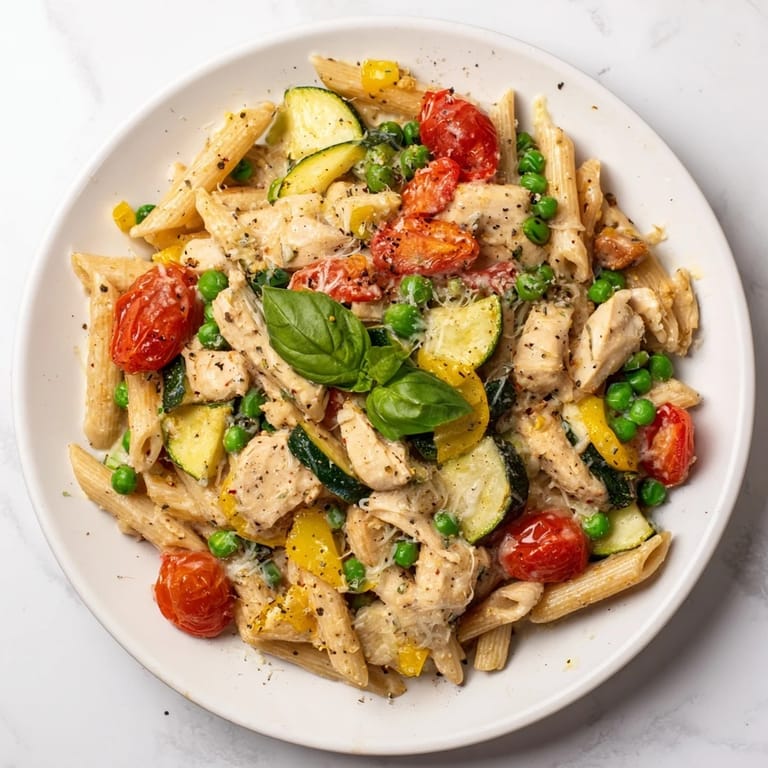 Save to Pinterest
 My friend's daughter asked me to teach her how to make this, and watching her carefully mince her garlic and decide which vegetables to use taught me something unexpected—this recipe isn't really about following steps, it's about learning how to trust your instincts in the kitchen. She added extra basil because she loved the smell, used almost no zucchini because she wasn't sure about it, and the result was perfectly hers. That's when I understood why I keep coming back to this dish: it's a permission slip to cook with your gut instead of your anxiety.
The 5-4-3-2-1 Formula Explained
This recipe works because of a simple structure that forces creativity within boundaries. Five vegetables means you're getting color, nutrition, and complexity without overwhelming your palate. Four pantry staples are enough to build a foundation but lean enough to keep things light. Three dairy elements create richness without heaviness, two garnishes add polish and brightness, and one final touch—the lemon zest—transforms good into memorable. Once you understand this pattern, you can apply it to almost anything in your kitchen and end up with something that tastes intentional.
When to Break the Rules
The beauty of this formula is that it's a starting point, not a prison. Swap chicken for cooked sausage and suddenly it's heartier and more Italian. Use shrimp if you want something lighter and more elegant. Keep it vegetarian by loading up on chickpeas or extra mushrooms, and you won't miss the protein because the dairy and pasta do that work for you. The only real rule is that you need something creamy to tie it all together—without that, you're just pasta with vegetables, which is fine but not what this dish is meant to be.
Variations and Next Steps
Once you've made this a few times, you'll start seeing it everywhere in your cooking. That random cheddar in your fridge becomes a possibility instead of a mystery block. Feta adds Mediterranean brightness. Cream gets replaced with half-and-half on nights when you want something lighter. The wine pairing suggestion of Pinot Grigio isn't just nice—it's because that wine has enough acidity and minerality to cut through the richness and make each bite feel fresher.
- Save the pasta water before you drain—this liquid gold is your insurance policy for perfect sauce consistency.
- Cook your vegetables with intention; undercooked vegetables taste raw and overcooked ones disappear into mush.
- This dish tastes better the moment it's done than it does reheated, so plan to eat it fresh or you'll be disappointed by the memory of how good it was.
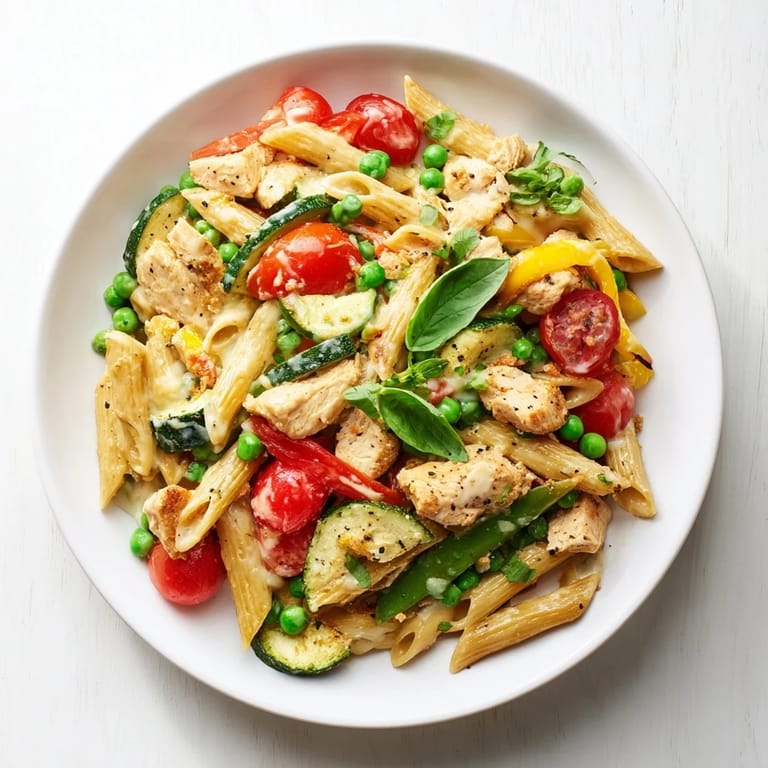 Save to Pinterest
 This pasta reminds me that the best meals don't require a perfectly stocked kitchen or hours of planning—they just need you to pay attention to what you have and care enough to put it together thoughtfully. That's the real recipe.
Your Questions Answered
- → Can I use different pasta types?
Yes, penne or fusilli work best, but you can use any pasta you have on hand.
- → How do I make it vegetarian?
Substitute chicken with chickpeas or add extra vegetables to keep it plant-based.
- → What cheeses work well in this dish?
Parmesan, mozzarella, or alternatives like cheddar or feta can be used for creaminess and flavor.
- → Can I swap heavy cream for a lighter option?
Yes, half-and-half or milk can be used, but it will reduce the richness of the sauce.
- → How should I store leftovers?
Keep leftovers refrigerated in an airtight container and consume within 2-3 days for best taste.