 Save to Pinterest
 I discovered this stew on a particularly gray October afternoon when my farmer's market haul seemed to demand something warm and grounding. There was this perfect convergence of sweet potatoes still piled high, fresh herbs looking vibrant, and suddenly it clicked—I could build something substantial without ever opening a dairy case. The first batch simmered while I curled up with a book, and the kitchen gradually filled with this smell that just said comfort.
Last winter I made this for a friend who'd just moved into her first apartment, and watching her face light up as she tasted something so nourishing that she'd made herself—well, that stuck with me. She's made it dozens of times since, and now it's become her go-to when people need feeding. That's when I knew this wasn't just a recipe; it was something worth keeping close.
Ingredients
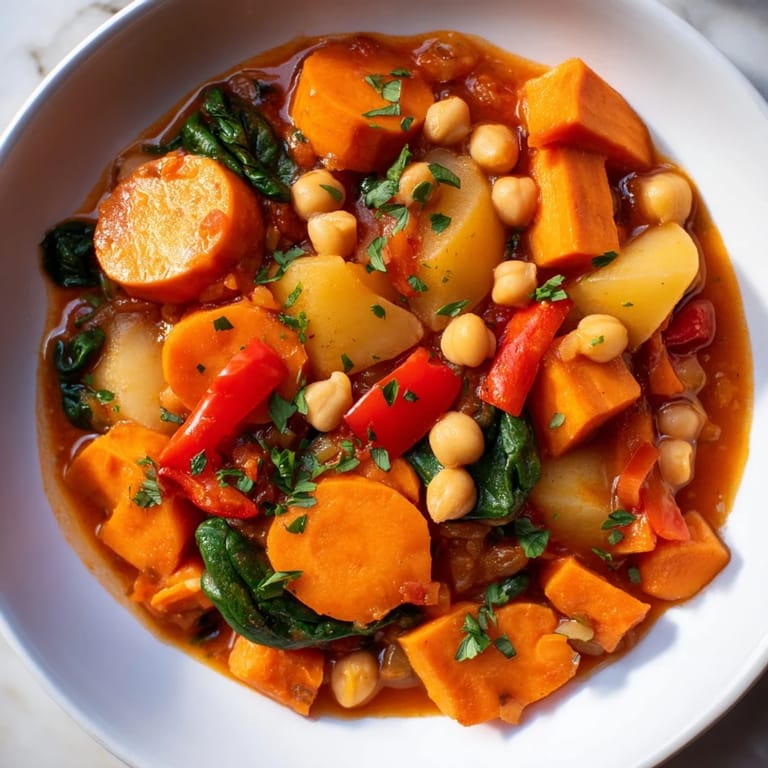
- Sweet potatoes: The real star here—they turn silky when cooked down and give the broth its natural sweetness and gorgeous color.
- Yukon Gold or russet potatoes: These add body and help thicken everything as they break down slightly, creating that creamy texture without cream.
- Carrots and celery: The foundation that makes this taste like someone's been tending to it for hours rather than minutes.
- Onion and garlic: Build your flavor base by letting these soften first—it's the difference between a stew and just hot vegetable soup.
- Red bell pepper and zucchini: Brightness and texture; add them after the base so they keep some personality.
- Cannellini beans and chickpeas: Two types give you variety in bite and texture, plus they're hearty enough to make this feel like a complete meal.
- Diced tomatoes and tomato paste: The paste deepens everything, while the canned tomatoes keep it bright; together they're the soul of the broth.
- Vegetable broth: Quality matters here since it's doing the actual nourishing work—taste yours first to make sure you like it.
- Smoked paprika, thyme, and cumin: This spice trio is almost impossible to mess up; they work together naturally and make the whole kitchen smell like home.
- Bay leaf: Don't skip it or forget to fish it out before serving—it's subtle but essential.
- Olive oil: Just enough to get the vegetables started without making this feel heavy.
Tired of Takeout? 🥡
Get 10 meals you can make faster than delivery arrives. Seriously.
One email. No spam. Unsubscribe anytime.
Instructions
- Build your flavor base:
- Heat the olive oil and let your onion, celery, and carrot soften into sweet submission over medium heat—this takes about five minutes and you'll hear the sizzle change as they relax. This isn't a step to rush; it's where all the depth begins.
- Layer in brightness:
- Add the garlic, bell pepper, and zucchini, letting them toast for a few minutes until fragrant and slightly golden at the edges. You're building flavor on top of flavor here.
- Toast the spices:
- Stir in your sweet potatoes, regular potatoes, paprika, thyme, cumin, pepper, and salt, cooking everything together for two minutes until you can smell the spices waking up. This toasting step is what keeps the seasoning from tasting flat.
- Create the broth:
- Stir in the tomato paste first, letting it cook into the spices for a moment, then add your tomatoes and vegetable broth along with the bay leaf. Bring it all to a boil—you'll see the color deepen and the smell become something serious.
- Let time do the work:
- Reduce heat to low, cover the pot, and simmer for twenty minutes until the potatoes are just tender when you pierce them with a fork—don't let them turn to mush. This is when you can step away and let the stove handle things.
- Add the beans:
- Stir in your beans and chickpeas and simmer uncovered for another ten to fifteen minutes, letting the flavors meld and the broth thicken slightly as the vegetables break down just enough. The longer you let this sit, the more the flavors marry into something greater.
- Finish with greenery:
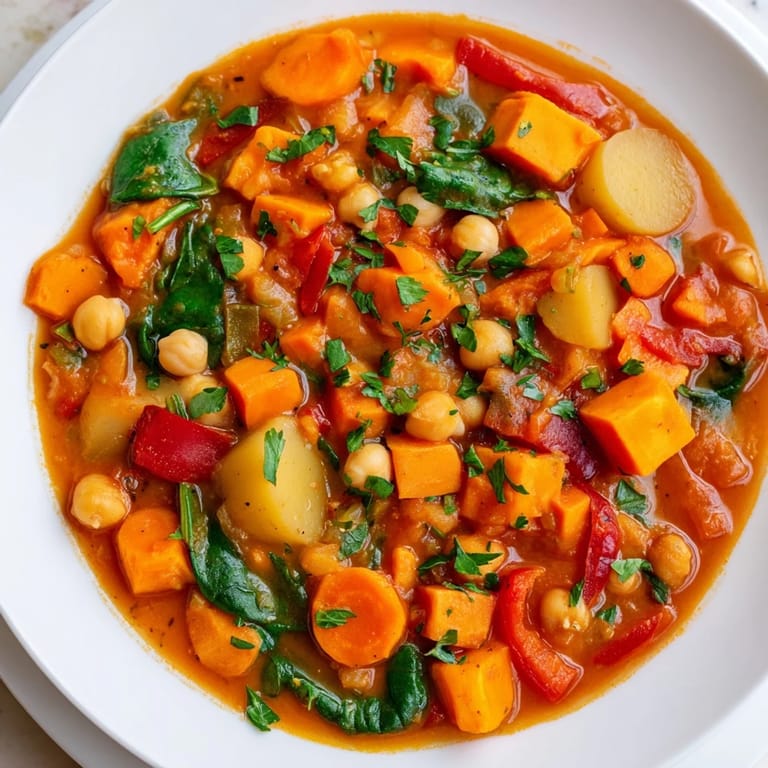
- Stir in the baby spinach if you're using it and cook for just two minutes until it wilts into the warm broth. Remove the bay leaf, taste, and adjust your seasoning—maybe a pinch more salt, maybe a crack of pepper.
 Save to Pinterest
 There's this moment about halfway through cooking when the house smells so good that everyone gravitates toward the kitchen without being called. That's when you know you've made something that feels less like cooking and more like an act of care.
Why This Stew Became My Cold-Weather Default
Honestly, it's because I can make it while doing other things—there's active cooking for maybe twelve minutes, then the pot mostly watches itself. I've chopped vegetables for this while on phone calls, set it simmering while I tidied the bedroom, and come back to something that tastes like I'd been tending to it all day. It's also genuinely better when you make enough for days; the flavors settle and deepen, and having containers of this in the fridge feels like a small victory.
Swapping Things Out Without Losing the Soul
The beauty of this stew is that it's not precious about specific ingredients. Swap the chickpeas for lentils if that's what you have, use regular white potatoes if sweet ones aren't calling to you, or throw in whatever vegetables are looking sad in your crisper. The tomato broth and spice base are strong enough to make any combination feel intentional and delicious. I've made it with kabocha squash in the fall, added mushrooms when I wanted more earthiness, and once threw in an entire head of broccoli because it needed to be used—everything worked.
Serving Ideas and Ways to Make It Your Own
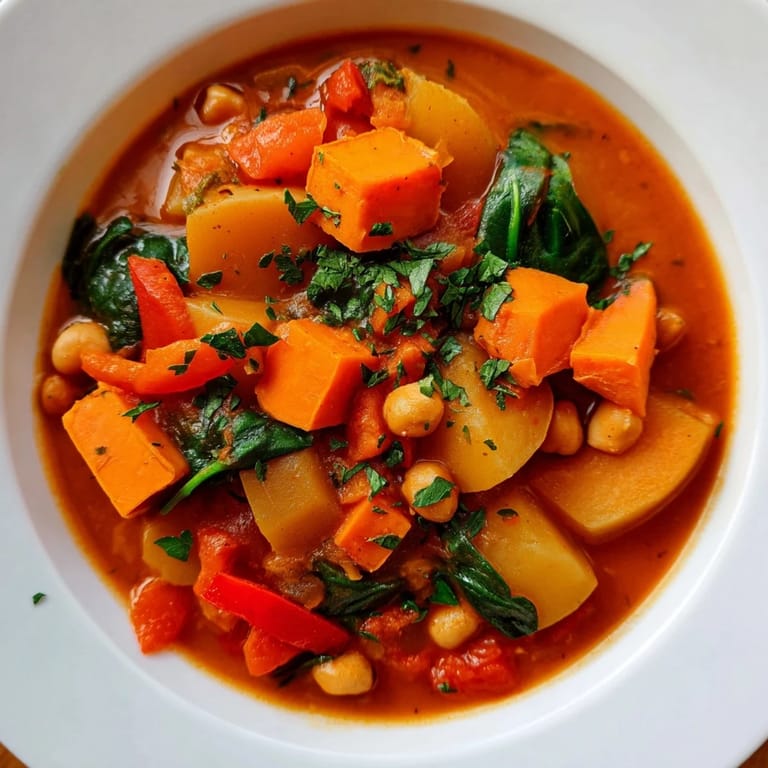
I usually serve this in bowls with a wedge of lemon on the side because that little squeeze of brightness is transformative—it wakes up all the spices without needing any extra salt. Crusty bread is essential for soaking up the broth, and sometimes I layer it over rice if I want something more substantial. Fresh parsley looks beautiful scattered on top, but honestly, even without garnish this tastes like someone put real care into it.
- For heat, stir in chili flakes or a pinch of cayenne at the spice stage and let it bloom in the oil.
- If you want creaminess, blend a portion of the finished stew and stir it back in, or swirl in some coconut milk at the end.
- Make extra and freeze in portions—it reheats beautifully and tastes even warmer the second time around.
 Save to Pinterest
 This stew has become my answer to almost every question about what to cook when it's cold outside and you need something that feels like an embrace. It asks for very little and gives back generously.
Your Questions Answered
- → What vegetables are used in this stew?
Sweet potatoes, Yukon Gold or russet potatoes, carrots, onion, celery, garlic, red bell pepper, zucchini, and optional baby spinach are included.
- → How are the beans prepared before adding?
Canned cannellini or kidney beans and chickpeas are drained and rinsed before being stirred into the stew.
- → Which spices enhance the stew's flavor?
Smoked paprika, dried thyme, ground cumin, black pepper, salt, and a bay leaf provide a warm and aromatic profile.
- → Can this dish be made spicier?
Yes, adding ½ teaspoon of chili flakes will introduce a gentle heat to the stew.
- → What cooking methods are used to prepare the stew?
Vegetables are sautéed initially, followed by simmering in tomato broth until tender and flavors meld deeply.
- → Is it possible to swap any ingredients for variety?
Beans can be replaced with lentils, and seasonal vegetables can be used to adjust the stew according to preference.