 Save to Pinterest
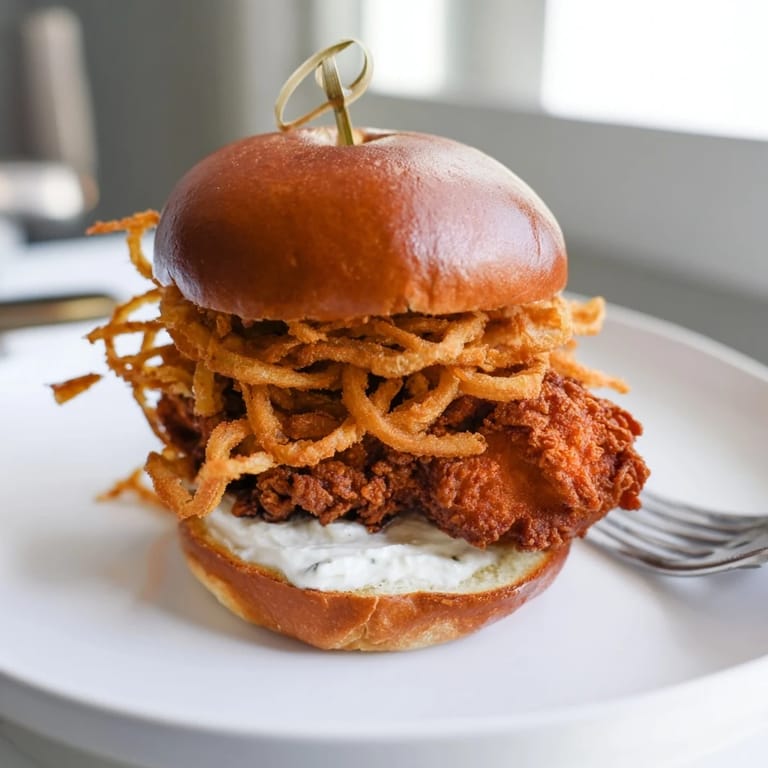
 My neighbor's kitchen window sits directly across from mine, and one Saturday I caught the unmistakable scent of frying onions drifting through the spring air. I leaned out and shouted over, asking what she was making. She held up a towering sandwich, golden and ridiculous, dripping with some kind of creamy sauce. That image stuck with me all week until I finally caved and made my own version. Now it's the sandwich I crave whenever I need something indulgent and completely worth the mess.
I made these sandwiches the night my brother came over unannounced, still in his work clothes and looking defeated. He didn't say much, just sat at the counter while I fried chicken and onions. By the time I handed him the sandwich, wrapped in parchment and leaking aioli, he'd already perked up. He ate two, then asked if I could teach him how to make them. We've been trading recipes ever since, but this one is still his favorite.
Ingredients
- Boneless, skinless chicken thighs: Thighs stay juicier than breasts and handle the high heat without drying out, plus they have more flavor baked right in.
- Buttermilk: The acidity tenderizes the meat and adds a subtle tang that balances the richness of frying.
- Garlic powder and paprika: These give the marinade warmth and a hint of sweetness without overpowering the chicken's natural taste.
- All purpose flour and cornstarch: The cornstarch makes the crust extra light and crispy, almost like tempura but sturdier.
- Smoked paprika: A little smokiness in the breading mimics that charred, grilled flavor even though you're frying.
- Yellow onion: Slice them thin so they crisp up fast and shatter when you bite, adding texture and a caramelized sweetness.
- Mayonnaise: The base of the aioli, creamy and rich, it clings to every surface and pulls all the flavors together.
- Garlic clove and lemon juice: Fresh garlic gives the aioli bite, and lemon brightens it up so it doesn't feel too heavy.
- Dijon mustard: Just a touch adds sharpness and depth, making the aioli taste more complex than it actually is.
- Brioche buns: Soft, slightly sweet, and sturdy enough to hold up under all that chicken and sauce without falling apart.
Tired of Takeout? 🥡
Get 10 meals you can make faster than delivery arrives. Seriously.
One email. No spam. Unsubscribe anytime.
Instructions
- Soak the chicken:
- Whisk the buttermilk with garlic powder, paprika, salt, and pepper until smooth, then submerge the chicken thighs completely. Let them sit in the fridge for at least half an hour so the buttermilk can work its magic and tenderize every fiber.
- Prepare the breading:
- Combine flour, cornstarch, smoked paprika, salt, and pepper in a shallow dish, mixing well with a fork. This mixture will cling to the buttermilk soaked chicken and create that shatteringly crisp crust.
- Coat the onions:
- Toss the thinly sliced onions with flour, salt, and pepper until every ring is lightly dusted. Shake off any excess so they fry up light and crispy instead of clumpy.
- Fry the onions:
- Heat about an inch of oil to 350°F and drop in the onions in small batches, stirring occasionally. They'll turn golden and fragile in just a few minutes, so pull them out as soon as they're crisp and drain them on paper towels.
- Bread the chicken:
- Lift each thigh from the buttermilk, let the excess drip off, then press it firmly into the breading on both sides. Make sure every inch is coated so you get an even, crunchy shell when it hits the oil.
- Fry the chicken:
- Slide the breaded thighs into the hot oil and fry for five to seven minutes per side, until deep golden and cooked through. Transfer them to a wire rack so the underside stays crispy instead of steaming on a plate.
- Mix the aioli:
- Stir together mayonnaise, minced garlic, lemon juice, Dijon, salt, and pepper until smooth and creamy. Taste it and adjust the seasoning, it should be tangy, garlicky, and just a little sharp.
- Toast the buns:
- If you want extra texture, butter the cut sides of the brioche buns and press them into a hot skillet until golden. This step is optional but adds a buttery crunch that holds up against all the moisture.
- Build the sandwich:
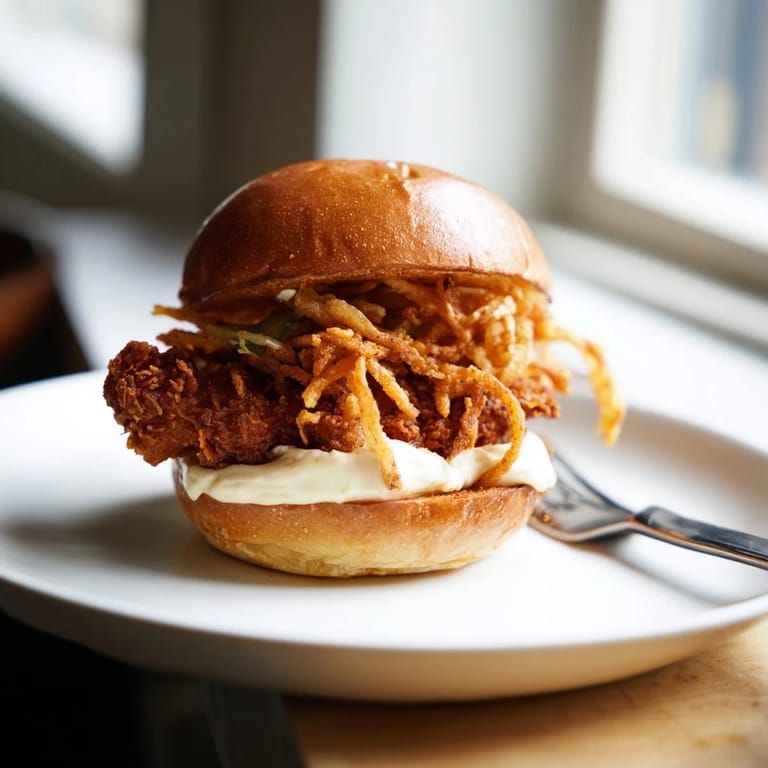
- Spread aioli generously on both halves of each bun, layer with lettuce if you like, then top with a fried chicken thigh and a big pile of crispy onions. Press the top bun down gently and serve immediately while everything is still hot and crunchy.
 Save to Pinterest
 The first time I served these at a casual dinner, my friend picked up her sandwich, took one enormous bite, and then just stood there chewing with her eyes closed. She didn't say a word for a full minute, and when she finally looked at me, she just nodded slowly. That silence said everything. It's the kind of sandwich that stops conversation, and that's exactly what makes it special.
Getting the Crunch Just Right
The secret to that crispy, golden crust is the cornstarch in the breading, which creates a lighter, crunchier texture than flour alone. If you want even more crunch, you can drizzle a tablespoon of the buttermilk marinade into the breading and mix it with your fingers to create little craggy bits that fry up extra crispy. I learned this trick by accident when I was messy one afternoon, and now I do it on purpose every time. Don't press the chicken too hard into the breading or you'll compact it, just a firm, even coat is all you need.
Making It Your Own
This sandwich is incredibly flexible once you understand the base. You can add pickles for brine and tang, swap the lettuce for coleslaw, or drizzle hot sauce directly onto the chicken before piling on the onions. I've made it with jalapeño slices in the aioli when I wanted heat, and once I used thick cut bacon because I had some left over and it was absurdly good. If you don't have brioche, a soft potato bun works beautifully too, just make sure it's sturdy enough to handle all the toppings without falling apart in your hands.
Serving and Storing Tips
These sandwiches are best eaten immediately, while the chicken is still hot and the onions are at their crispiest. If you need to make components ahead, you can fry the chicken and onions a few hours in advance, then reheat the chicken in a 375°F oven for about five minutes to restore the crunch. The aioli keeps in the fridge for up to three days and actually tastes better after the flavors meld overnight. Assemble the sandwiches right before serving, because the moisture from the aioli and chicken will soften the bun if it sits too long.
- Serve with thick cut fries, potato chips, or a simple green salad to balance the richness.
- Wrap any leftovers tightly and store the chicken separately from the buns so nothing gets soggy.
- Reheat leftover chicken in the oven, never the microwave, to keep the crust from turning rubbery.
 Save to Pinterest
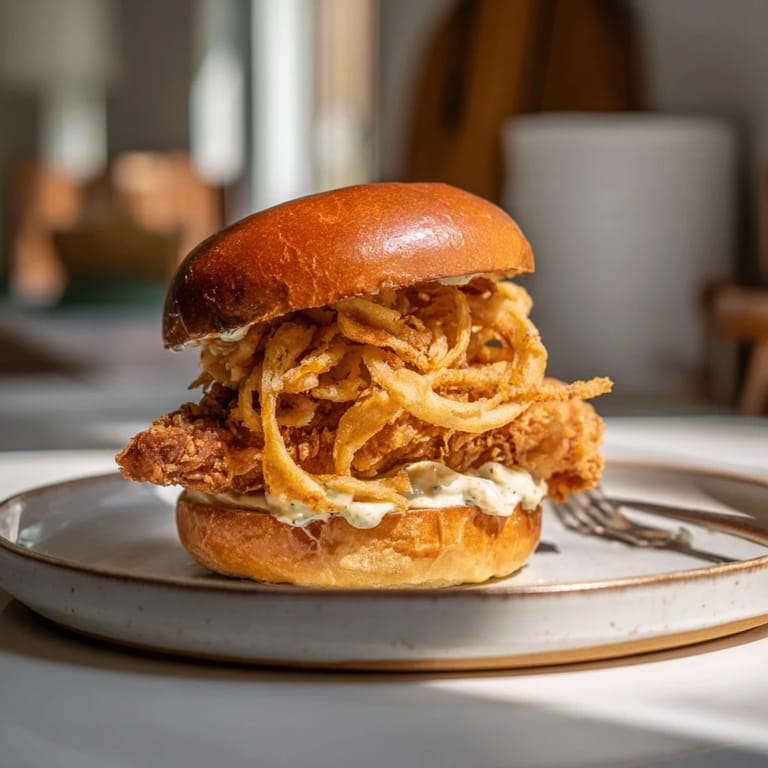
 Every time I make this sandwich, I'm reminded that the best meals don't need to be complicated, they just need to be made with attention and a little bit of love. Serve it to someone you care about, and I promise they'll remember it long after the last bite is gone.
Your Questions Answered
- → How long should I marinate the chicken?
The chicken should marinate for at least 30 minutes, but up to 4 hours in the refrigerator yields the best flavor and tenderness from the buttermilk marinade.
- → Can I use chicken breasts instead of thighs?
Yes, chicken breasts work well as a substitute. However, reduce the cooking time to 4–6 minutes per side to prevent drying out, as breasts cook faster than thighs.
- → What's the ideal oil temperature for frying?
Maintain the oil at 350°F (175°C) for even cooking and optimal crispness. Use a thermometer to ensure accuracy and prevent undercooked or excessively greasy results.
- → How do I keep the fried components crispy?
Drain both the chicken and onions on paper towels immediately after frying to remove excess oil. Assemble the sandwich just before serving to maintain maximum crispness.
- → Can the aioli be made ahead?
Yes, the aioli can be prepared up to 2 days in advance and stored in an airtight container in the refrigerator, making it convenient for meal preparation.
- → What sides pair well with this sandwich?
Serve with pickles, coleslaw, or crispy fries. The cool, tangy sides complement the rich, savory chicken and provide textural contrast.