 Save to Pinterest
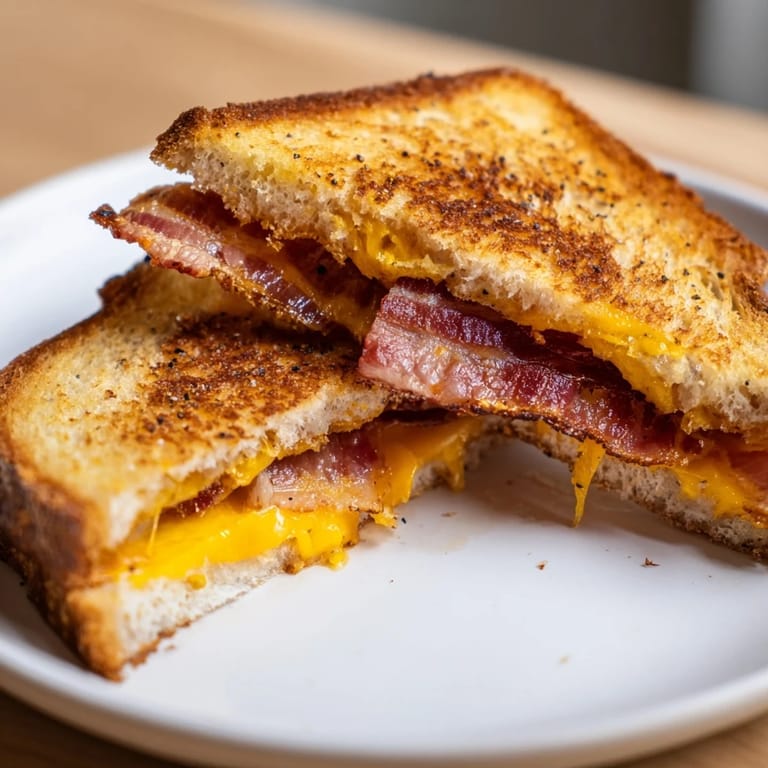
 There's something about the smell of bacon hitting a hot skillet that makes everything feel deliberate and purposeful in the kitchen. I was rushing through a Tuesday lunch, looking for something that wouldn't feel like leftovers, when I caught myself standing still for a moment, just listening to that sizzle. That's when it hit me—why not make this the star instead of a side? Sharp cheddar, crispy sourdough, smoke curling up from the pan. Suddenly twenty minutes felt like a small price for something actually worth eating.
My roommate walked in while I was plating these, took one bite, and just closed his eyes for a second. He didn't say anything at first, just reached for the other half like it might disappear. That quiet moment—when someone stops talking because they're actually tasting what you made—that's the whole reason I make this sandwich now.
Ingredients
- Sourdough bread: The slight sourness stops this from tasting one-dimensional, and the crust holds up to the butter without getting soggy the way softer breads do.
- Sharp cheddar cheese: Don't use mild here—you need that bright, almost sharp edge to balance the bacon and butter or everything blurs together into one heavy note.
- Bacon: Cook it until it's actually snapping between your fingers, not just limp and chewy.
- Unsalted butter: You're in control of the salt, not the butter brand.
- Mayonnaise: Sounds weird, but thin layer on the non-buttered side creates a secondary crust that stays crispy longer.
- Black pepper: A pinch between the layers does more than you'd expect.
Tired of Takeout? 🥡
Get 10 meals you can make faster than delivery arrives. Seriously.
One email. No spam. Unsubscribe anytime.
Instructions
- Render the bacon until it snaps:
- Medium heat, let it take its time so the fat actually cooks out. Rushing this means chewy bacon in a crispy sandwich, which breaks the whole thing. Drain it on paper towels so it stays dry.
- Butter your bread like you're frosting a cake:
- Soft butter spreads thin and even, which is what you want. If you're adding mayo to the other side, keep that layer almost translucent or it won't crisp the same way.
- Build it with intention:
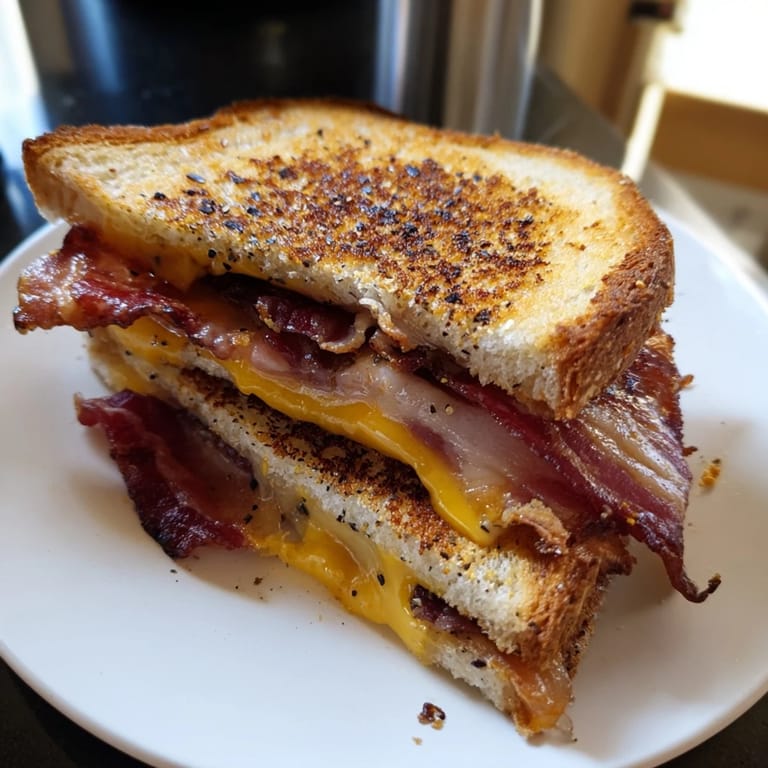
- Cheese first on the buttered bread, then bacon, pepper, then more cheese on top. This sandwich is about layers protecting layers. The cheese on bottom keeps the bread from getting soggy from the bacon's moisture, and the cheese on top melts into the bread on top.
- Medium-low heat keeps the inside warm while the outside crisps:
- This is the moment most people mess up by going too hot. You want golden, not brown. That gentle pressure with your spatula matters—not crushing it, just letting the heat transfer better through your weight.
- Rest it for one minute before cutting:
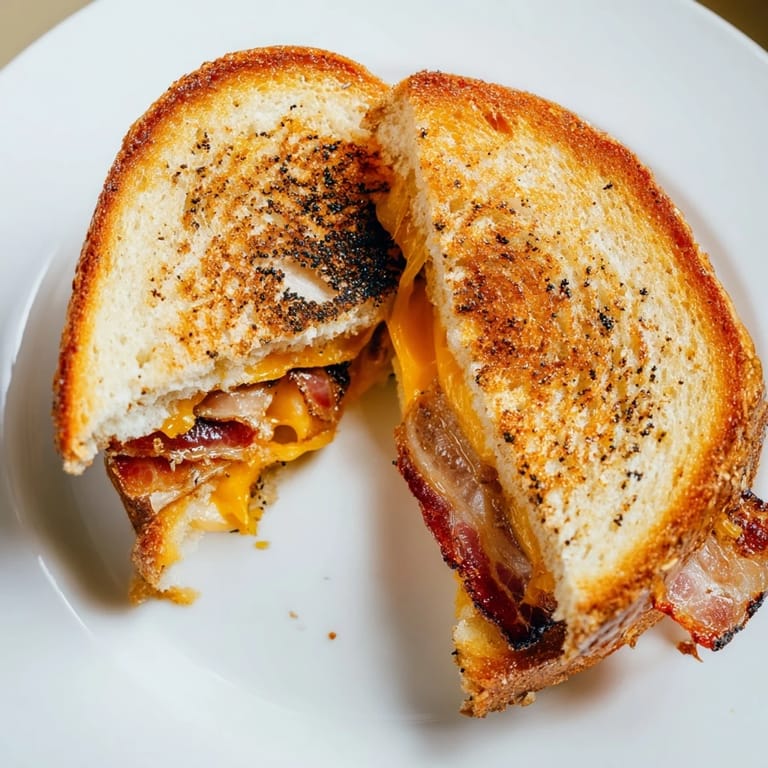
- The cheese is still moving inside the bread when you pull it off the heat. One minute lets it set up just enough that the whole thing holds together when you bite it.
 Save to Pinterest
 My nephew ate three of these at a family dinner and spent the whole meal asking when he could have another one. That's the real victory—not impressing anyone, just making something that tastes like care feels.
Why This Sandwich Feels Different
Most grilled cheese recipes treat the filling like an afterthought, but bacon changes the equation. You're not just melting cheese onto bread anymore—you're building something with texture and smoke and salt that actually wants to stick around. Sourdough gets this in a way other breads don't. The crust matters. The tang matters. Everything matters in a sandwich this simple.
The Cheese and Butter Decision
Sharp cheddar versus mild cheddar is the difference between a sandwich you make and one you actually remember eating. I learned this the hard way, watching someone take a bite of a mild-cheddar version I made and then politely set it down half-finished. The sharpness isn't about being bold for boldness's sake—it's about complexity. It reminds your mouth that something real just happened.
Small Variations That Actually Change Things
The mayonnaise trick came from watching a friend cook, and I was skeptical until I tried it. It creates a crust on the underside that competes with the butter-side crispness, which sounds like overkill until you bite through both sides at once. Caramelized onions add sweetness that softens the sharpness of the cheddar in a way that feels intentional, not accidental.
- Tomato soup on the side isn't just pairing—it's the reason this sandwich became something people ask for.
- Gruyère swaps in beautifully if you want something slightly nuttier and less aggressive than sharp cheddar.
- Keep your expectations real: this is a twenty-minute sandwich, not a quick lunch, and that time is exactly what makes it worth eating.
 Save to Pinterest
 This sandwich reminds me that the best meals don't need to be complicated—they need to be intentional. Twenty minutes of genuine attention beats hours of pretending.
Your Questions Answered
- → What type of bread is best for this sandwich?
Sourdough bread provides a sturdy, tangy base that crisps well, complementing the rich bacon and melted cheddar.
- → How can I make the sandwich extra crispy?
Butter the bread generously and consider adding a thin layer of mayonnaise on the opposite side before grilling for an enhanced crunch.
- → Can I substitute the cheddar cheese?
Gruyère or smoked gouda can be used as alternatives to sharp cheddar for different flavor profiles.
- → What is the best method to cook the bacon?
Cook bacon in a skillet over medium heat until crisp, then drain on paper towels to remove excess fat before assembling the sandwich.
- → Are there recommended additions to vary the flavor?
Adding thinly sliced tomatoes or caramelized onions offers delicious variations that enhance the sandwich’s taste.