 Save to Pinterest
 I remember the first time I assembled a proper charcuterie board for my book club—I was nervous, thinking it had to be complicated. But standing in my kitchen that afternoon, arranging cheeses and fruits with care, I realized the magic wasn't in complexity; it was in thoughtfulness. Each section told a story, and when my friends arrived, their eyes lit up at the sight of it all arranged so intentionally. That's when I understood: a beautiful platter is really just an invitation to slow down and savor together.
I'll never forget hosting book club at my place for the first time and deciding to make this platter. One friend mentioned she'd been intimidated by entertaining, and watching her relax as we all gathered around the board—laughing, eating, talking about the book—reminded me that hospitality isn't about perfection. It's about creating a moment where people feel welcome. This platter became my secret weapon for doing exactly that.
Ingredients
- Triple-cream brie: Choose one that's soft but still holds its shape; the creamy richness pairs beautifully with crisp apples and works magic with Chardonnay
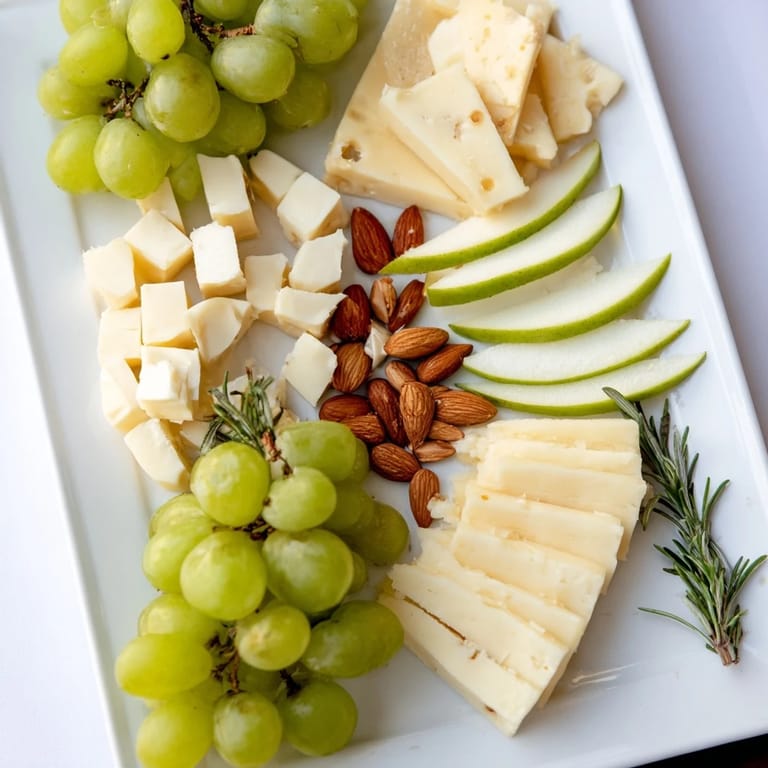
- Gruyère cheese: This nutty, slightly sweet cheese bridges the gap between delicate and bold—cut it into small cubes so people can grab one easily
- Green grapes: They refresh the palate and their slight tartness keeps the section feeling bright; chill them beforehand if you have time
- Crisp apple: A Honeycrisp or Granny Smith works best; slice just before serving and if you're worried about browning, toss lightly with lemon juice
- Marcona almonds: These are roasted and salted, with a buttery texture that's more elegant than raw almonds—they make all the difference
- Aged cheddar: Look for something with real character; sharp, aged cheddar brings depth that cuts through the richness of the red wine pairing
- Smoked gouda: The smoke adds warmth and complexity; slice it thin so people can layer it with meat if they wish
- Prosciutto: Buy it freshly sliced if possible; it should be translucent and delicate, never thick or rubbery
- Salami: Choose a variety you genuinely love—this is where your personal taste shows through
- Cherry tomatoes: Their sweetness and brightness anchor the red wine section beautifully
- Herbed goat cheese: Form it into a small log yourself or find one at the market; the tanginess is essential to the sparkling wine pairing
- Dried apricots: Their natural sweetness plays wonderfully with the delicate nature of rosé; they feel special and considered
- Roasted pistachios: The color and flavor they bring is distinct and sophisticated—worth seeking out
- Mixed olives: Choose ones you'd actually eat; they add a briny, Mediterranean feel to the sparkling section
- Cucumber: Slice it thin and keep it cool; it provides refreshing crunch that balances richer elements
- Baguette: A day-old baguette is actually better than fresh—it won't overwhelm the other flavors and has better structure for holding toppings
- Crackers: Pick a variety of shapes and textures; some plain, some seeded, so people have options
- Fresh rosemary sprigs: These do double duty—they're beautiful and they perfume the whole experience with their aroma
- Honey or fig jam: A drizzle of honey on soft cheese or a dollop of fig jam on aged cheddar elevates everything; these are optional but I never skip them
Tired of Takeout? 🥡
Get 10 meals you can make faster than delivery arrives. Seriously.
One email. No spam. Unsubscribe anytime.
Instructions
- Choose your canvas:
- Start with a large platter or board—marble, wood, or ceramic all work beautifully. The size matters more than the material; you want room to breathe between elements so everything feels intentional and not crowded.
- Create your dividers with rosemary:
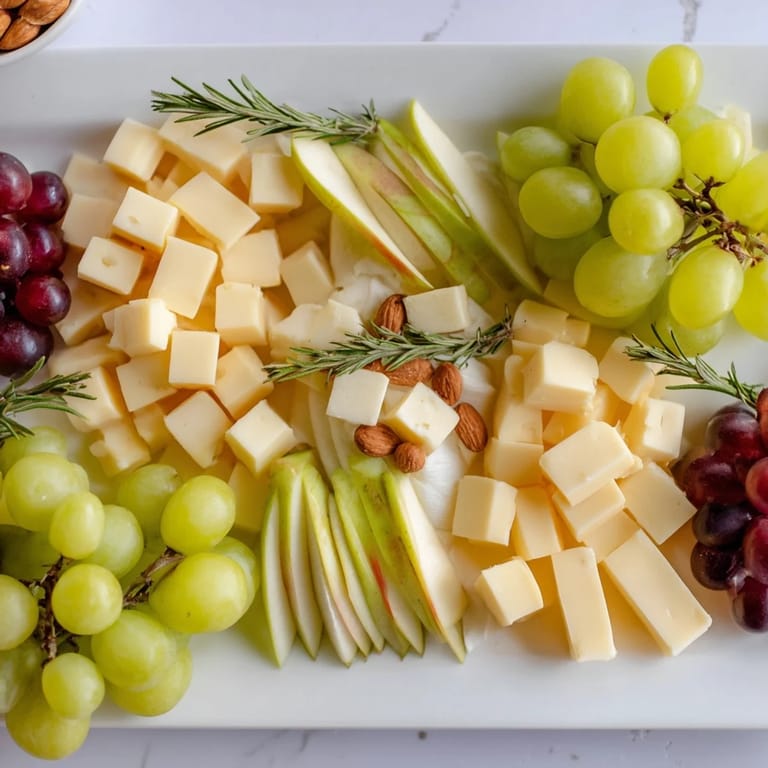
- Lay 3-4 fresh rosemary sprigs across your board to create three distinct sections. Let them guide your eye as you work; they're not just garnish, they're your organizational anchors.
- Build your white wine section:
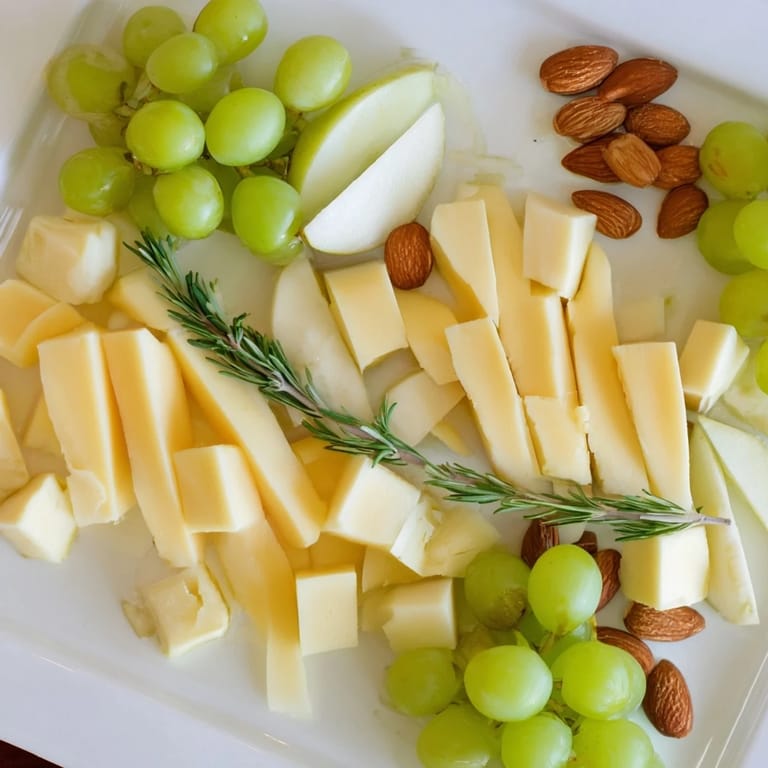
- In the first section, start with the brie and Gruyère, positioning them so they're visible and easy to reach. Scatter the green grapes in small clusters, fan the apple slices to show their fresh cut, and sprinkle the Marcona almonds around. Think about color balance—the creamy whites and pale yellows should feel cohesive.
- Arrange your red wine section:
- This is where you layer flavors and textures. Place the aged cheddar and smoked gouda in separate spots, drape the prosciutto and salami loosely so they look abundant and inviting, and scatter cherry tomatoes to add pops of bright red. Group like things together but not so tightly that they lose their individual appeal.
- Compose your sparkling section:
- Slice your goat cheese log into thin rounds or keep it whole—both are beautiful. Arrange the dried apricots and pistachios in little clusters, add your olives to a small bowl or directly on the board, and scatter cucumber slices. This section should feel bright and effervescent, lighter in presentation than the others.
- Fill in the architecture:
- Now comes the part that feels like puzzle-solving. Tuck baguette slices and crackers into the spaces between cheeses and fruits. They're the infrastructure that lets people navigate the platter with ease, so make sure they're accessible from multiple angles.
- Add your finishing touches:
- Pour honey or fig jam into small bowls and place them strategically—one near the soft cheese, one near the aged cheddar. If you're not using bowls, a simple drizzle is fine. Step back and look at the whole board. Are there gaps that need filling? Is the color balanced? Does it look like you put thought and care into it? Because you did.
- Serve with intention:
- Bring it to the table just before your guests arrive. The beauty of this platter is that it's the opening act—it creates anticipation and sets the tone for what's to come.
 Save to Pinterest
 One of my favorite moments happened when we finally opened that bottle of Chardonnay and my friend—who always said she didn't know anything about wine—took a bite of brie with a green grape and closed her eyes. When she opened them, she just smiled and said, 'Oh, I get it now.' That's what this platter does. It doesn't just feed people; it creates small moments of discovery.
The Art of Cheese Selection
Choosing cheeses for this platter isn't about finding the fanciest or most expensive ones—it's about understanding what each cheese does. The brie brings softness and richness. The Gruyère adds nuttiness and structure. The aged cheddar brings character and boldness. The goat cheese brings tang and sophistication. When you think about cheese as a series of flavors and textures rather than just luxury items, everything becomes clearer. Visit a good cheesemonger if you can; they'll point you toward varieties that are actually good right now, in this season, from actual makers who care about their craft. That's worth more than any fancy label.
Wine Pairing Wisdom
The pairing sections here aren't arbitrary—they're built on real principles. Chardonnay loves creamy textures and delicate flavors; those soft cheeses and fresh fruits are made for each other. Pinot Noir has enough structure to stand up to smoky, salty elements without overpowering fruit; that's why the cured meats and aged cheeses sing with it. Sparkling wine brings acidity and bubbles that refresh the palate between bites; the herbed goat cheese and bright dried apricots play off that effervescence. When you understand the 'why' behind pairings, you can adapt them confidently. Try different combinations. Trust your own taste. The best pairing is always the one that makes you happy.
Making It Your Own
This recipe is truly a template, not a decree. Swap ingredients based on what's at the market, what's in season, what you genuinely love to eat. Prefer manchego to Gruyère? Absolutely do that. Love figs more than apricots? Slice them up. Have vegetarian guests? Simply leave out the cured meats and add roasted vegetables, more cheeses, or candied nuts instead. The structure stays the same—three sections, rosemary dividers, breadth of flavors—but the details become entirely yours.
- Keep at least one soft cheese, one hard cheese, and one funky or tangy cheese in each section so textures stay interesting
- Aim for a color palette that feels intentional rather than chaotic—too many competing colors can make even a beautiful board feel scattered
- Remember that people eat with their eyes first, so take a moment to step back and look at what you've created before anyone else does
 Save to Pinterest
 This platter is proof that entertaining doesn't have to be complicated to be memorable. It's about bringing good things together thoughtfully and creating a moment where people can slow down, taste, talk, and connect. Every time you make it, it'll be a little different—and that's exactly the point.
Your Questions Answered
- → How do I best arrange the platter sections?
Use fresh rosemary sprigs to divide the platter into three sections, then arrange cheeses, fruits, nuts, and meats neatly within each area for visual appeal and flavor balance.
- → What are good substitutions for vegetarian options?
Omit the cured meats and replace them with extra nuts, roasted vegetables, or additional cheese varieties to maintain variety and texture.
- → Which wines complement each platter section?
Section one pairs with Chardonnay or crisp whites, section two suits Pinot Noir or light reds, and section three works well with sparkling wine or rosé.
- → How long can the platter be prepared in advance?
Prepare and arrange the sections up to a few hours ahead, keeping the platter covered and refrigerated to maintain freshness until serving.
- → What role does rosemary play on the platter?
Fresh rosemary acts as a natural divider between sections, adding fragrance and enhancing the visual presentation.
- → Can the nuts or cheeses be swapped?
Yes, feel free to swap nuts and cheeses based on personal preference or availability; just maintain a balance of textures and flavors.