 Save to Pinterest
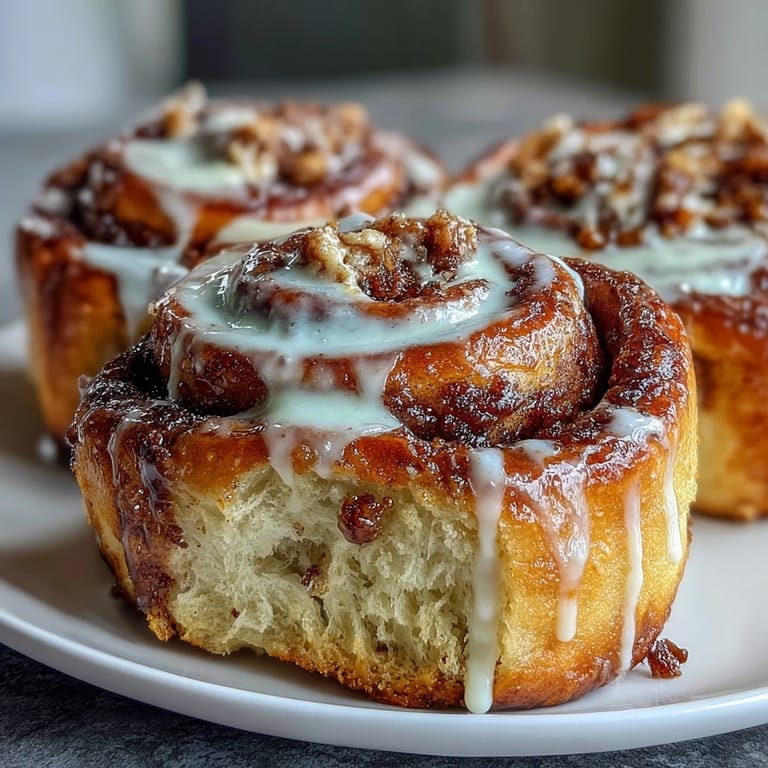
 There's something about the smell of banana bread dough rising that makes a kitchen feel like home, even if you're just learning to bake. My cousin brought these cinnamon rolls to a lazy Sunday brunch last spring, and I watched people's faces light up as they bit into that soft, pillowy dough with its swirl of cinnamon sugar and hint of banana sweetness. The way the warm icing pooled into every crevice felt like a small act of generosity on a plate. I pestered her for the recipe, and now it's become my go-to when I want to impress without spending hours in the kitchen.
I made these for my neighbor's kids one afternoon when they stopped by after school, and they devoured three rolls each while watching cartoons. One of them asked if they were "fancy donuts," and honestly, that felt like the highest compliment I could get. Their mom came to pick them up and ended up staying for coffee, and we talked for an hour while the kitchen still smelled like cinnamon and butter.
Ingredients
- Mashed ripe bananas: Use bananas that are speckled brown—they're sweeter and more flavorful, and the dough will taste noticeably better than if you use ones that are still pale yellow.
- All-purpose flour: Don't sift unless you're feeling precise; I just spoon it into my measuring cup and level it off, and it works beautifully every time.
- Active dry yeast: Make sure it hasn't been sitting in your cupboard for years; old yeast won't rise, and you'll end up with dense, disappointing rolls.
- Warm milk: Think bathwater temperature, not hot coffee; too hot and you'll kill the yeast, too cold and nothing will happen.
- Unsalted butter: For the dough and filling both; salted butter can make the filling taste oddly unbalanced.
- Brown sugar: The molasses in it adds a subtle depth that granulated sugar can't match; pack it gently into your measuring spoon.
- Ground cinnamon: Quality matters here since you're using two teaspoons; cheap cinnamon tastes dusty and flat.
- Powdered sugar and milk for icing: The icing should be pourable but not runny; start with two tablespoons of milk and add more if needed, one teaspoon at a time.
Tired of Takeout? 🥡
Get 10 meals you can make faster than delivery arrives. Seriously.
One email. No spam. Unsubscribe anytime.
Instructions
- Wake up the yeast:
- Pour your warm milk into a large bowl with the yeast and a tiny pinch of sugar, then wait five minutes while it foams up like a little science experiment. You'll know it's working when it smells alive and yeasty, not stale or absent.
- Build your dough:
- Stir in the bananas, melted butter, egg, sugar, and salt until everything comes together, then gradually add the flour while mixing. The dough should be soft and slightly sticky—if it's too dry, your rolls will taste dense and heavy.
- Knead and develop:
- Turn it onto a floured surface and knead for five minutes until it becomes smooth and elastic, stopping when it no longer feels rough. You'll feel the transformation under your hands as the gluten develops.
- First rise:
- Place it in a greased bowl, cover with a damp cloth, and let it sit in a warm spot (like near a sunny window or on top of your preheating oven) until it's doubled, usually about an hour. The dough should nearly fill the bowl when it's ready.
- Roll and fill:
- Punch the dough down with a satisfying force, then roll it into a rectangle on a floured surface—aim for roughly 14 by 9 inches. Spread softened butter across it like you're frosting a cake, then sprinkle with the brown sugar and cinnamon mixture.
- Slice with intention:
- Starting from the longer side, roll it up tightly into a log, then use a sharp knife to cut it into nine equal pieces. A serrated knife works best because it won't compress the dough as it cuts.
- Second rise:
- Nestle the rolls into a greased 9-inch baking dish, cover them loosely with plastic wrap or a cloth, and let them puff up for about 20 minutes while you preheat your oven to 350°F. They should look puffy but not completely merged together yet.
- Golden bake:
- Bake for 25 minutes until they're deep golden brown and feel set when you gently press the top. The edges should be golden and slightly crispy while the centers remain soft.
- Finish with icing:
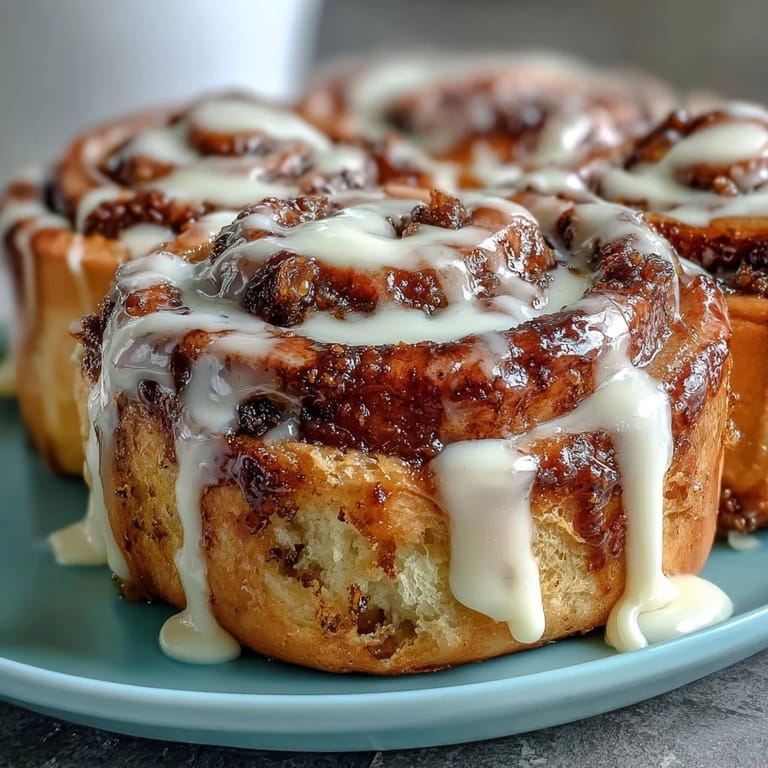
- While they're still warm, whisk together powdered sugar and milk until you have a pourable consistency, then drizzle it generously over the rolls. It'll melt slightly into the warm bread, creating pockets of sweetness.
 Save to Pinterest
 There's a moment every time I make these when the whole kitchen smells so good that I have to pause and just breathe it in before doing anything else. My partner once said that the aroma alone was worth the effort, even before tasting them, and I realized that sometimes the joy is in the process itself, not just the outcome.
The Banana Bread Magic
What makes this different from a standard cinnamon roll is the banana in the dough itself, which seems small until you taste how it transforms the texture. The banana adds moisture and subtle sweetness that lets the cinnamon shine without being overpowered, and it also means these rolls stay tender even if you make them ahead and reheat them gently the next morning. I've made dozens of cinnamon rolls before and after trying this version, and I always come back to this one because the banana feels like a secret ingredient that elevates everything.
Timing and Temperature Tips
The most common mistake I see people make is rushing the rise times or working in a space that's too cold, which means the yeast moves slowly and the rolls come out dense. Temperature truly matters with yeast doughs—if your kitchen is cool, give yourself an extra 15 to 20 minutes on each rise and don't stress about it. I've learned that a slightly longer rise time beats an underproofed dough every single time.
Customizing Your Rolls
These rolls are wonderful on their own, but they're also a canvas for your preferences and what you have on hand. The beauty of a good base recipe is that you can play with it without losing the magic. Consider adding chopped pecans or walnuts to the filling for crunch, or swapping the plain milk icing for a cream cheese version that tastes almost sinfully rich.
- Toast your nuts lightly before chopping them into the filling to deepen their flavor and make them feel intentional rather than an afterthought.
- If you use cream cheese icing, add it while the rolls are just barely warm so it doesn't melt into a puddle but still softens enough to coat.
- You can also brush the warm rolls with a little melted butter before icing if you want them to feel even more indulgent.
 Save to Pinterest
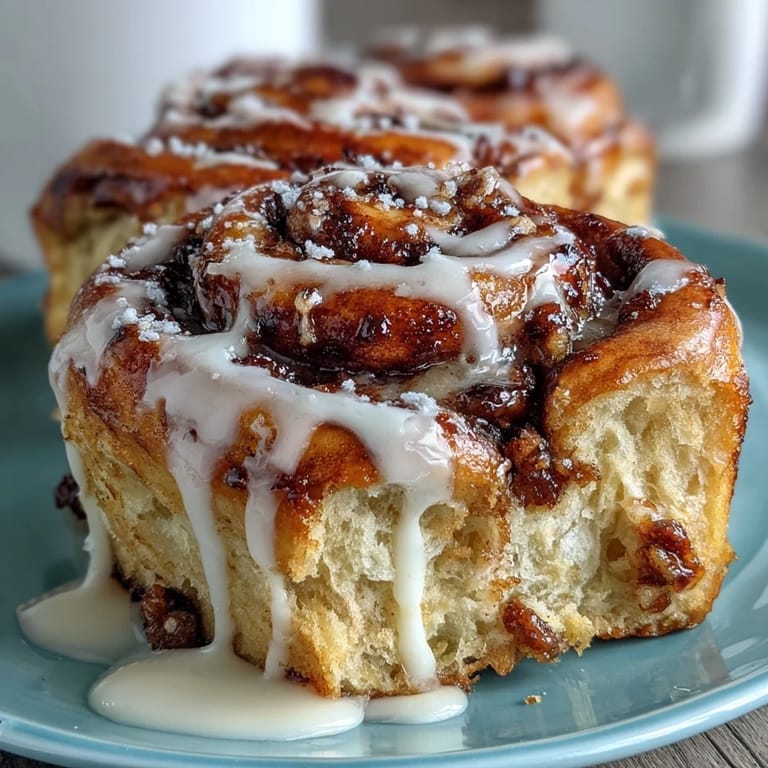
 These rolls have a way of turning an ordinary morning into something worth slowing down for. Serve them warm with coffee, watch people's faces as they take that first bite, and you'll understand why they've become my favorite thing to make when I want to show someone they're worth a little effort.
Your Questions Answered
- → How do ripe bananas affect the dough?
Mashed ripe bananas add natural sweetness and moisture, resulting in a tender, flavorful dough that stays soft after baking.
- → What is the purpose of letting the dough rise twice?
The first rise develops the dough’s structure and texture, while the second rise after shaping ensures light, fluffy rolls with a delicate crumb.
- → Can I add nuts to the filling?
Yes, adding chopped walnuts or pecans enhances texture and flavor, providing a pleasant crunch in the cinnamon sugar filling.
- → How should the icing be applied for best results?
Drizzle the smooth icing over slightly warm rolls to let it melt slightly into the surface, adding creamy sweetness without overpowering the flavors.
- → What baking dish size is recommended?
A 9-inch round or square baking dish works well to contain the rolls and promote even baking with a nicely browned crust.