 Save to Pinterest
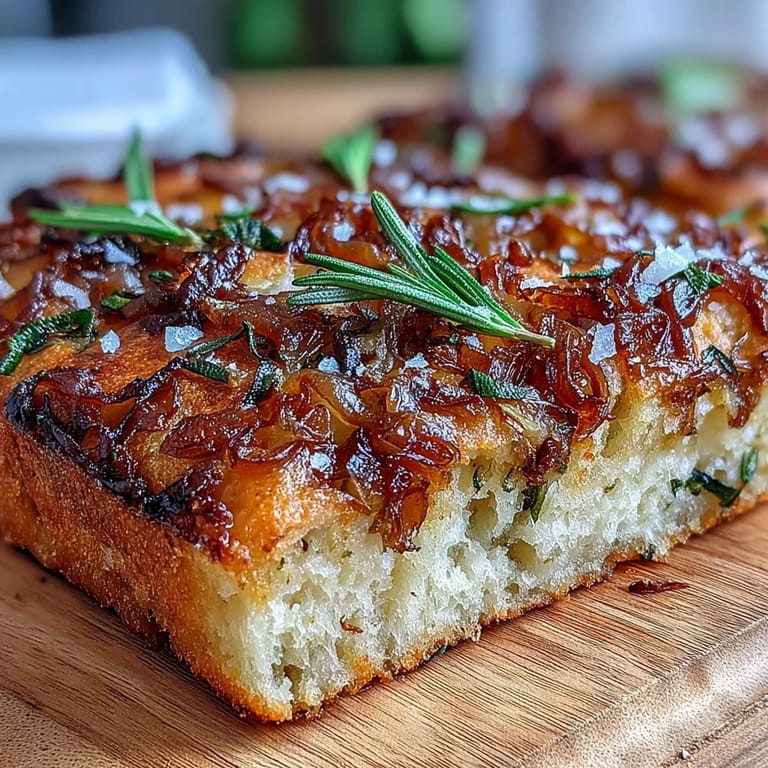
 There's something almost magical about the moment when you pull a focaccia from the oven and hear it crackle as it cools—that sound alone tells you everything worked. My sourdough starter had been bubbling away on the counter for months before I finally trusted it enough to make this, and the first time the dough puffed up overnight in the fridge, I couldn't stop checking on it like it might disappear. That caramelized onion topping came from a lazy Sunday when I had time to actually tend to them properly, letting them turn sweet and mahogany-colored instead of rushing them. This focaccia became my answer to those expensive bakery loaves, except it's somehow better because you watched it transform.
I made this for a friend who kept saying sourdough was intimidating, and watching her tear into a slice with those perfectly dimpled pockets still warm from the oven completely changed her mind. She said it tasted like the focaccia her grandmother made in Liguria, which might have been the nicest compliment I've ever received in my kitchen.
Ingredients
- Active sourdough starter (100 g, 100% hydration): This is your leavening agent and flavor engine—make sure it's bubbly and at peak before mixing, usually about 4–8 hours after feeding depending on your kitchen temperature.
- Bread flour (400 g): The protein content creates that beautiful chewy texture and open crumb you're after; all-purpose will work but bread flour really makes a difference here.
- Lukewarm water (300 ml): Temperature matters more than you'd think—too cold and fermentation stalls, too hot and you'll kill the starter, so aim for about body temperature.
- Fine sea salt (10 g): Added after the autolyse because it would otherwise toughen the gluten development early on.
- Extra-virgin olive oil (20 ml plus more for the pan and topping): Good olive oil isn't just nice here, it's essential—it flavors every crumb and creates that tender crumb structure.
- Yellow onions (2 medium, thinly sliced): The thinner you slice them the faster they caramelize and the sweeter they become; don't skip the low and slow cooking.
- Flaky sea salt (1 tsp) and fresh rosemary (1 tsp, optional): Finishing salts and herbs are where you make this your own—the rosemary adds an herbal note but this is totally customizable based on what speaks to you.
Tired of Takeout? 🥡
Get 10 meals you can make faster than delivery arrives. Seriously.
One email. No spam. Unsubscribe anytime.
Instructions
- Mix and rest your dough:
- In a large bowl, combine your bubbly starter, bread flour, and water—don't overthink it, just stir until everything is shaggy and moistened, then cover and let sit for 30 minutes. This autolyse gives the flour time to fully hydrate and makes the next steps easier.
- Build strength with salt and oil:
- After the rest, sprinkle salt and olive oil over the dough and gently mix until fully incorporated. The dough will feel slippery and loose right now, which is exactly right.
- Develop gluten through stretch and folds:
- Over the next 2 hours, every 30 minutes, grab one side of the dough, stretch it up and fold it over itself, rotate the bowl a quarter turn, and repeat until you've done this 4 times total. By the end you'll feel the dough tighten and become more cohesive—this is gluten development happening in real time.
- Let it rise and double:
- Cover the bowl and leave it at room temperature for 6–8 hours until it's visibly puffy and roughly doubled in size. You're looking for it to feel airy when you gently poke it, not dense.
- Transfer to your pan:
- Oil a 9x13-inch pan generously and carefully turn the dough out into it, trying to keep all those bubbles intact. Gently stretch and press with oiled fingers until it fills the pan—don't stress if it doesn't cooperate perfectly, focaccia is forgiving.
- Cold ferment overnight:
- Cover the pan and refrigerate for 8–12 hours, which develops flavor and makes the dough easier to handle. The cold also helps the dough rise more gently in the oven.
- Caramelize your onions while waiting:
- Heat olive oil in a skillet over medium-low heat, add your sliced onions, and let them cook undisturbed for about 5 minutes, then stir occasionally for another 15–20 minutes until they're completely soft, golden, and smell absolutely incredible. This low-and-slow method is what turns onions sweet instead of just soft—rushing it won't work as well.
- Bring dough to room temperature:
- Remove the pan from the fridge about an hour before baking and let it sit on the counter until the dough feels less cold to the touch. This helps it rise evenly in the oven.
- Dimple, dress, and bake:
- Preheat your oven to 220°C (425°F), then use your oiled fingertips to gently press dimples all over the dough surface. Drizzle with a bit more olive oil, scatter the cooled caramelized onions, flaky salt, rosemary, and pepper evenly across the top, then slide into the oven.
- Achieve golden perfection:
- Bake for 25–30 minutes until the top is deep golden brown and the edges are crispy and slightly darker. The focaccia should sound hollow when you tap the bottom.
- Cool and serve:
- Let it rest for a few minutes so it sets slightly, then slice and serve warm while it's still soft inside with those crispy edges.
 Save to Pinterest
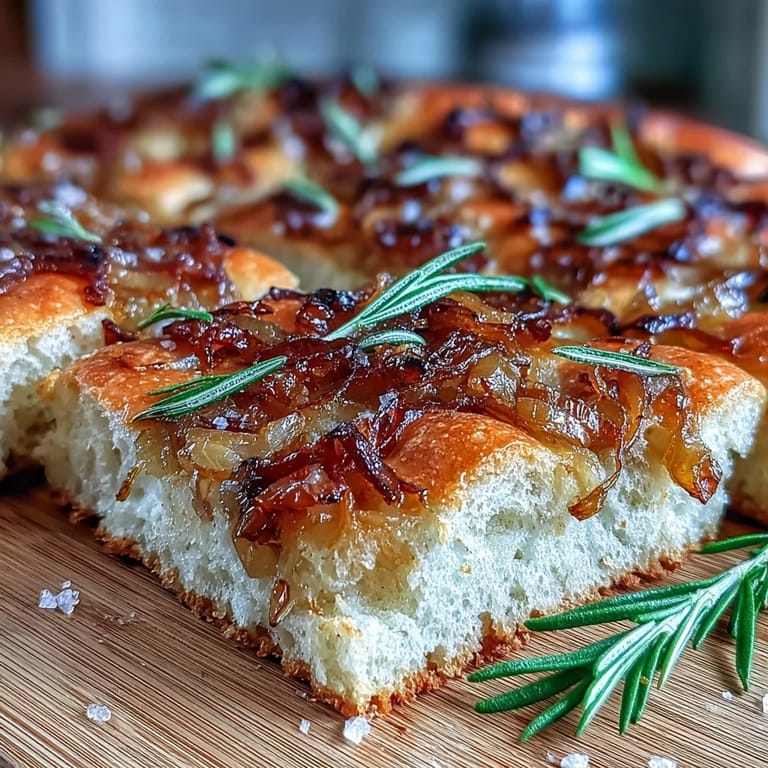
 One afternoon a neighbor stopped by just as I was pulling this from the oven, and the smell alone pulled her inside without invitation. We shared a warm slice with a little good butter, and she asked for the recipe before she even finished chewing—that's when I knew this one was keeper.
The Art of Sourdough Timing
Sourdough lives on its own schedule, which took me a while to accept when I was used to instant yeast and predictable timers. Temperature matters enormously—in a warm kitchen, your dough might be ready in 5 hours; in a cool one, it might take 9. The trick is to watch the dough itself, not the clock, and look for it to increase in volume noticeably and feel airy when you poke it gently. Once you trust this, you stop stressing and start actually enjoying the process.
Making Caramelized Onions Worth Your Time
The first time I tried to caramelize onions quickly on high heat, they just turned soft and slightly brown but tasted sharp and raw inside. Now I understand that medium-low heat and patience are the real ingredients—the onions release their natural sugars slowly and those sugars actually caramelize, creating sweetness and depth that transforms every other flavor on the focaccia. It's worth setting a timer and checking on them every few minutes rather than walking away.
Why Cold Fermentation Changes Everything
That overnight refrigeration isn't just a convenience, it's genuinely better for flavor and structure. The cold slows fermentation to a gentle pace, letting wild yeast develop more complex flavors, and it makes the dough less sticky and easier to handle when you come back to it. Plus, the dough rises more evenly in the oven when it starts closer to cold.
- If your kitchen is very warm, you can even do the initial bulk ferment in the fridge for 6–8 hours instead of at room temperature, then go straight to the overnight rest.
- Don't panic if the dough looks deflated when you pull it from the fridge—it will spring back and puff up significantly as it comes to room temperature and then in the oven.
- Leftover focaccia stays delicious for a couple of days wrapped at room temperature, and warming it in a toaster oven restores that crispy exterior perfectly.
 Save to Pinterest
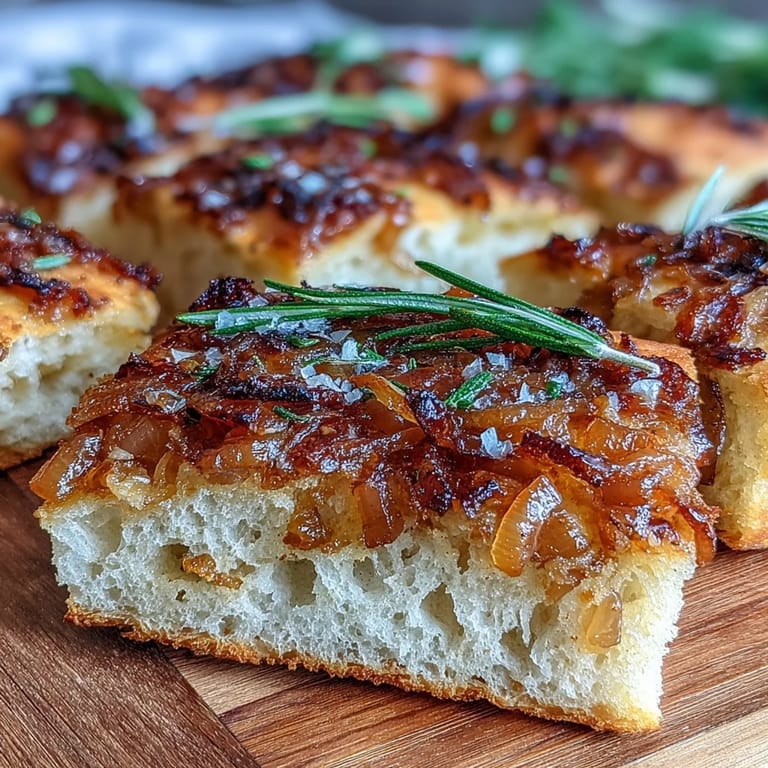
 This focaccia became my proof that patience and good ingredients are worth the wait, and now it's the bread I make whenever I want to impress someone or just remind myself that I can actually do this. Every time it turns out differently because temperature and humidity and my starter's mood all play a role, but that's exactly what makes homemade sourdough worth the effort.
Your Questions Answered
- → How do I caramelize onions for the focaccia?
Slice onions thinly and cook over medium-low heat in olive oil, stirring occasionally for 20-25 minutes until soft, golden, and sweet.
- → What is the purpose of the overnight rest?
Allowing the dough to rest overnight in the refrigerator enhances flavor development and improves the bread's texture and structure.
- → Can I add other toppings besides onions?
Yes, sliced olives or sun-dried tomatoes can be added with the onions for extra flavor variations.
- → How should I store leftover focaccia?
Leftovers keep well when reheated in a toaster oven to restore crisp edges and warmth.
- → What makes this bread chewy and airy?
The combination of sourdough starter, multiple stretch and fold sessions, and a slow rise creates an open crumb with a chewy texture.
- → Is fresh rosemary necessary for the topping?
Fresh rosemary is optional but adds an aromatic, herbaceous note that complements the sweetness of the caramelized onions.