 Save to Pinterest
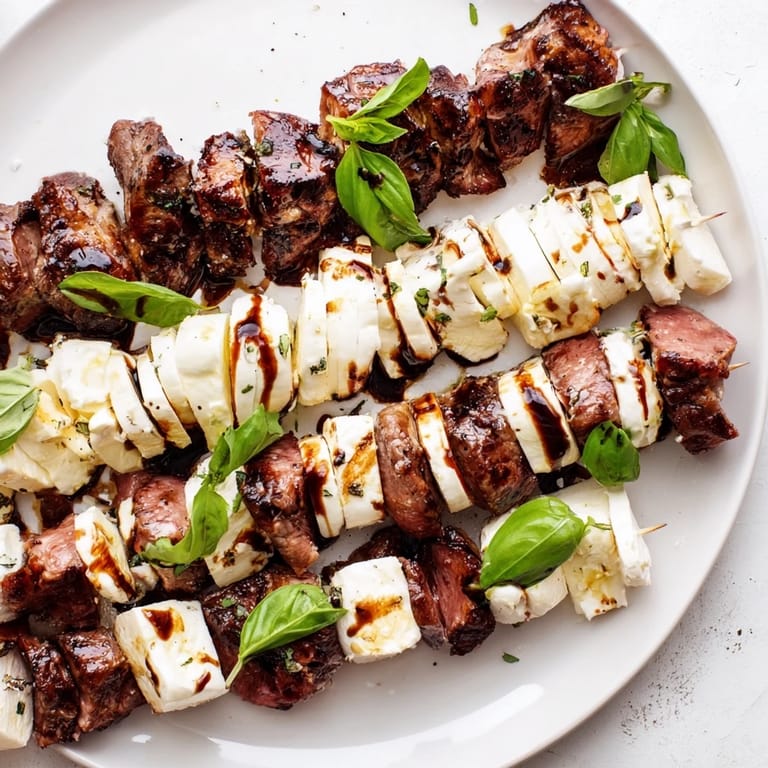
 I discovered this dish by accident at a gallery opening in the city, where a friend's caterer had arranged what looked like edible modern art on the buffet table. The alternating stripes of white cheese and dark glazed meat caught my eye before anything else, and I remember standing there thinking it was too beautiful to eat, then promptly demolishing three pieces. That night, I went home determined to recreate it, and after a few attempts tweaking the ratios and the glaze thickness, I realized how elegantly simple it was beneath all that visual drama.
I made this for a dinner party once when someone asked me to contribute something I'd actually stand by, and I watched my quietest friend go back for seconds without saying a word about it. That's when I knew the balance was right—the cool creaminess of the cheese, the warm salty meat, and that glossy balsamic thread holding it all together created something that just worked without needing any explanation or apology.
Ingredients
- Fresh mozzarella: Use blocks you slice yourself rather than pre-packaged; it has better texture and won't weep as much on the platter.
- Feta cheese: The tanginess cuts through the richness of the meat and keeps the palate from feeling heavy.
- Beef tenderloin: This is the one place where quality matters—thin slicing works only if the meat is tender enough to bite cleanly.
- Chicken breast: Pound it gently to even thickness so it cooks at the same rate as the beef.
- Olive oil: High heat cooking calls for oil that can handle it; don't use your good finishing oil for searing.
- Balsamic vinegar: The reduction is everything here—cheap vinegar stays thin and bitter no matter how long you simmer it.
- Honey: Just a touch rounds out the acidity and gives the glaze that slight sheen that catches the light.
- Fresh basil: Tear it by hand just before serving so the leaves stay green and don't bruise into dark patches.
Tired of Takeout? 🥡
Get 10 meals you can make faster than delivery arrives. Seriously.
One email. No spam. Unsubscribe anytime.
Instructions
- Make the magic glaze:
- Pour your balsamic vinegar into a small saucepan with honey and set it over medium heat. You'll know it's ready when the bubbles slow down and the mixture coats the back of a spoon—usually around 8 to 10 minutes, though every stove is different.
- Sear the proteins:
- Season both meats generously, then get your skillet screaming hot with olive oil. The beef wants just 1 to 2 minutes per side so it stays pink in the middle, and the chicken needs a bit longer until the outside is golden and the inside is cooked through.
- Build the stripes:
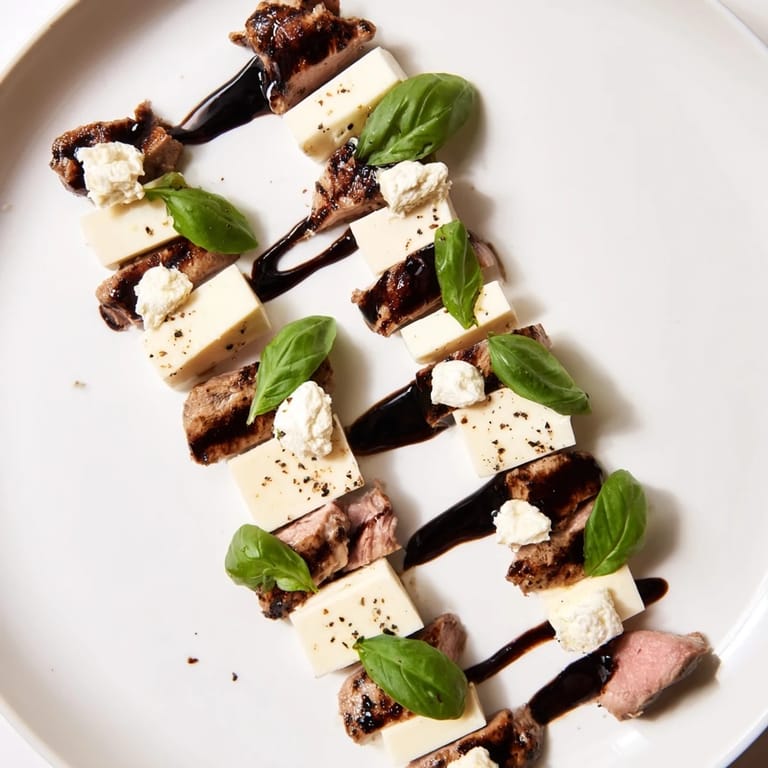
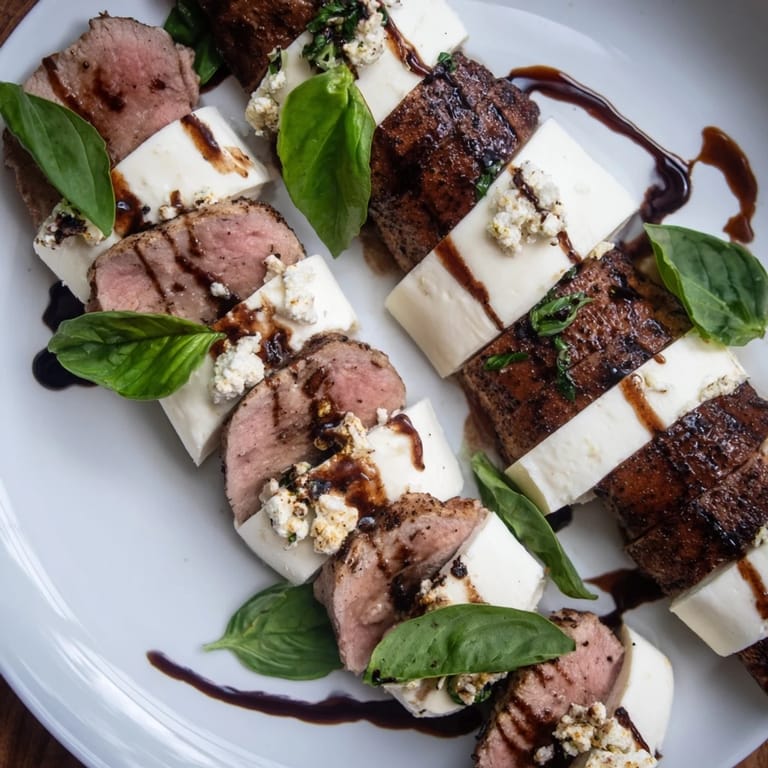
- While the meat is still warm but cool enough to handle, arrange your cheese and meat strips on a platter in alternating rows like you're painting something. The slight warmth of the meat will make the cheese just soft enough to look intentional.
- Finish with the glaze:
- Drizzle that reduced balsamic generously over just the meat strips so the cheese stays pristine and creamy-looking.
- Garnish and serve:
- Scatter fresh basil across the top and crack black pepper over everything. Serve at room temperature so all the flavors can actually be tasted.
 Save to Pinterest
 The first time someone told me this didn't taste like restaurant food because it tasted better, I realized I'd stopped trying to copy what I'd seen and started making something that was actually mine. That's when appetizers stopped being things I stressed over and started being moments to slow down and actually talk to people while eating something beautiful.
Timing and Temperature Matter
This dish lives in the space between hot and cold, and getting that right is what separates it from feeling rushed or confused. The meat needs to cool just enough that it won't immediately wilt the basil or turn the cheese into soup, but warm enough that it still tastes like something alive and freshly cooked. I learned to assemble everything while the glaze is cooling but the meat is still warm enough that I can smell it—that's when the timing is perfect.
Why the Stripes Work
The pattern isn't just for show, though it definitely stops conversations at parties. By alternating cheese and meat, every bite has both elements no matter where someone starts, and the eye naturally follows the lines across the platter. It's also practical—you can eat it with toothpicks, on a small plate, or pick it up with your fingers depending on the setting.
Variations and What They Change
I've made this with prosciutto instead of beef when I wanted something lighter, and it becomes more elegant and less hearty somehow. Smoked turkey works too and brings a completely different mood to the same visual format. The vegetarian version with grilled eggplant or portobello mushrooms is actually my go-to in summer because the char on the vegetables adds something the meat alone can't replicate.
- Prosciutto strips are delicate and don't need cooking—just drape them directly onto the platter.
- Grilled vegetables should be cooled completely or they'll release water and turn the cheese slippery.
- You can make this up to 2 hours ahead, though the glaze is best drizzled right before guests arrive.
 Save to Pinterest
 This is the kind of dish that disappears from the platter and makes people ask for the recipe, which is the nicest compliment any food can get. Make it once and you'll find yourself pulling it out whenever you need something that looks impressive but feels easy.
Your Questions Answered
- → What cheeses are used in Safari Stripes?
Fresh mozzarella and feta cheese sliced into strips provide a creamy and tangy contrast.
- → How is the balsamic glaze prepared?
Simmer balsamic vinegar with honey until it thickens into a syrupy glaze for drizzling.
- → Can I substitute the meats in this dish?
Yes, prosciutto or smoked turkey can be used for different flavors, or grilled eggplant for a vegetarian option.
- → How should the platter be served?
Arrange alternating strips of cheeses and cooked meats on a platter, drizzle with glaze, and garnish with basil.
- → What pairings complement this dish?
Light red wines like Pinot Noir or crisp whites such as Sauvignon Blanc enhance the flavors.