 Save to Pinterest
 I'll never forget the summer my family decided to drive across three states in a beat-up minivan with no snacks planned. By hour four, we were raiding gas station aisles, grabbing processed cookies and stale crackers. That's when I realized there had to be a better way. The next road trip, I packed individual snack boxes with intention—fresh fruits, real cheese, nuts, chocolate—and suddenly those long stretches of highway became moments of joy rather than desperation. The kids actually asked for seconds, and my hands stayed clean. That's when I knew I'd cracked the code to happy traveling.
I remember packing these boxes for my nephew's first long road trip. He opened that little compartmented container and his eyes lit up like I'd given him treasure. When we stopped four hours later, the box was still organized, nothing had leaked, and he actually made it the whole drive without asking if we were there yet. I became the favorite aunt that day.
Ingredients
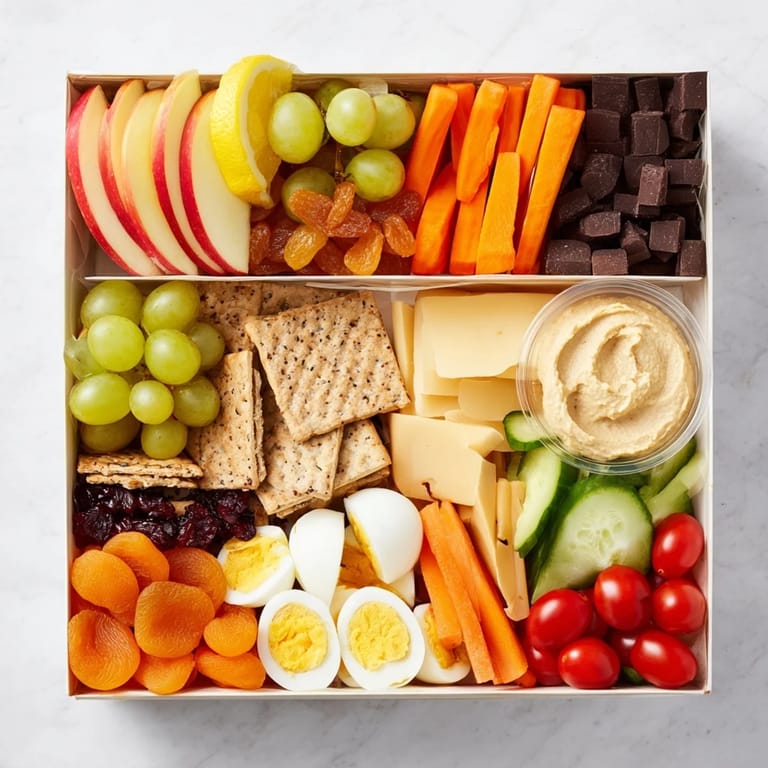
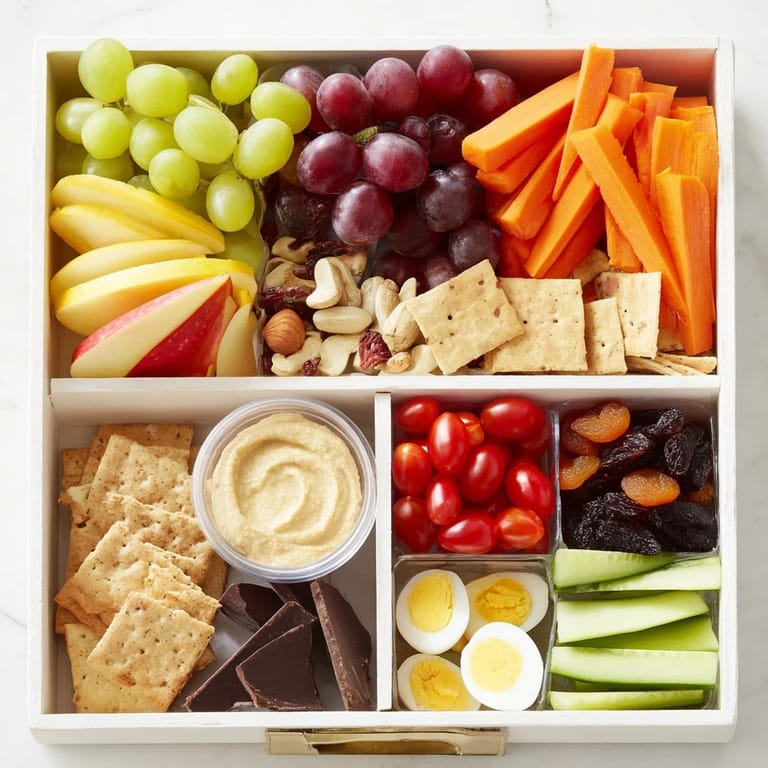
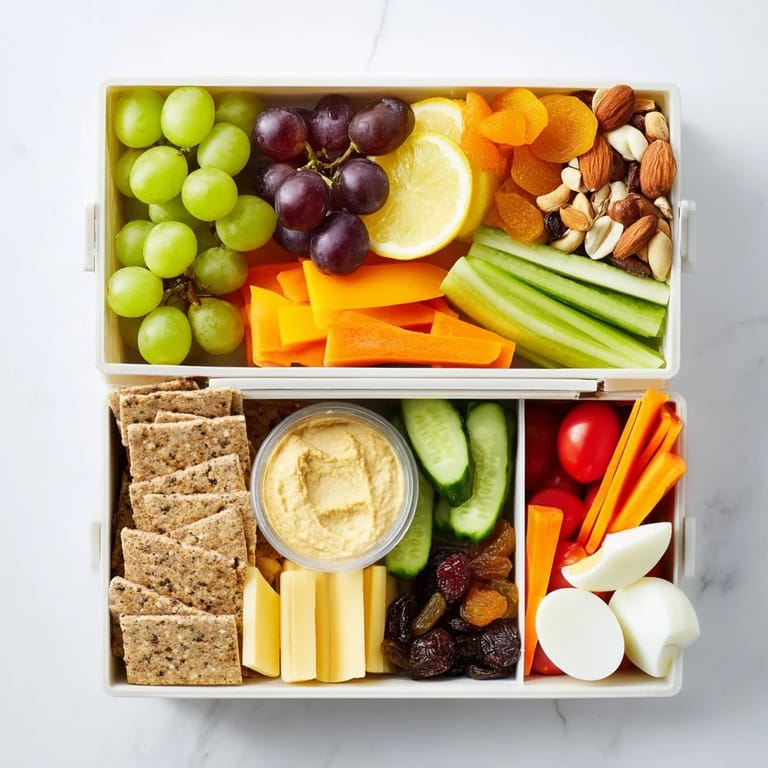
- Fresh Fruits: Seedless grapes (1 cup) stay plump and refreshing without those annoying seeds, and they're sturdy enough not to bruise. A medium apple (sliced and tossed with lemon juice) keeps its color and crispness longer—the lemon juice is your secret weapon against browning. Baby carrots (1 cup) are nature's perfect traveling snack, no prep needed.
- Savory Snacks: Cheese cubes (1 cup, cheddar or Swiss) are the backbone here—they're dense and travel well. Whole grain crackers (1 cup) add satisfying crunch and stay crisp when kept separate from moisture. Mixed nuts (1/2 cup of almonds, cashews, walnuts, unsalted) give you staying power and healthy fats that keep hunger at bay. Hummus (1/2 cup in small containers) is your secret dip that makes everything taste better.
- Sweet Treats: Dried fruit (1/2 cup of apricots, cranberries, or raisins) delivers concentrated sweetness without weighing you down. Dark chocolate pieces or chocolate-covered pretzels (1/2 cup) handle the temperature changes in a car better than milk chocolate ever could.
- Extras: Cherry tomatoes (1/2 cup) add bright freshness and natural hydration. Cucumber slices (1/2 cup) are crisp and cooling on a hot day. Hard-boiled eggs (4, peeled) are protein powerhouses that quiet hunger like nothing else.
Tired of Takeout? 🥡
Get 10 meals you can make faster than delivery arrives. Seriously.
One email. No spam. Unsubscribe anytime.
Instructions
- Prepare Everything with Care:
- Wash your fruits and vegetables first—this is non-negotiable. Pat everything dry because water is the enemy of freshness in a sealed box. Slice your apple and immediately toss it with lemon juice, rubbing it gently so every slice gets coated. This one step will keep your apple looking like you just cut it hours later. Peel your hard-boiled eggs gently under cool running water, starting at the wider end where the air pocket is. Prep your carrots and cucumbers, and have your cheese cubed and ready.
- Build Your Boxes with Intention:
- Grab your divided snack box or bento container—compartments are your best friend here. Think of it like a puzzle where each piece needs its own space. Place the hummus in its leak-proof container first, in a spot where it won't tip if the box shifts. Arrange your foods by type: fruits in one section, veggies in another, nuts and crackers together, cheese separate, and chocolate in a spot where it won't melt against other foods. Leave the chocolate for last—it's the most sensitive to temperature.
- Seal and Chill:
- Close that lid tight and listen for the satisfying click that tells you it's sealed properly. Pop it into the fridge immediately. If you're traveling more than two hours, slip an ice pack into the box or wrap it with a small cooler pad. The cold won't hurt anything, and it buys you extra hours of freshness and safety.
- Hit the Road Confident:
- When hunger hits during your journey, you're ready. Hand out the box, and people can eat directly from the compartments without dishes, without mess, without complicated unwrapping. Everything is right there, exactly where it should be.
 Save to Pinterest
 There was this moment on a long drive through the mountains when traffic stopped unexpectedly for an hour. Everyone in the car was getting cranky, bored, tired. I pulled out those snack boxes, and suddenly we were laughing, sharing bites, discovering that we all loved the same chocolate piece. That box became a thread connecting us in a moment where we could have fallen apart. Food is never just food, is it?
Customization Magic
The beauty of this snack box is that it bends to your family's needs without breaking. Making vegan boxes? Swap cheese for cashew-based cheese or just add more nuts and dried fruit. Have a nut allergy in your group? Roasted chickpeas are crispy, salty, and satisfying in exactly the same way. Planning ahead? Prep all your ingredients the night before and just assemble in the morning for maximum freshness. Want to add protein? Turkey slices, pepperoni, or smoked salmon (if it's a short trip) all tuck into compartments beautifully. The box isn't a recipe—it's a canvas.
Traveling Smart with Food
I learned the hard way that what works in your kitchen fails on the road. Foods need to survive temperature swings, vibrations, time, and the shifting weight of people moving around. Soft foods crack, wet foods leak, and strong-smelling foods take over. So choose ingredients that are naturally travel-resilient: firm fruits, dense proteins, crackers that stay crisp, chocolate that doesn't melt easily, veggies with natural structure. Hard-boiled eggs are genius because they're self-contained protein packages. Cheese is basically made for travel. Nuts don't spoil. These aren't accidents—they're lessons learned through trial and error on highways and backroads.
The Container Matters More Than You Think
Not all snack boxes are created equal, and I've learned this the expensive way. You want something with real compartments—not just a box with loose dividers that shift around. A quality bento-style container or divided snack box becomes an investment in every trip. The seal matters too. A sloppy lid means ice pack water dripping on your cheese, or crackers absorbing moisture from fruit. A good seal keeps everything exactly where you put it. And leak-proof containers for hummus and other dips aren't optional—they're essential. Your car upholstery will thank you. Finally, choose a box that fits your cooler perfectly. An awkward shape gets shoved around, tilted, forgotten. A good fit means it travels safely.
- Invest in quality compartmentalized containers that actually seal properly and fit your travel cooler
- Small leak-proof containers for dips aren't an extra expense—they're insurance against disaster
- Assemble your boxes the morning of travel if possible, or no more than 12 hours before, for peak freshness
 Save to Pinterest
 These boxes are more than a snacking solution—they're a way of saying to the people you travel with that their comfort matters to you. Every time someone opens that perfectly organized container, they're tasting care.
Your Questions Answered
- → How do I keep the snack box fresh during travel?
Use an ice pack inside your container and store it in a cooler or refrigerator until your trip to maintain freshness.
- → Can I substitute ingredients for dietary needs?
Yes, swap cheese for plant-based alternatives, nuts for seeds or roasted chickpeas, and choose gluten-free crackers as needed.
- → What containers work best for packing snacks?
Divided snack boxes or bento-style containers with leak-proof mini cups for dips help keep flavors separate and prevent mess.
- → How can I prepare the fruits to prevent browning?
Slice fresh fruits like apples and toss them with lemon juice to help prevent browning before packing.
- → Are there protein options included in the snack box?
Yes, hard-boiled eggs, cheese cubes, and mixed nuts provide protein, with options to add deli meats for extra protein if preferred.