 Save to Pinterest
 I'll never forget the day we got the keys to our new place. Everything was boxes and blank walls, but I wanted to celebrate with friends anyway. That's when I realized the easiest way to welcome people into a new home wasn't a fancy dinner—it was a beautiful board overflowing with good cheese, crackers, and the kind of food that lets everyone graze at their own pace. No stress, no timing, just genuine hospitality that says 'make yourself at home.'
I remember my mom watching me set up that first board and saying, 'This is exactly what entertaining should feel like.' People naturally gravitated toward it, built their own little plates, had conversations, and somehow the party just flowed. That's when I understood that the most welcoming thing you can do is give people permission to feed themselves with dignity and joy.
Ingredients
- Sharp Cheddar (250 g / 9 oz), cut into blocks: The anchor cheese—bold enough to stand on its own but friendly enough to play well with others. Cut it into generous chunks so people feel like they're getting something substantial.
- Creamy Brie (250 g / 9 oz), cut into wedges: This is your crowd-pleaser, the cheese that even people who think they don't like cheese will reach for. The soft, almost buttery texture makes people feel indulged.
- Manchego (200 g / 7 oz), sliced: A slightly nutty, firm cheese that adds sophistication without pretension. It holds its shape beautifully on the board.
- Blue cheese (200 g / 7 oz), crumbled or in blocks: For the adventurous eaters. A little goes a long way, so don't be shy with it—people who love it will seek it out.
- Smoked Gouda (200 g / 7 oz), cubed: That subtle smoky note makes people pause and ask what it is. It's the conversation starter cheese.
- Assorted crackers (1 large box, 350 g / 12 oz): Mix textures and flavors—some delicate, some sturdy enough to hold jam and cheese without crumbling. This is your base layer of hospitality.
- Baguette, sliced thinly: Toasted or fresh, depending on your mood. Fresh baguette feels more generous and welcoming.
- Breadsticks (1 packet, 150 g / 5 oz): They fill gaps visually and give people who want something lighter an option.
- Red and green grapes (1 cup each), washed and separated into small clusters: The color burst that makes the board look alive. Those little clusters are easier to grab than individual grapes.
- Apples (2), sliced and tossed with lemon juice: The lemon juice is essential—it's not just about preventing browning, it's about keeping them looking fresh throughout the party. No one wants brown apples at their open house.
- Dried apricots (1/2 cup) and figs (1/2 cup): These add jewel-like pops of color and a natural sweetness that balances the salty, savory elements.
- Roasted almonds (1 cup) and walnuts (1 cup): Toasted nuts add crunch and richness. Make sure they're actually roasted—raw nuts don't have the same warmth.
- Honey (1/2 cup) and fig or apricot jam (1/2 cup): Pour the honey into a small bowl; pair it with sharp cheddar or Manchego for a moment of pure joy. The jam does the same with blue cheese.
- Whole grain mustard (1/3 cup): The unexpected hero. It cuts through richness and adds sophistication.
- Cherry tomatoes (1 cup) and baby carrots (1 cup): Fresh vegetables aren't just nutritionally responsible, they provide color contrast and a refreshing counterpoint to all the richness.
- Fresh herbs like rosemary and thyme: A few sprigs scattered around is the difference between a board and a board that looks like it came from a magazine.
Tired of Takeout? 🥡
Get 10 meals you can make faster than delivery arrives. Seriously.
One email. No spam. Unsubscribe anytime.
Instructions
- Start with the cheese foundation:
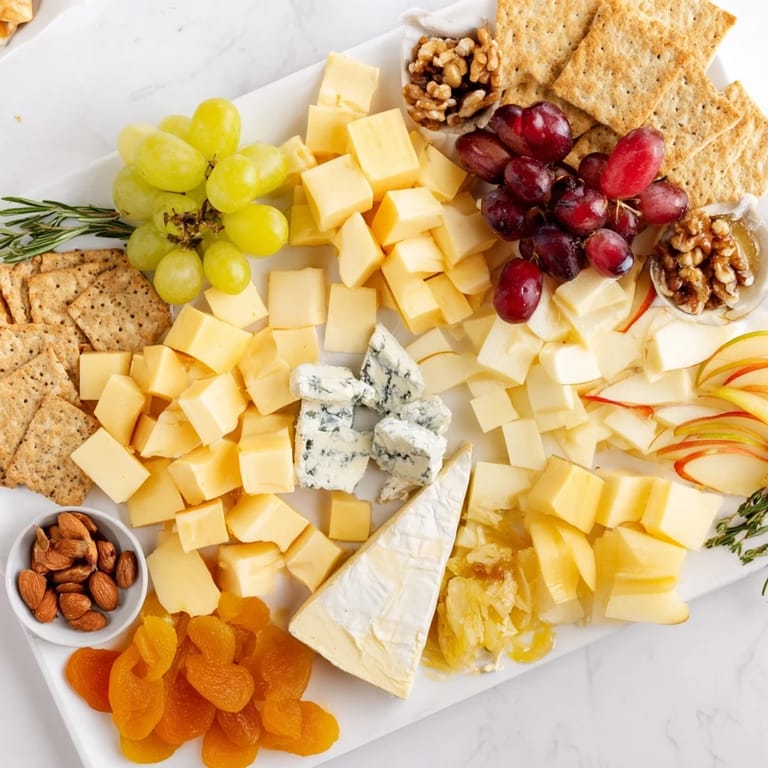
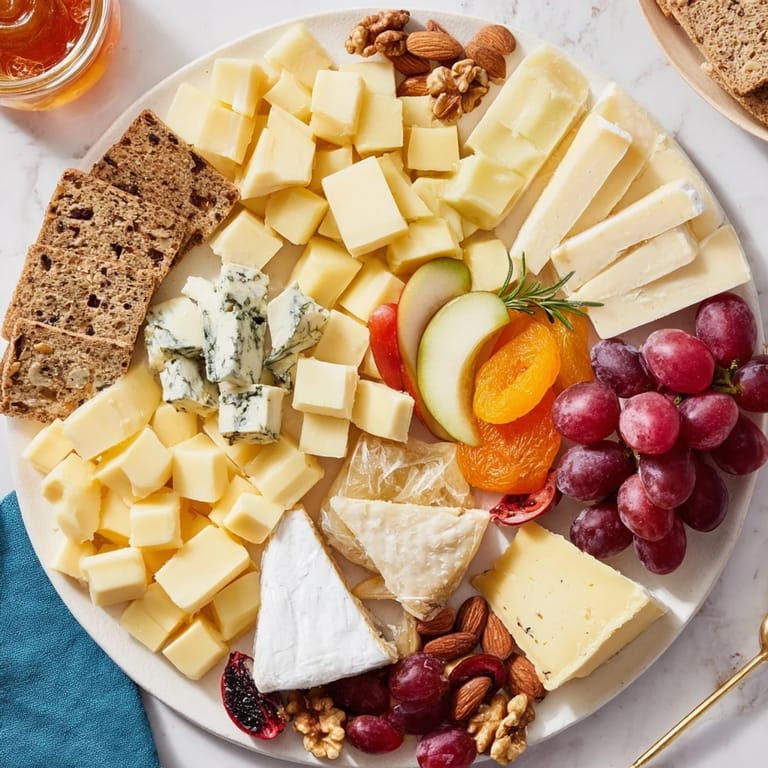
- Arrange your cheese blocks and wedges on your board or platter like you're creating a landscape. Leave space between them—this isn't a puzzle where you're trying to fill every gap. The space is what makes it feel generous and easy to navigate. Put the Brie in an accessible spot because it's going to be the first thing people reach for.
- Build your cracker landscape:
- Now fill those spaces with generous piles of assorted crackers and baguette slices. Don't be stingy here. More crackers than you think you need is the right amount. Layer them slightly so they look abundant and inviting.
- Nestle the fruit around like treasure:
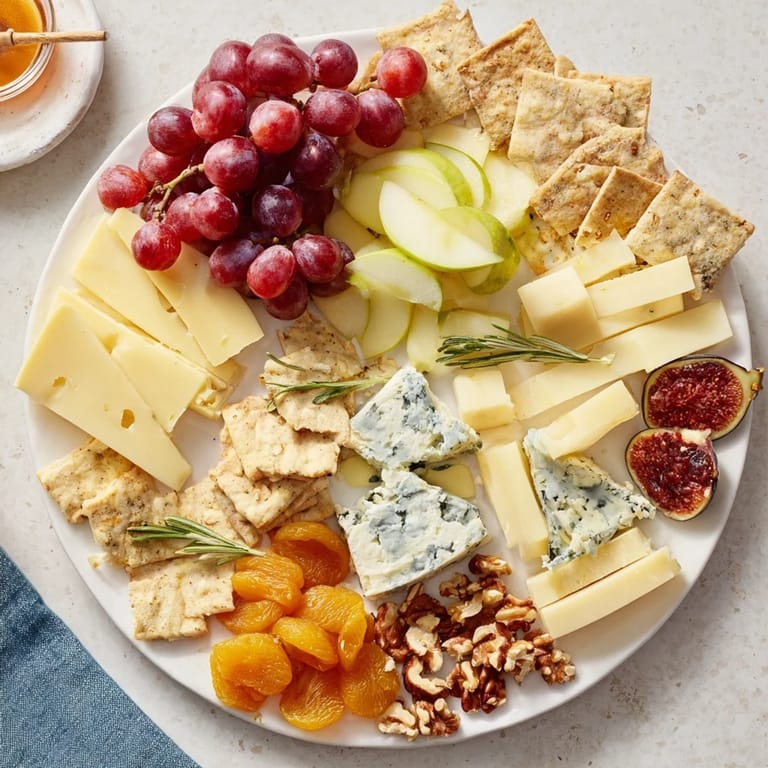
- Tuck grape clusters, apple slices, dried apricots, and figs into the pockets of your board. This is where color happens. Let the reds and golds shine. If something looks a bit sparse, add more fruit—this is not a time for restraint.
- Create little rest stops with nuts and condiments:
- Place small bowls of roasted almonds and walnuts in strategic spots. Put the honey and jam in their own bowls too—these are flavor boosters that deserve their own moment. The whole grain mustard goes in a small dish nearby. These little bowls create rhythm across your board.
- Add fresh vegetables for the final brightness:
- Scatter cherry tomatoes and baby carrots around the board. They're the green and orange that tie everything together visually and give people who want something vegetable-based an obvious choice.
- Crown it with herbs:
- Lay sprigs of rosemary or thyme across the board. This is the final touch that says someone cared about how this looks. The herbs aren't just pretty—they add a subtle aroma that makes people want to lean in.
- Set up the service station:
- Place cheese knives, spreaders, toothpicks, and cocktail forks around the board where they're easy to find. Some people need permission to help themselves, and good tools provide that permission.
- Keep it alive throughout the party:
- About halfway through, take a moment to refresh things. Replenish crackers, arrange fruit that's gotten scattered, top up the honey or jam. A board that's being actively maintained feels more welcoming than one that's been picked over.
 Save to Pinterest
 Someone once told me that hosting isn't about impressing people—it's about making them feel like you were waiting for them. When I realized I could create a board like this and then actually spend the evening talking to guests instead of running around, something clicked. Entertaining became less about performance and more about presence.
The Art of Board Balance
A beautiful board is about proportion and contrast. You want sturdy elements (the cheeses, the nuts) that anchor the space, delicate elements (the herbs, the grapes) that catch light, and flavor elements (the honey, the jam, the mustard) that tell a story. Think of yourself as a composer, not a puzzle-solver. The goal isn't to fill every space—it's to create a rhythm that makes people want to explore.
Customizing for Your Crowd
This board is a canvas. Don't have Manchego? Use a different firm cheese. Someone's gluten-free? Swap regular crackers for gluten-free ones, or add sliced cucumber, which honestly looks beautiful on a board anyway. Prefer different fruits? Use what's in season and what makes you happy when you look at it. The moment you start seeing this as a template rather than a recipe, you'll find yourself naturally customizing it for whoever you're feeding.
Making It Your Signature
The most welcoming entertaining happens when you bring yourself to it. Maybe you add a special jam from a place you love. Maybe you always include one cheese that surprises people. Maybe you tell the story of where each cheese comes from as people gather around. These personal touches transform a board from nice to memorable.
- Include one cheese that's a conversation starter—something with a story or a unique flavor that makes people curious.
- Don't forget the small details like setting out napkins, small plates, or even a beautiful knife for slicing. These practical touches show you were thinking about your guests' experience.
- Remember that the board should look good at the beginning, middle, and end of your party—refresh it not just for quantity but for beauty.
 Save to Pinterest
 Every time someone stands at one of my boards and feels welcome, unhurried, and seen—that's when I know I've done my job. This isn't fancy cooking. It's friendship on a platter.
Your Questions Answered
- → What cheeses work best for this spread?
Sharp cheddar, creamy brie, manchego, blue cheese, and smoked gouda provide a balanced variety of textures and flavors, perfect for mixing and matching.
- → How can I make the spread suitable for gluten-free guests?
Include gluten-free crackers or substitute bread slices with sliced cucumbers or other fresh veggies for those avoiding gluten.
- → What are good accompaniments to enhance the spread?
Fresh and dried fruits, roasted nuts, flavored honeys, jams, and whole grain mustard can add sweet, savory, and tangy notes to complement the cheeses.
- → How should the board be arranged for easy serving?
Space cheese blocks evenly and fill gaps with crackers, fruits, nuts, and vegetables to allow guests effortless self-service with provided utensils.
- → Can this setup accommodate non-vegetarian guests?
Yes, adding cured meats like prosciutto or salami alongside the existing ingredients creates a more expansive offering for varied preferences.
- → What tools are recommended for serving?
Use small bowls for condiments, cheese knives, spreaders, toothpicks or cocktail forks, and serving tongs to facilitate easy guest access.