 Save to Pinterest
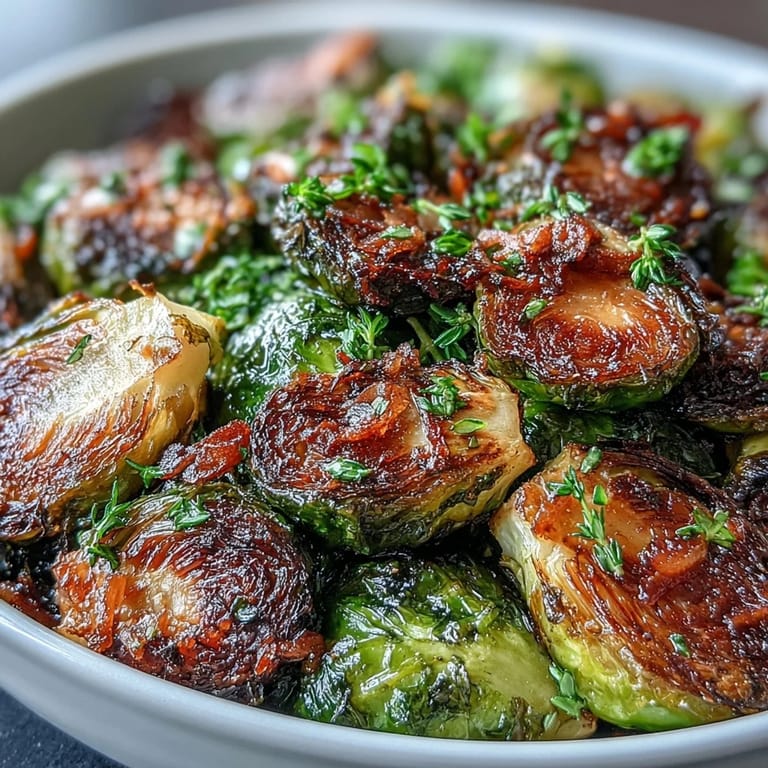
 One autumn evening, my neighbor brought over a bowl of roasted Brussels sprouts that actually tasted like something worth eating. I'd spent years avoiding them, convinced they were inevitably mushy or bitter, but these were golden and snappy with flecks of fresh herbs clinging to each piece. She wouldn't share her recipe at first, just smiled and said it was about treating them right. After some gentle persistence, I finally got her to walk me through it, and that night changed how I cook vegetables entirely.
I made this for my sister's dinner party last spring, and watching her eat three helpings while insisting she doesn't like Brussels sprouts was worth every minute of prep. She kept asking what made them different, and I realized it wasn't magic—just respect for good ingredients and the patience to let them brown properly.
Ingredients
- Brussels sprouts: Choose ones that feel firm and haven't started yellowing; they'll roast more evenly and taste sweeter when they caramelize.
- Fresh parsley: The mild, grassy flavor keeps things fresh without overpowering; dried herbs will taste dusty here, so don't shortcut this one.
- Fresh thyme leaves: Strip them from the stems right before using—they release their oils better and taste cleaner than pre-dried.
- Lemon zest and juice: The zest goes in before roasting so it toasts slightly and becomes almost floral, while the juice finishes the dish with brightness.
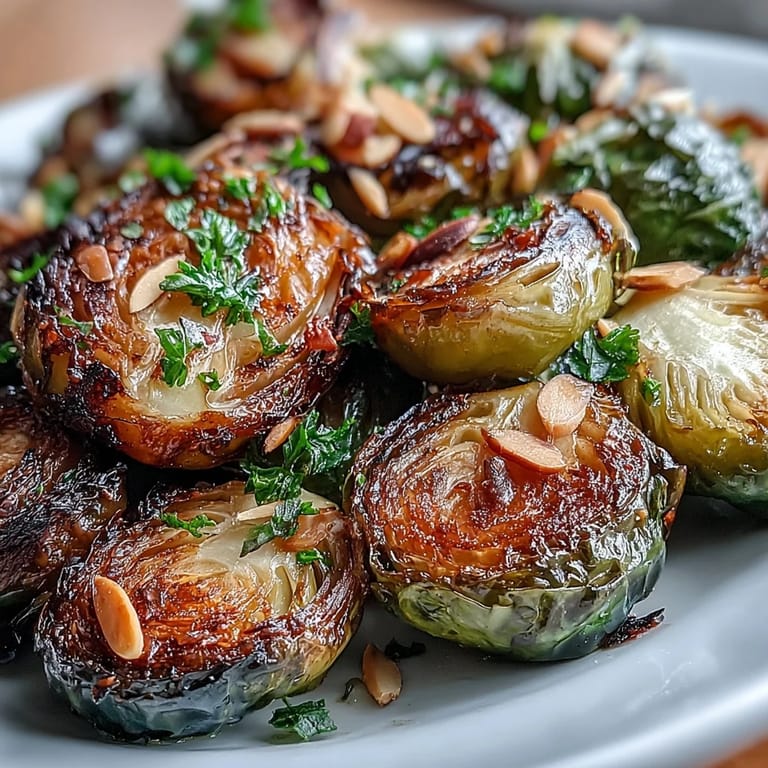
- Sliced almonds: Toasting them separately means they stay crispy instead of softening in the oven's steam; it's a small step that matters.
- Extra-virgin olive oil: A good oil here isn't pretentious—it actually tastes different and makes the difference between good and memorable.
- Sea salt and black pepper: Freshly ground pepper has so much more bite than pre-ground; it's the kind of detail that makes you wonder what you've been missing.
Tired of Takeout? 🥡
Get 10 meals you can make faster than delivery arrives. Seriously.
One email. No spam. Unsubscribe anytime.
Instructions
- Heat your oven and prep:
- Get your oven to 220°C (425°F) and line a baking sheet with parchment paper so everything slides off easily when it's done. This takes just a moment but saves you from scrubbing later.
- Coat the sprouts with love:
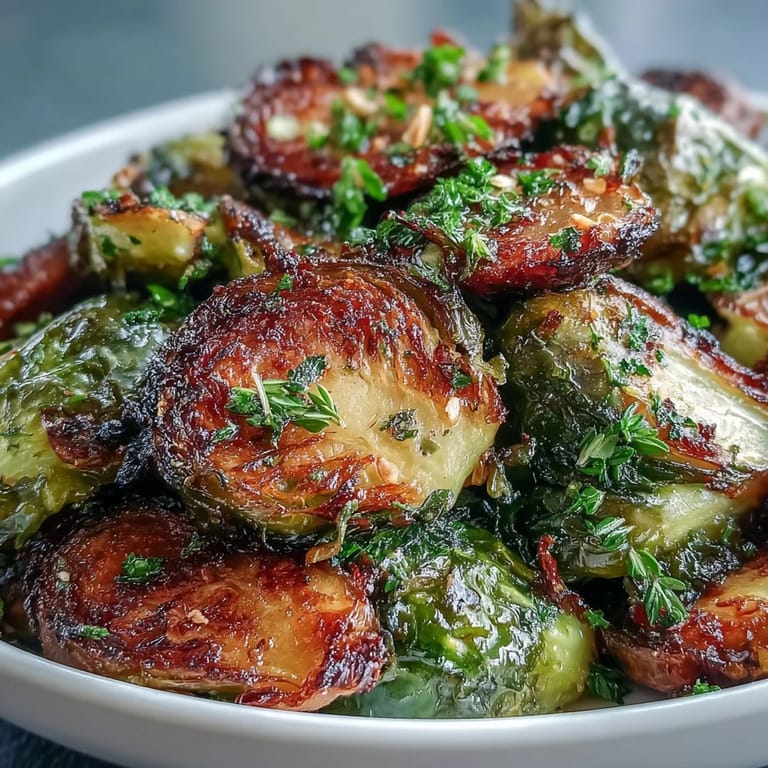
- Toss your trimmed and halved Brussels sprouts with olive oil, salt, pepper, parsley, thyme, and lemon zest in a large bowl until every piece glistens. You want them evenly coated so they all brown at the same pace.
- Arrange and roast:
- Spread them cut-side down on your baking sheet in a single layer—this is the secret to crispiness, as the flat surface makes contact with the hot pan. Don't crowd them; give them room to breathe.
- Stir midway through:
- After about 10 minutes, give the pan a shake or stir them around so they brown evenly on all sides. They should look golden and smell almost nutty when they're ready, around 20 minutes total.
- Toast your almonds alongside:
- While the sprouts roast, warm your sliced almonds in a dry skillet over medium heat, stirring constantly for just 2–3 minutes until they smell fragrant and turn light golden. Watch them carefully—they go from golden to burned in about 30 seconds.
- Finish with brightness:
- Transfer your roasted sprouts to a serving bowl, drizzle with fresh lemon juice, scatter the warm almonds over top, and toss gently. Serve while everything's still warm so you get that contrast of crispy and tender.
 Save to Pinterest
 There was a moment during that dinner party when my sister paused mid-bite and just closed her eyes, and I realized this dish had become more than side—it was proof that the smallest changes in technique transform how we taste things. Now whenever someone says they don't like a vegetable, I think of her and smile.
The Science of Roasting Vegetables
Roasting at high heat creates something called the Maillard reaction, where proteins and sugars interact to create those deep, savory, almost nutty flavors you can't get any other way. It's why your Brussels sprouts taste completely different from steamed or boiled versions—the dry heat caramelizes their natural sugars instead of boiling them away. This recipe respects that chemistry by giving them space and not fussing too much.
Why Fresh Herbs Make the Difference
Fresh herbs have volatile oils that release their brightest flavors when heated gently, which is why you add them before roasting rather than after. The lemon zest toasts alongside everything else, becoming almost candied and intensely fragrant rather than sharp. When you finish with fresh lemon juice at the end, you're layering brightness on top of toasted brightness—one early and mellow, one final and punchy.
Serving Suggestions and Variations
This dish sits happily next to roasted chicken, grilled fish, or even a simple grain bowl, but I've also served it as a room-temperature salad the next day with a handful of crumbled feta. A pinch of red pepper flakes before roasting adds warmth without heat, or you can swap almonds for hazelnuts or walnuts depending on what you have or prefer. The beauty of this recipe is how it adapts while staying fundamentally itself.
- Try a drizzle of balsamic glaze after roasting for a slightly sweet-sour note that feels elegant.
- Add grated Parmesan at the table if you want richness, though the dish is perfectly complete without it.
- Make a double batch knowing leftovers taste wonderful cold straight from the fridge the next day.
 Save to Pinterest
 This recipe taught me that vegetables aren't side dishes waiting to be tolerated—they're the main event when you let them be. Make this once, and you'll understand why my neighbor guards it so carefully.
Your Questions Answered
- → What is the best way to roast Brussels sprouts for crispiness?
Roast them cut-side down on a lined baking sheet at a high temperature (220°C/425°F) for about 20 minutes, stirring halfway to ensure even caramelization and a crisp-tender texture.
- → Can I substitute almonds with other nuts?
Yes, toasted hazelnuts or walnuts work well to add a similar crunchy texture and nutty flavor to the dish.
- → How do fresh herbs enhance the flavor of this dish?
Fresh parsley and thyme add bright, aromatic notes that complement the lemon’s zestiness and enhance the natural sweetness of the Brussels sprouts.
- → Is it important to toast the almonds separately?
Toasting the almonds in a dry skillet brings out their fragrant aroma and deepens their flavor, adding a satisfying crunch to the finished dish.
- → Can I prepare this dish ahead of time?
It's best served warm right after roasting and tossing with lemon juice and almonds, but leftovers can be reheated gently to preserve texture and flavor.