 Save to Pinterest
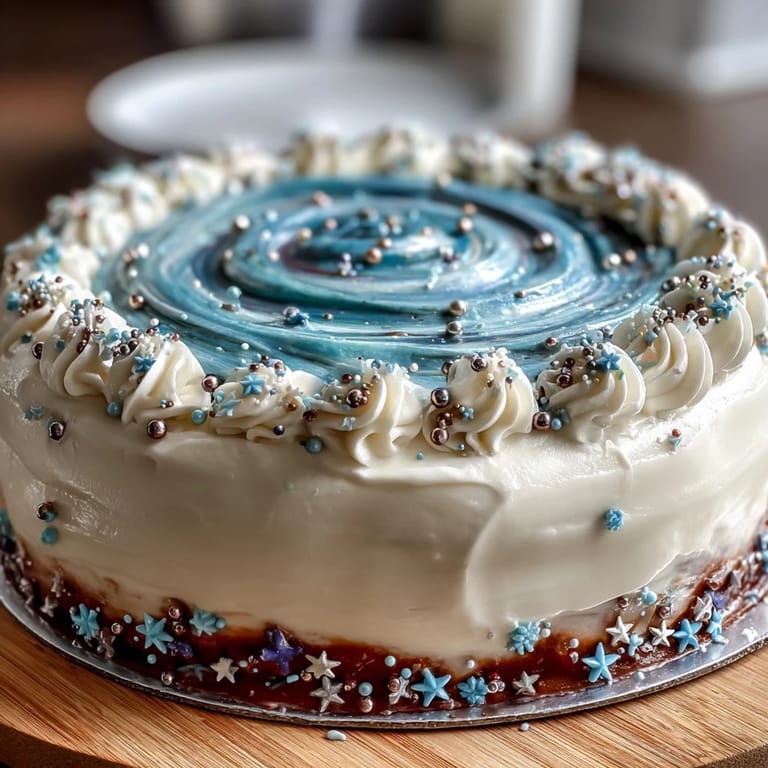
 My friend texted me at midnight asking if I could make her graduation cake, and instead of panicking, I found myself grinning at my kitchen counter imagining something wild—a cake that looked like the night sky itself. I'd never attempted galaxy buttercream before, but there was something about the challenge that felt right for marking such a big moment. By the time I finished, my hands were stained with edible glitter and my kitchen smelled like vanilla and possibility. This cake became the star of her celebration, quite literally.
I'll never forget the moment her mom saw the finished cake sitting on the dessert table—she literally gasped and pulled out her phone to photograph it from every angle. What started as a midnight panic became a three-layer triumph that tasted as good as it looked, and everyone at that party felt the love baked into it. That's when I realized this cake wasn't just about celebrating graduation; it was about showing up for someone in a way that mattered.
Ingredients
- All-purpose flour: Use 2 ½ cups and make sure to measure correctly by spooning and leveling, not scooping straight from the bag—this prevents a dense cake.
- Granulated sugar: 2 cups creates the right sweetness balance without overpowering the vanilla notes.
- Whole milk: Keep it at room temperature so it incorporates smoothly and won't shock the batter.
- Unsalted butter: 1 cup for the cake plus 1 ½ cups for buttercream—softened means it should leave a slight indent when you press it.
- Large eggs: 4 eggs at room temperature blend into the batter without creating lumps or making the texture dense.
- Baking powder: 2 ½ teaspoons is crucial for lift; don't skip or reduce this.
- Salt: ½ teaspoon enhances all the flavors even though you won't taste it directly.
- Vanilla extract: 1 tablespoon plus 2 teaspoons total gives you that classic, comforting backdrop for the buttercream.
- Powdered sugar: Sift the 5 cups before mixing to avoid lumpy buttercream that won't spread smoothly.
- Gel food coloring: Invest in quality black, navy blue, purple, pink, and teal—liquid food coloring will make your buttercream too wet and pale.
- Edible stars and glitter: These aren't just decoration; they're what transform this from pretty to absolutely breathtaking.
Tired of Takeout? 🥡
Get 10 meals you can make faster than delivery arrives. Seriously.
One email. No spam. Unsubscribe anytime.
Instructions
- Prep your pans like you mean it:
- Grease three 8-inch round pans with butter or cooking spray, then line the bottoms with parchment paper cut to fit. This double protection means your layers will release cleanly every time. Preheat your oven to 350°F and let it come to full temperature while you prepare the batter.
- Cream butter and sugar until clouds form:
- Beat the softened butter with 2 cups sugar for about 3 minutes until the mixture is pale, fluffy, and almost looks like frosting itself. This aeration is what makes your cake tender and light.
- Bring in the eggs one at a time:
- Add each egg individually, beating well after each one so it fully incorporates before the next arrives. This prevents a curdled-looking batter and ensures even mixing.
- Add vanilla and dry ingredients in an alternating dance:
- Start with a third of your flour mixture, then milk, then more flour, ending with flour—this pattern helps everything blend smoothly without overdeveloping the gluten. Mix just until combined; overmixing toughens the cake.
- Divide and bake with confidence:
- Pour batter evenly into your three prepared pans and smooth the tops gently. Bake for 30 to 35 minutes until a toothpick inserted in the center comes out clean or with just a few moist crumbs clinging to it.
- Cool with patience:
- Let cakes sit in their pans for exactly 10 minutes so they set slightly, then turn them out onto wire racks to cool completely. Rushing this step risks broken layers.
- Build your galaxy buttercream base:
- Beat softened butter until creamy, gradually add sifted powdered sugar, then milk and vanilla extract, and beat until fluffy and spreadable. This should take about 5 minutes total.
- Tint your cosmos:
- Divide buttercream into four or five bowls and add gel food coloring drop by drop, stirring until each color is deep and vibrant. The colors should look bold in the bowl; they'll mellow slightly when mixed together.
- Create the magical buttercream log:
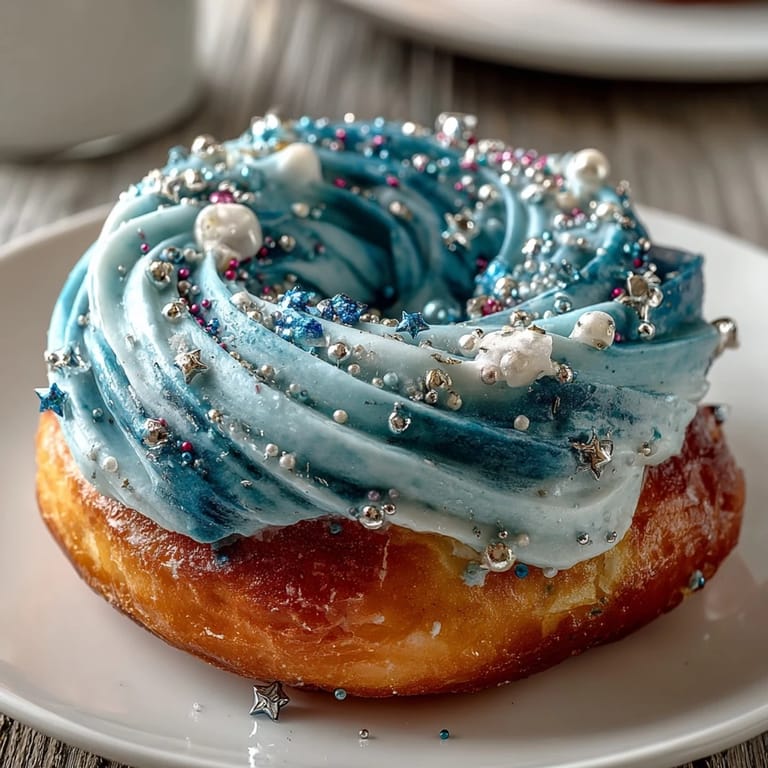
- Spoon random dollops of each color onto a large piece of plastic wrap, keeping them somewhat side by side without fully mixing. Roll the plastic wrap tightly to form a log, then snip one end and pipe it into a large round-tipped piping bag—this creates the organic galaxy swirl effect.
- Layer and crumb coat:
- Place your first cake layer on a serving plate, spread a thin layer of galaxy buttercream on top, then add the second layer and repeat. Apply a thin crumb coat all over the entire cake and chill for 20 minutes so it sets before final frosting.
- Pipe the galaxy effect:
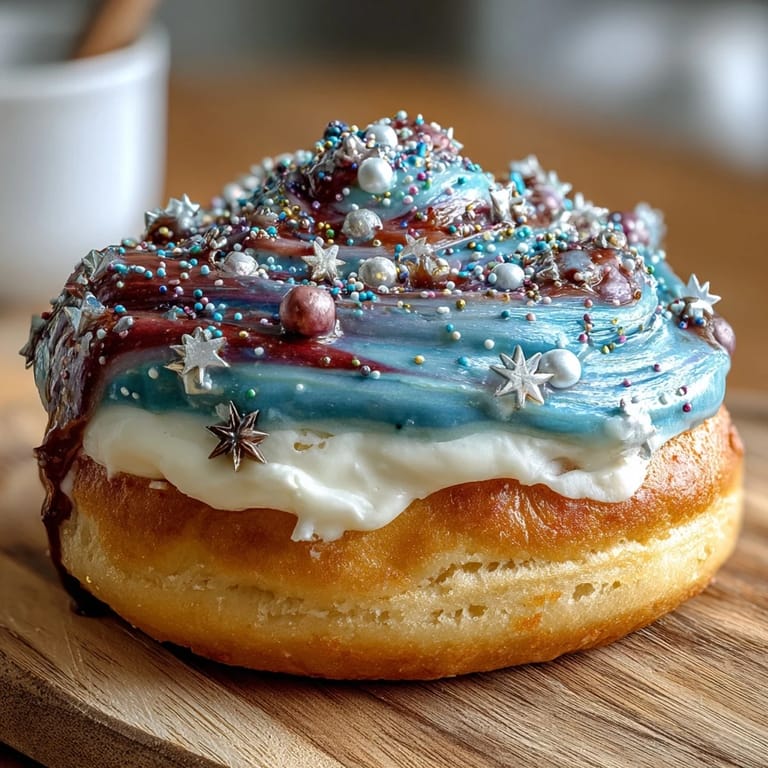
- Pipe the galaxy buttercream log over the crumb coat, then use an offset spatula to swirl and blend the colors gently, creating that marbled nebula look. Don't overthink it—the beauty is in the imperfection and the way colors dance together.
- Hand-paint your stars:
- Mix white gel food coloring with a tiny bit of water to create a paintable consistency, then use a food-safe brush to flick and splatter white stars across the cake's surface. Step back occasionally to see the effect and add stars where the cake feels bare.
- Crown with edible decoration:
- Sprinkle edible gold and silver stars across the cake, then dust with edible glitter or luster dust to catch the light. If using a graduation cap topper, place it proudly on top.
 Save to Pinterest
 The most unexpected part of making this cake was watching someone who'd never baked before attempt their own galaxy design after seeing mine, and honestly, theirs turned out stunning in a completely different way. That's when it hit me that this cake gives you permission to be imperfect and creative at the same time, which feels like exactly the right message for a graduation celebration.
Why the Three-Layer Structure Matters
Three layers might seem like overkill compared to a standard two-layer cake, but there's real logic here. Each layer is thinner, which means they bake faster and more evenly, reducing the risk of doming or uneven browning. When you stack three layers, the cake feels more substantial and impressive without being overwhelming to eat, and there's more surface area for that stunning galaxy frosting to shine.
The Buttercream Log Game-Changer
I discovered this technique by accident while frantically trying to figure out how to marble multiple colors without a fancy tool, and it completely changed how I approach decorative frosting. The plastic wrap log allows you to load different colors side by side, and when you pipe them out together, they ribbon through each other naturally. It's the difference between trying to hand-marble frosting on a cake (messy and time-consuming) and letting the piping bag do the blending for you (fast, forgiving, and genuinely beautiful).
Customizing Your Galaxy
While the color combination I've suggested creates a stunning night sky, your galaxy is yours to design. Some people lean into cooler tones with just blacks, navies, and teals; others add hot pinks and purples for a more cosmic, almost alien vibe. You can even theme the colors to match the graduate's favorite colors or school colors, making it feel personally theirs. The edible decorations are where you really get to play—gold stars feel elegant, rainbow sprinkles feel fun, and a combination of both feels celebratory without being chaotic.
- Mix in edible shimmer dust while the frosting is still soft so it clings better and catches light beautifully.
- If you're nervous about hand-painting stars, practice on a piece of parchment paper first to get a feel for the splatter tool.
- Keep edible glitter sealed in a dry place; moisture makes it clump and lose its sparkle.
 Save to Pinterest
 Making this cake taught me that sometimes the most memorable dishes aren't complicated—they're just ones made with intention and a little bit of creativity. Every time you make this, it'll be different, and that's exactly as it should be.
Your Questions Answered
- → How do I achieve the galaxy buttercream effect?
Divide the buttercream into sections and tint each with gel food coloring in galaxy hues. Roll spoonfuls together into a log and pipe to create swirling marbled colors.
- → What are the best tools for decorating with edible stars?
Use a food-safe paintbrush or splatter tool to flick white gel coloring for star accents, then sprinkle edible gold and silver stars for shimmer.
- → Can I prepare the cake layers in advance?
Yes, bake and cool the layers fully, then wrap and refrigerate until ready to assemble and decorate.
- → Are there alternatives to the edible glitter used here?
You can use luster dust or fine shimmer powders for a similar sparkling effect without altering flavor.
- → What pairing complements this celestial cake?
Pair it with sparkling wine or a fruity punch to enhance the celebratory mood and balance the sweetness.