 Save to Pinterest
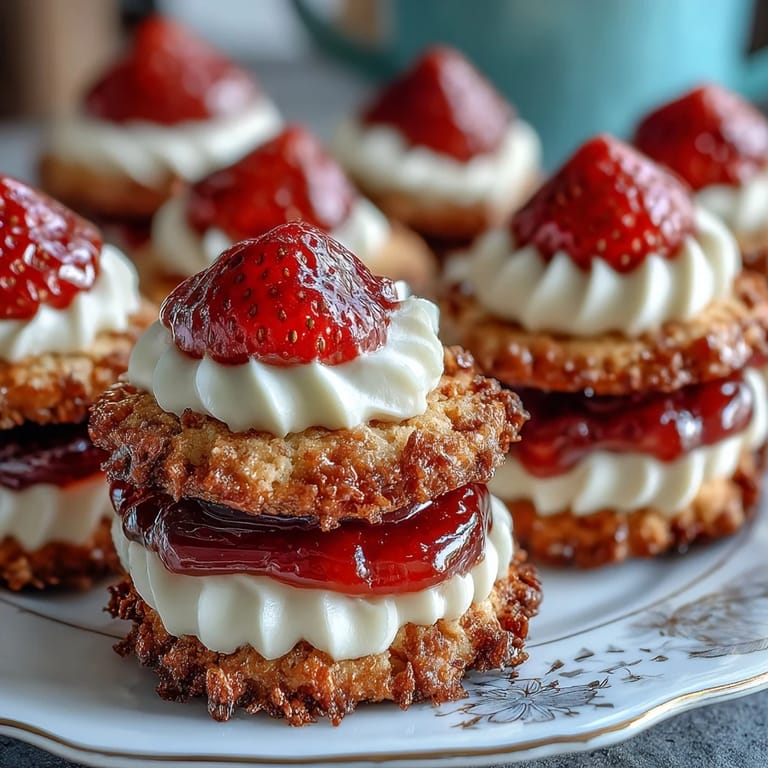
 My neighbor Sarah brought these to a garden party last summer, and I watched three people reach for a second cookie before even finishing their tea. There's something about that combination—buttery shortbread giving way to tangy clotted cream and bright jam—that feels both simple and impossibly indulgent. She refused to share her recipe until I promised to make them for my own gathering, and when I did, I understood why she'd been so protective of it. These cookies have that rare quality of tasting fancy without demanding anything beyond basic kitchen skills. Now they're my go-to when I need to impress without stress.
I made these the morning before my mother-in-law's visit, and they filled my entire kitchen with this warm, vanilla-tinged aroma that somehow made everything feel more welcoming. When she arrived, she took one bite and got quiet for a moment—the kind of quiet that means something registered. Later she asked if I'd learned to bake properly, which from her was practically a standing ovation. That single batch became the reason she now asks for them by name whenever she visits.
Ingredients
- All-purpose flour (2 cups): The foundation of tender shortbread; make sure it's spooned and leveled rather than scooped directly from the bag, which packs it down and makes cookies tough.
- Fine sea salt (1/4 tsp): Barely-there but essential; it brightens the buttery flavor without tasting salty and prevents the cookies from tasting flat.
- Unsalted butter (1/2 cup, softened): Softened means you can press it with your finger and it leaves a slight indent—too warm and the dough becomes greasy, too cold and it won't cream properly.
- Granulated sugar (1/2 cup): Dissolves quickly during beating to create that pale, fluffy texture that gives these cookies their tender crumb.
- Egg yolk (1 large): The yolk alone creates richness without the whites making the dough tough; room temperature yolks mix in more smoothly.
- Pure vanilla extract (1 tsp): Don't skip this or use the imitation kind; it's what transforms buttery shortbread into something that tastes like a proper bakery cookie.
- Clotted cream (1/2 cup): If you can't find it, crème fraîche works beautifully and honestly adds a subtle tang that I've come to prefer; mascarpone is richer but also works.
- Strawberry jam (1/3 cup): Use a good quality jam with real fruit; the cheaper varieties can taste artificial and throw off the whole balance.
Tired of Takeout? 🥡
Get 10 meals you can make faster than delivery arrives. Seriously.
One email. No spam. Unsubscribe anytime.
Instructions
- Heat your oven and prepare the stage:
- Set your oven to 350°F and line two baking sheets with parchment paper—this matters more than you'd think because it prevents the delicate bottoms from browning too quickly. Working on two sheets means you won't be cramped for space and each cookie gets room to bake evenly.
- Combine your dry ingredients:
- Whisk the flour and salt together in a medium bowl, breaking up any tiny clumps; this distributes the salt evenly so you won't taste salty pockets in the finished cookies. Set it aside and take a breath—you're about to build the real magic.
- Cream butter and sugar until pale and fluffy:
- This takes about 2 to 3 minutes with an electric mixer on medium speed, and you'll see it transform from a dense paste into something almost cloud-like. It should look noticeably lighter in color; this is where air gets incorporated, making the cookies tender rather than dense.
- Add egg yolk and vanilla, beating until smooth:
- The yolk will look slick and separated at first, but keep beating for another 30 seconds or so and it'll become a cohesive, glossy mixture. This step takes less than a minute but it's where the dough stops being basic and starts tasting rich.
- Fold in the dry ingredients gently:
- Add the flour mixture gradually while mixing on low speed, scraping down the bowl halfway through; don't overmix or the cookies will be tough and dense rather than tender and delicate. You're done when you don't see any white flour streaks anymore.
- Roll dough into balls and create the thumbprints:
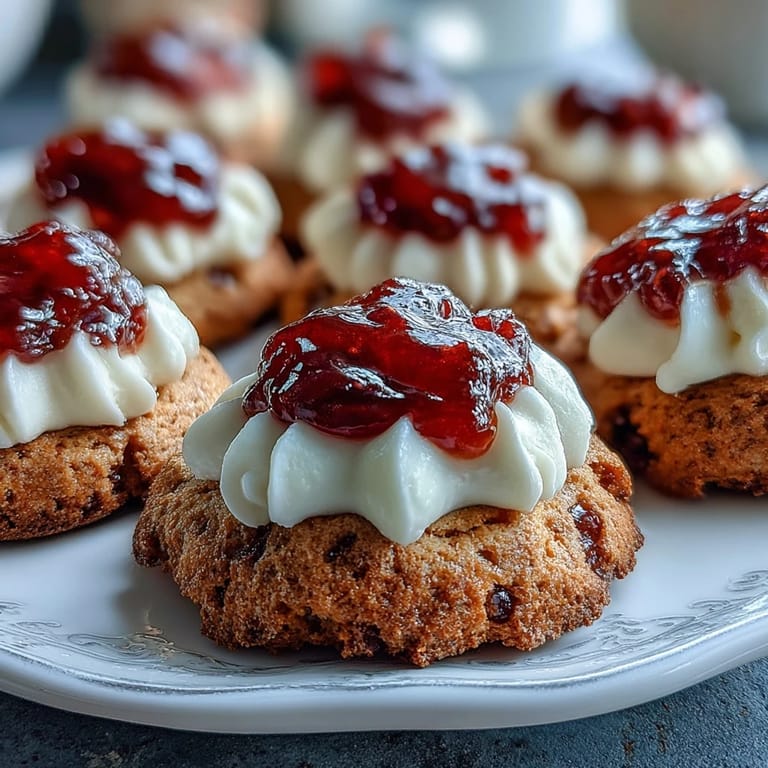
- Roll dough into 1-inch balls and place them 2 inches apart on your baking sheets—this gives them room to spread slightly without touching. Using your thumb (or the back of a teaspoon if your thumb is too large), press down into the center of each ball to create a shallow well; you want it deep enough to hold filling but not so deep that you're pressing all the way through to the pan.
- Fill each cookie with cream and jam:
- Add about 1/2 teaspoon of clotted cream to each indentation first, then top with 1/4 teaspoon of jam; the order matters because the cream acts as a barrier and prevents jam from seeping into the cookie itself. Don't overfill—it's the most common mistake, and it causes the jam to run out during baking.
- Bake until edges are lightly golden:
- Set a timer for 13 to 15 minutes; the cookies should look barely golden at the edges while the centers still look slightly underbaked. They'll continue to cook from residual heat after you pull them out, so don't wait for them to look completely done.
- Cool properly to set the texture:
- Let them sit on the baking sheet for 5 minutes—this allows them to firm up enough to move without breaking. Then transfer them carefully to a wire rack where the air circulating underneath prevents the bottoms from becoming soggy.
 Save to Pinterest
 My daughter wanted to help me bake them for her school bake sale, and I let her make the thumbprints while I handled the mixing—she was so focused, using her small thumb with absolute concentration. When the cookies came out of the oven and she saw the way the jam had caught the light, still slightly jiggly and jewel-like, she said, "These look like tiny treasure chests." I've called them that ever since, and now so does everyone else.
Why These Cookies Are Worth Your Time
There's a reason teatime became a whole ritual in Britain—it's not just about the food, it's about the slowness and intention of it. These cookies capture that feeling. They're not difficult, but they ask you to pay attention, to soften your butter properly, to not rush the creaming step, to understand when a thumbprint is deep enough. In a kitchen culture that often prioritizes speed, that kind of intentionality feels like a small rebellion.
Variations That Still Feel Authentically These Cookies
Once you've made them the classic way, you'll notice how much room there is for subtle shifts. Raspberry jam instead of strawberry feels just as proper—actually, some people argue it's even more traditional. If you can't find clotted cream, mascarpone creates a richer, almost custard-like filling, while crème fraîche keeps that slight tartness that plays beautifully against sweet jam. I've even made a winter version with apricot jam and added a tiny pinch of cardamom to the dough, which felt like an entirely new cookie while still being recognizably these same cookies.
How to Store Them So They Stay Perfect
These keep well for several days in an airtight container at room temperature, though the clotted cream will eventually firm up slightly if the kitchen is cool. They're best eaten within two days when the filling is creamiest and the cookies are still tender. If you need to make them ahead for an event, you can bake the cookies a day or two early and fill them just a few hours before serving—it adds a small step but ensures the best possible texture and taste.
- Store in airtight containers with parchment between layers so they don't stick together.
- Keep them away from heat and humidity or the filling will soften and the cookies may get soft.
- They freeze beautifully unfilled for up to a month, so you can fill them fresh whenever you need them.
 Save to Pinterest
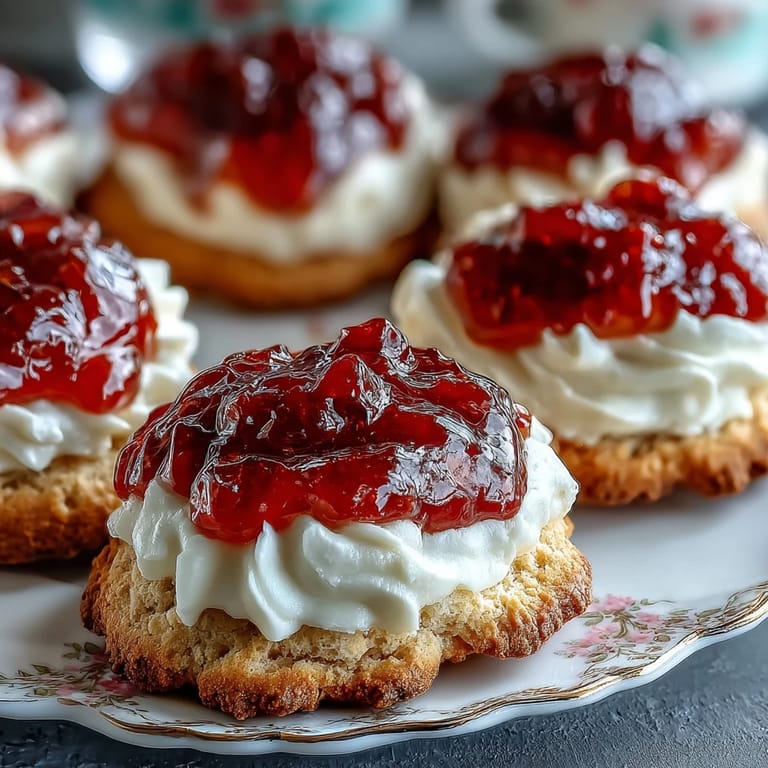
 These cookies stopped being just a recipe the moment they became a reason for someone to visit your kitchen. Make them with the kind of care that says you were thinking of someone while your hands were busy, and they'll taste like that intention in every bite.
Your Questions Answered
- → What is the best way to make the dough tender?
Use softened unsalted butter and beat it thoroughly with sugar to create a light, fluffy base before adding dry ingredients. Avoid overmixing once flour is added to maintain tenderness.
- → Can I substitute clotted cream in the filling?
Yes, crème fraîche or mascarpone are excellent alternatives that provide a similarly rich and creamy texture.
- → How do I prevent the cookies from spreading too much during baking?
Chill the dough slightly before shaping and maintain proper spacing on the baking sheet to help them hold their shape.
- → What are good jam alternatives for these cookies?
Raspberry or apricot jam work well, offering fruity variety while complementing the creamy filling.
- → What is the ideal baking temperature and time?
Bake at 350°F (175°C) for 13–15 minutes or until the edges turn lightly golden for perfect texture.
- → How should I cool the cookies after baking?
Let them cool on the baking sheet for 5 minutes, then transfer to a wire rack to cool completely and retain crispness.