 Save to Pinterest
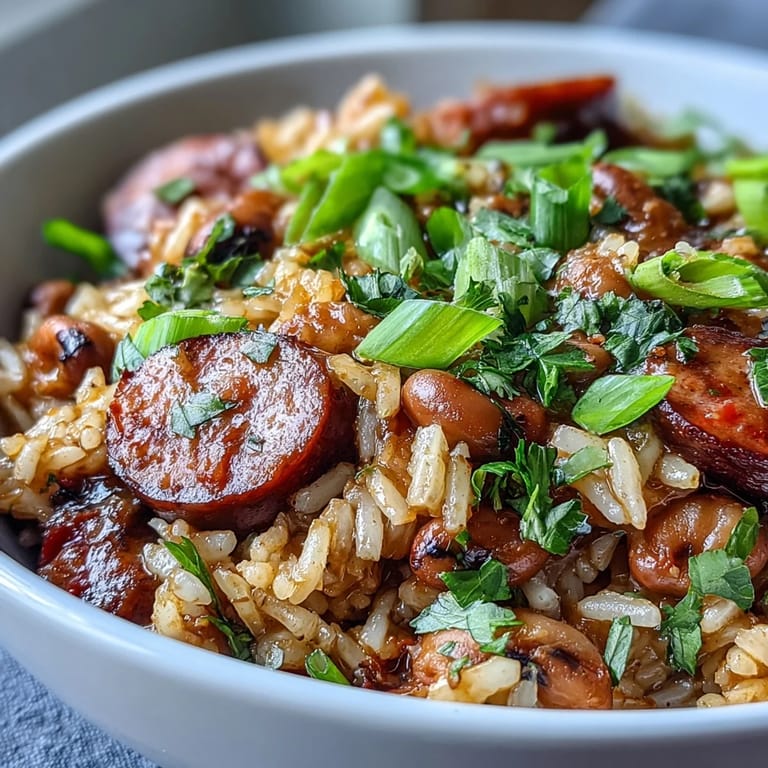
 There's a particular magic that happens when you open a pot of jambalaya—that first hit of steam carrying smoke, spice, and warmth that fills your whole kitchen. I learned to make this dish on a humid afternoon in New Orleans, watching my friend's grandmother stir a massive pot with the kind of ease that only comes from making something a thousand times. She didn't measure much, just moved with intention, and somehow the whole thing came together like a conversation between ingredients. Now whenever I make it at home, I chase that same feeling: the way the sausage browns first, how the holy trinity of onion, celery, and pepper softens into sweetness, and that final moment when the rice drinks up all the liquid and becomes something greater than its parts.
I made this for my neighbors on a crisp fall evening, and I remember my daughter asking why our house smelled like a festival—which is honestly the best compliment a dish can get. Someone brought over a bottle of hot sauce and we ended up laughing about whose version was spicier, turning dinner into something that felt celebratory even though it was just a weeknight meal.
Ingredients
- Smoked sausage (340 g/12 oz): Andouille gives authentic Cajun depth, but kielbasa works beautifully too—the smoke is what matters, and slicing it lets all that flavor distribute through the pot.
- Onion, celery, and bell peppers (1 medium onion, 2 celery stalks, 1 red and 1 green pepper): This trio is called the holy trinity in Cajun cooking, and there's a reason—they create the sweet, aromatic foundation that makes jambalaya taste like home.
- Garlic (3 cloves): Always mince it fresh and wait just a moment after adding it before the next step, or it can burn and turn bitter.
- Black-eyed peas (1 can, 425 g/15 oz): Canned and rinsed are perfect here—dried would require soaking, and honestly, the convenience doesn't compromise the flavor.
- Long-grain white rice (300 g/1 ½ cups): It needs to absorb liquid without turning mushy, and long-grain rice handles that job with grace.
- Chicken broth (800 ml/3 ⅓ cups): Low-sodium is crucial so you control the salt and the spices shine through without competing.
- Diced tomatoes with juices (1 can, 400 g/14 oz): The acidity balances the richness of the sausage and adds a subtle brightness.
- Cajun seasoning (1 ½ tsp): This is your base spice, so if yours is milder, add a bit more; if it's fiery, go easy and taste as you go.
- Smoked paprika, dried thyme, dried oregano (1 tsp, ½ tsp, ½ tsp): Each one adds its own voice—paprika brings smoke, thyme brings earth, oregano brings a Mediterranean whisper.
- Bay leaf, salt, black pepper, cayenne (1 leaf, ½ tsp, ¼ tsp, ¼ tsp optional): The bay leaf infuses the whole pot, cayenne is your heat dial, and salt and pepper are your final adjustments.
- Olive oil (2 tbsp): Just enough to brown the sausage and coat the rice without making it greasy.
- Spring onions and fresh parsley (2 spring onions, 2 tbsp parsley): These garnishes are not optional—they add brightness and color that make the finished dish sing.
Tired of Takeout? 🥡
Get 10 meals you can make faster than delivery arrives. Seriously.
One email. No spam. Unsubscribe anytime.
Instructions
- Brown the sausage and build your base:
- Heat olive oil in your pot over medium heat and let it shimmer before adding sausage slices—you want them to sizzle immediately and develop golden edges in about 4 to 5 minutes. Don't rush this step because the Maillard reaction is where so much of jambalaya's depth comes from.
- Soften the holy trinity:
- Once sausage is browned, add onion, celery, and both peppers, stirring occasionally and letting them cook down for about 5 minutes until they lose their raw edge and become fragrant. You'll notice the pot starts smelling less like raw vegetables and more like something intentional is happening.
- Wake up the garlic:
- Add minced garlic and cook for just 1 minute, stirring constantly—you want that piercing garlic aroma to bloom without any burnt bitterness. This is a short window, so stay focused.
- Toast the rice:
- Stir in the rice and let it coat itself in all the oil and flavorful bits clinging to the pot—about 1 to 2 minutes. You're not cooking it yet, just awakening it and making sure every grain touches the heat and the flavors around it.
- Add the liquid and remaining flavors:
- Pour in the chicken broth, canned tomatoes with their juices, drained black-eyed peas, Cajun seasoning, smoked paprika, thyme, oregano, bay leaf, salt, black pepper, and cayenne if you want heat. Stir everything together so the spices aren't sitting in clumps but are distributed evenly throughout the liquid.
- Bring to a boil, then simmer gently:
- Let the pot come to a rolling boil so you know the heat is reaching the bottom and the liquid is really moving, then drop the heat to low and cover with a lid. The gentle bubbling underneath that cover is exactly what you want—not violent, just persistent and patient for about 20 to 25 minutes.
- Let it rest and finish:
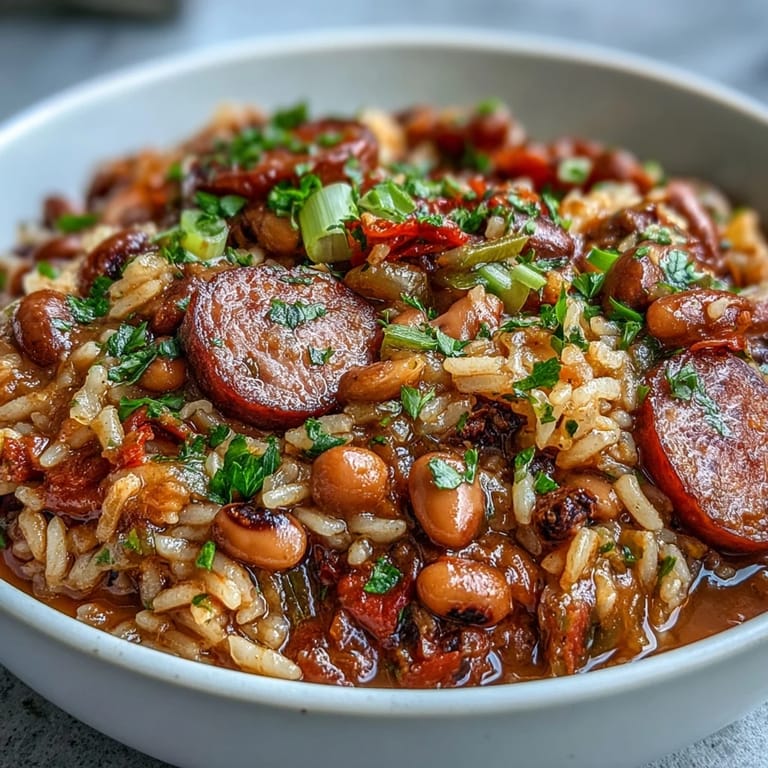
- Once the rice is tender and the liquid has been absorbed (peek carefully under the lid to check), remove from heat and let it sit covered for 5 minutes—this lets the steam finish its work. Fluff with a fork, fish out the bay leaf, scatter spring onions and parsley on top, and serve.
 Save to Pinterest
 My son came home from school in the middle of cooking this and said the house smelled like an adventure, which somehow made the whole meal feel like more than just dinner. That's what jambalaya does—it transforms a regular evening into something that feels a little bit celebratory, a little bit bold, and absolutely worth repeating.
The Beauty of One-Pot Cooking
There's a rhythm to one-pot meals that feels almost meditative—each layer of flavor builds on the last, and you can watch the transformation happen right in front of you. With jambalaya, the sausage seasons the oil, which then carries that flavor to the vegetables, which sweetens the broth, which the rice eventually absorbs until every single grain has tasted everything that came before it. It's less like following instructions and more like conducting an orchestra where every ingredient knows its moment to shine.
Adjusting Heat and Spice to Your Taste
Jambalaya's heat is wonderfully adjustable because you control it at multiple points—Cajun seasoning provides the baseline spice, smoked paprika adds warmth without intense heat, and cayenne pepper is your dial for turning it up to your preference. I've made this for friends who think anything spicier than black pepper is too much, and for people who pour hot sauce straight into their bowls, and both groups left happy because I let them build their own spice level.
Variations and Swaps That Actually Work
The foundation of this jambalaya is flexible enough that you can adapt it without losing its soul—if you want it vegetarian, skip the sausage and use vegetable broth, then add mushrooms or extra beans for that hearty, substantial feeling. Chicken thighs work if you prefer poultry, shrimp can be added in the last few minutes if you want seafood jambalaya, and even extra vegetables like okra or carrots slip in seamlessly.
- Make it vegan by using vegetable broth and adding smoked tofu or extra mushrooms to replace the sausage's savory depth.
- Prep all vegetables the night before and store them in containers so the actual cooking is as simple as opening containers and adding them in sequence.
- Leftovers actually taste better the next day because the flavors have more time to get to know each other, so don't hesitate to make extra.
 Save to Pinterest
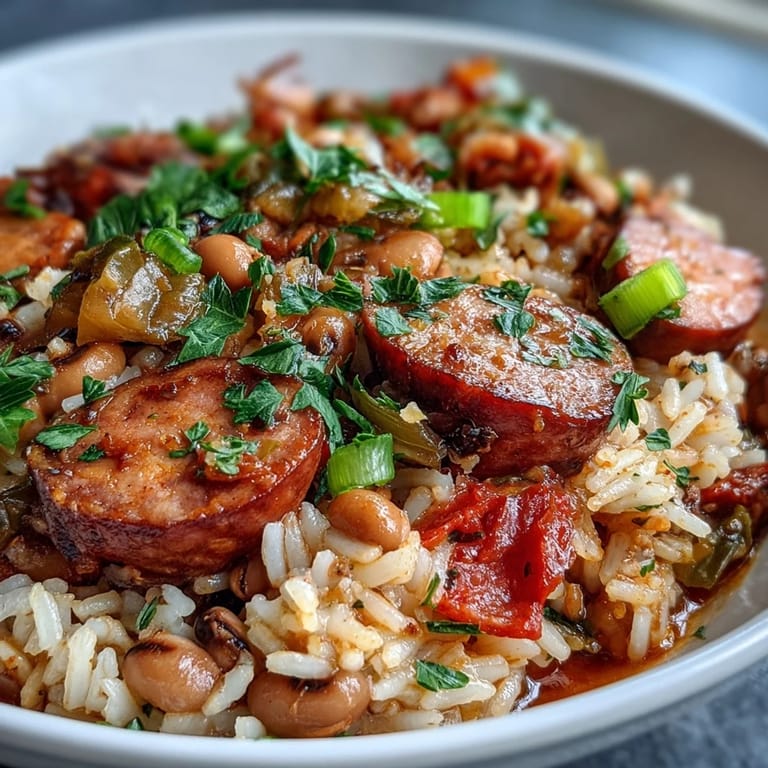
 This jambalaya has become the dish I make when I want to feel like I'm cooking something that matters, something with history and soul and enough bold flavor to fill a room with warmth. Make it, and I promise you'll understand why it keeps drawing people back to the table.
Your Questions Answered
- → Can I make this vegetarian?
Yes, simply omit the smoked sausage and use vegetable broth instead of chicken broth. You can add extra black-eyed peas, mushrooms, or plant-based sausage to maintain the heartiness and protein content.
- → How spicy is this jambalaya?
The heat level is medium. You can control the spice by adjusting the amount of Cajun seasoning and cayenne pepper. Start with less and add more to taste, or serve with hot sauce on the side.
- → Can I use dried black-eyed peas instead of canned?
Yes, but you'll need to cook them first. Soak dried peas overnight, then simmer until tender before adding to the jambalaya. This will extend the total cooking time significantly.
- → What type of rice works best?
Long-grain white rice is traditional as it stays fluffy and separate. Brown rice can be used but will require more liquid and longer cooking time. Avoid short-grain or Arborio rice which becomes too sticky.
- → How long do leftovers keep?
Store in an airtight container in the refrigerator for up to 4 days. The flavors often improve overnight. Reheat gently with a splash of water or broth to prevent the rice from drying out.
- → Can I freeze jambalaya?
Yes, it freezes well for up to 3 months. Cool completely before transferring to freezer-safe containers. Thaw overnight in the refrigerator and reheat on the stovetet with a little added liquid.