 Save to Pinterest
 The first time I made Spring Pasta Primavera, my kitchen windows were wide open, letting in an afternoon breeze that carried scents of cut grass and blooming lilacs. As I chopped the zucchini and squash, sunlight spilled across the counter and I found myself humming along to a song playing in the next room. There was something spontaneous and joyful about assembling a jumble of green and gold vegetables, all crisp and beautiful, that felt like a celebration of the season. Making this dish feels a little like painting, splashing colors into a canvas: every ingredient seems to brighten the mood. Sometimes, I add whatever fresh vegetables I’ve picked up that morning, trusting flavors to mingle beautifully.
One early spring evening, I made this for a group of friends after a spontaneous farmers’ market run. We crowded into my tiny kitchen, laughing as someone dropped a handful of peas and the dog was quick to help. Cooking together made the chopping and sautéing effortless—someone salted the pasta water while another passed me the basil, and there was the sense of anticipation as the veggies sizzled. When we finally gathered around the table, plates piled high, everyone reached for seconds. I still remember the way the lemon zest lifted the dish and how a pinch of red pepper flakes made it sparkle.
Ingredients
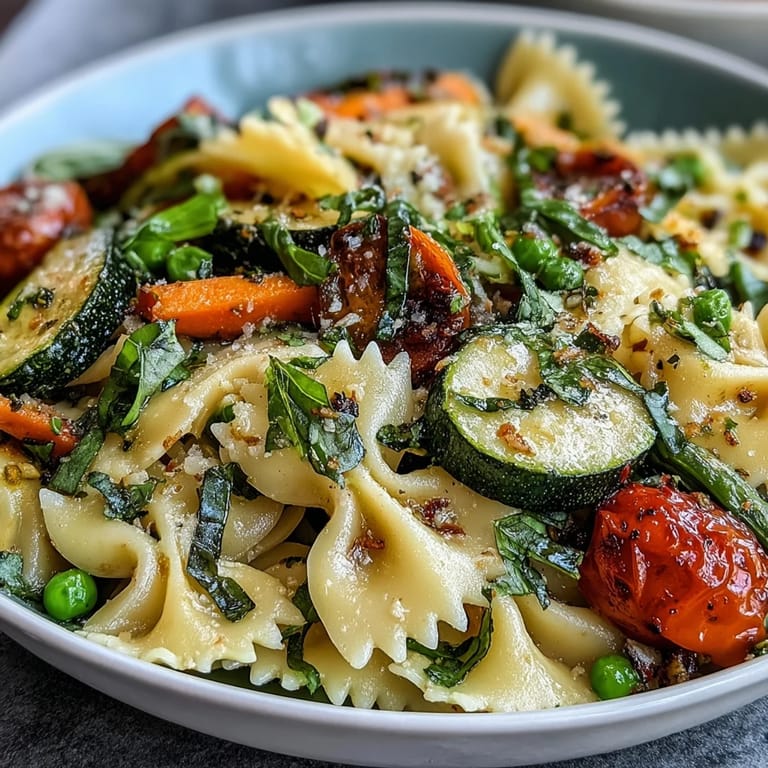
- Pasta: Choose penne or farfalle for their shape, which catches sauce and veggies perfectly; I always salt the water generously to flavor the pasta itself.
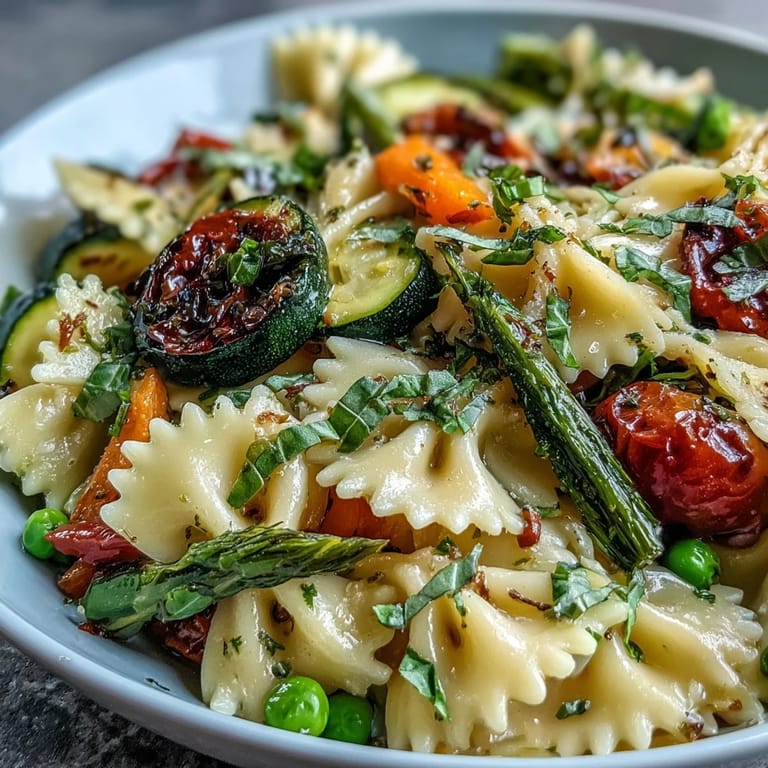
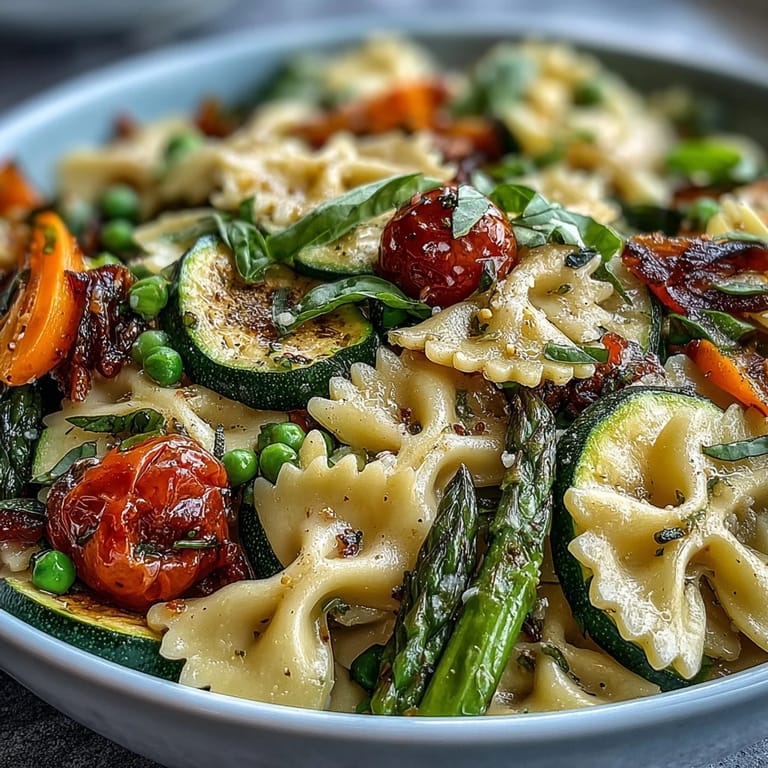
- Fresh Vegetables: Using zucchini, yellow squash, asparagus, cherry tomatoes, red bell pepper, and peas brings crisp texture and a rainbow of color—don’t rush slicing, neat pieces cook evenly.
- Aromatics & Herbs: Garlic, shallot, basil, and parsley infuse the dish with fragrance; fresh herbs are essential for the brightest flavor, and a lemon’s zest is the secret to spring’s essence.
- Sauce & Seasoning: Extra-virgin olive oil, Parmesan, salt, pepper, and red pepper flakes tie everything together—I once skimped on oil, and realized it’s what keeps the dish silky.
Tired of Takeout? 🥡
Get 10 meals you can make faster than delivery arrives. Seriously.
One email. No spam. Unsubscribe anytime.
Instructions
- Boil and Prep the Pasta:
- Fill a large pot with water, salt it well, and bring to a rolling boil. Cook your pasta just until al dente, save half a cup of pasta water, then drain and set aside.
- Sauté Aromatics:
- While pasta simmers, heat olive oil in a big skillet; add shallot and garlic, letting their aroma bloom for a minute.
- Add Crunchy Veggies:
- Toss zucchini, squash, asparagus, and bell pepper into the skillet. Stir and let them soften, watching their colors brighten and smelling their sweetness, for about five minutes.
- Tomatoes & Peas:
- Mix in cherry tomatoes and peas, letting the tomatoes melt slightly and the peas turn vivid green, just three minutes.
- Combine Pasta and Veggies:
- Turn heat low, add pasta to the skillet, and toss gently so veggies wrap around the pasta.
- Finishing Touches:
- Stir in reserved pasta water, lemon zest, juice, basil, parsley, and the last splash of olive oil. Sprinkle seasoning and taste; add red pepper flakes if you like a kick.
- Cheese and Serving:
- Off heat, fold in the Parmesan so it melts into the sauce. Serve immediately, topping with extra cheese and fresh herbs for a burst of flavor.
 Save to Pinterest
 This was the meal I made when a friend returned from overseas and exclaimed it tasted like spring itself. With plates in hand and laughter echoing in the kitchen, sharing Primavera turned a weeknight dinner into a memory we still talk about. Food, it seems, can summon a season and gather everyone around its warmth.
Bringing Color into Your Kitchen
There’s real joy in seeing a skillet full of vibrant produce you’ve chopped yourself. Cooking this recipe reminds me to keep the veggies just crisp enough so every bite bursts with freshness. If the pile of ingredients looks overwhelming, I always enlist someone to help prep—making it a two-person job instantly turns it into part of the fun. Even when I’m cooking solo, the colorful jumble always feels celebratory.
Making Pasta Primavera Your Own
I rarely make this dish the same way twice, and it never disappoints. Snap peas, baby spinach, or even artichoke hearts work beautifully if you’re feeling adventurous. The sauce can be tweaked to your taste—sometimes I add more cheese, other times I dial up the lemon. It’s a forgiving recipe that welcomes improvisation.
Last-Minute Wonders and Little Fixes
Most of the magic happens right at the end: adding extra Parmesan, tossing in fresh herbs, and tasting to adjust the seasoning. If the pasta seems dry, a bit more olive oil or a splash of pasta water loosens it up instantly. The aroma fills the kitchen fast, inviting everyone to the table and signaling dinner is ready.
- Don’t wait to serve—Primavera tastes best while hot and fresh.
- A squeeze of lemon can rescue any bland moment.
- Let guests add their own cheese and herbs at the table for extra flair.
 Save to Pinterest
 Cooking Spring Pasta Primavera feels like inviting freshness and light into your home. It’s worth making anytime you crave a meal that’s as cheerful as the season itself.
Your Questions Answered
- → What vegetables work best for pasta primavera?
Spring vegetables such as zucchini, yellow squash, asparagus, cherry tomatoes, peas, and bell peppers bring vibrant flavors and textures, but you can also add snap peas or baby spinach for variety.
- → How do I make this vegan?
Simply omit the Parmesan cheese or use a plant-based alternative for a dairy-free version. The dish remains full of flavor and freshness.
- → Can I use frozen vegetables?
Yes, frozen peas and other vegetables can be substituted if fresh is unavailable. Ensure they are heated through in the pan before combining with pasta.
- → What pasta shapes work best?
Short pasta shapes such as penne or farfalle are ideal for holding the veggies and sauce together. You may use your pasta of choice.
- → Is this dish suitable for meal prep?
Pasta primavera can be prepared ahead and stored in the refrigerator. Reheat gently to preserve the vibrant vegetables and sauce.
- → How can I add extra flavor?
Try adding a pinch of red pepper flakes, extra lemon zest, or serving with more fresh herbs and Parmesan cheese for enhanced taste.