 Save to Pinterest
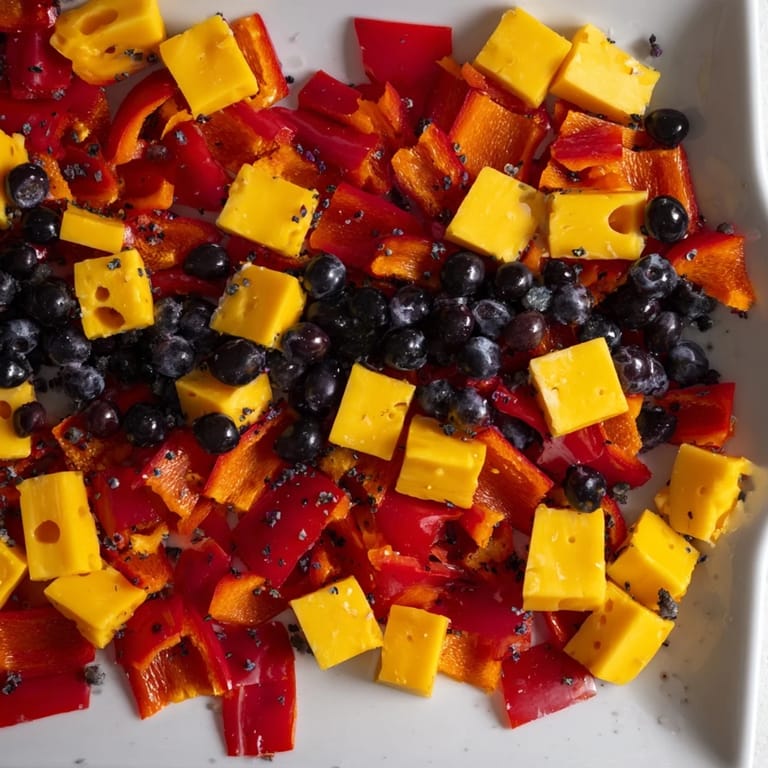
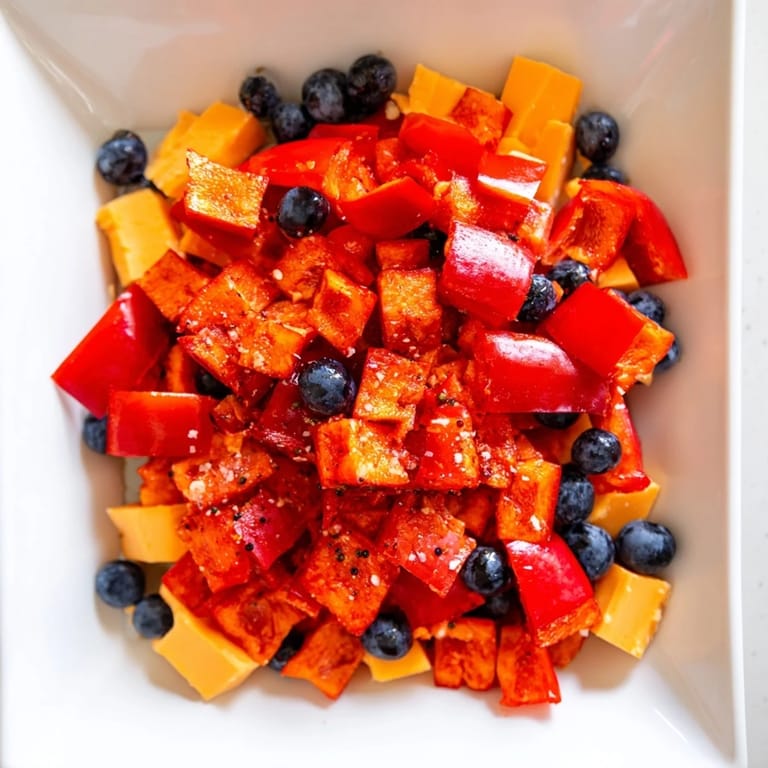
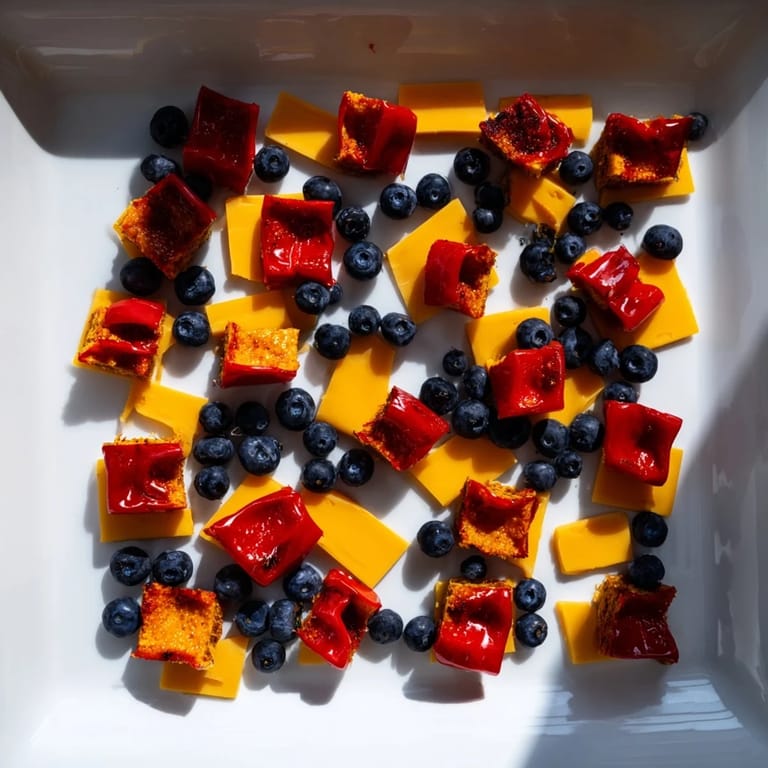
 I stumbled upon the Bauhaus Block at a gallery opening in Berlin, where a friend's artist roommate had arranged this stunner on a white platter as guests mingled. The way those red pepper squares, golden cheese blocks, and deep purple grapes lined up in perfect formation made me stop mid-conversation. What grabbed me wasn't just how it looked, but how simple it was—no cooking, no fuss, just pure intentional design on a plate.
The first time I made this for a dinner party, I was nervous about looking too try-hard with the whole geometric thing. But when I set it down and watched people just pause and smile before diving in, something clicked—this wasn't pretentious, it was joyful. My neighbor actually said it reminded her of playing with building blocks as a kid, which somehow made a modern art reference feel warm and accessible.
Ingredients
- Red Bell Pepper: One large one gives you plenty of squares without wasteful scraps; pick one that feels dense and has thick walls because those hold their shape and color better than thin-skinned peppers.
- Yellow Cheddar or Gouda: The firmness matters here—you want blocks that hold their edges, not cheese that crumbles; a well-aged block from the deli counter cuts cleaner than pre-sliced.
- Blue or Black Seedless Grapes: Cold grapes taste sweeter and feel more refreshing; grab them the day before so they have time to chill in the fridge.
- Extra-Virgin Olive Oil: A light brush on the peppers wakes up their flavor without drowning the plate; skip it if you prefer the raw crispness.
- Sea Salt and Black Pepper: Freshly ground pepper makes a real difference, and sea salt crystals add texture that pre-ground salt just doesn't.
Tired of Takeout? 🥡
Get 10 meals you can make faster than delivery arrives. Seriously.
One email. No spam. Unsubscribe anytime.
Instructions
- Prep Your Canvas:
- Wash the pepper under cold water and dry it thoroughly; a damp pepper makes cutting messier and the squares won't feel as crisp. Cut it in half, scoop out the seeds and white bits, then slice it into strips before cutting those into neat 1-inch squares.
- Cut the Cheese with Intention:
- Use a sharp knife and a steady hand—cheese wants clean edges, not crushed corners. Work on a clean cutting board so the cheese doesn't pick up pepper debris, and if your cheese is soft, pop it in the freezer for ten minutes first to make cutting easier.
- Rinse and Dry the Grapes:
- Pat them completely dry with a paper towel so they don't slip around on the platter and they stay looking polished.
- Arrange Like You Mean It:
- Lay your platter on the counter and start placing pieces in a grid pattern, alternating pepper, cheese, and grapes in rows or columns—think of it like arranging tiles. Step back and look at it; if something feels off balance, move pieces around until the colors flow naturally across the space.
- Season and Finish:
- If using olive oil, use a pastry brush and a light touch so the peppers shine without getting glossy. A pinch of sea salt and freshly ground pepper over the whole thing adds sophistication without overpowering the fresh flavors.
- Serve with Confidence:
- This is best served within thirty minutes, though you can assemble it up to an hour ahead and refrigerate; the cold actually makes the pepper taste crisper and the cheese firmer.
 Save to Pinterest
 I made this for my dad's retirement party, and he spent more time admiring it than eating it. He kept saying it reminded him of a Mondrian painting he'd always loved, and somehow that made a simple cheese and pepper platter become this meaningful thing we could talk about together. That's when I realized food doesn't always have to nourish just your body—sometimes it feeds something else entirely.
Why Geometry Actually Matters
There's something about arranging food in a deliberate pattern that changes how people perceive it. A random pile of pepper squares and cheese blocks reads as a snack, but arrange them in a grid and suddenly it's a statement. The Bauhaus movement understood that design isn't decoration—it's communication, and this little platter speaks that language perfectly.
Timing and Temperature
This dish lives in that sweet spot where cold works better than room temperature. Chilled peppers are crispier, grapes taste sweeter, and cheese holds its shape better. I used to assemble this right before serving, but I've learned that prepping it thirty minutes ahead and letting it chill actually improves the experience—everything tastes cleaner, fresher.
Making It Your Own
The beautiful thing about geometric design is that it's forgiving—once you understand the concept, you can adapt it endlessly. Different colored peppers, aged cheeses in cream or white, dried cranberries instead of grapes, it all works if you think about color balance. I've even done a vegan version with cashew cheese and it turns heads just the same.
- Try different cheese types—aged Manchego or smoked Gouda add completely different vibes to the same design.
- Add thin slices of crisp apple or pear between the columns for textural contrast.
- Serve with crispy crackers on the side so people can build their own bites if they want to.
 Save to Pinterest
 This appetizer proves that food doesn't need heat or complexity to feel special. Sometimes the most memorable moments come from paying attention to what's already beautiful and letting it shine.
Your Questions Answered
- → What is the best cheese to use?
Yellow cheddar or Gouda are perfect for their firm texture and mild flavor that complements the fruit and pepper.
- → Can I prepare this in advance?
Yes, it can be chilled up to 30 minutes before serving to maintain freshness and enhance flavors.
- → How should the vegetables and fruit be cut?
Cut bell pepper into 1-inch squares, cheese into rectangular blocks, and use whole seedless grapes for easy assembly and visual appeal.
- → Are there any suitable variations?
For a vegan option, substitute plant-based yellow cheese. Adding crackers or sliced bread can provide more texture.
- → What seasoning enhances the flavor best?
A light brush of extra-virgin olive oil with a pinch of sea salt and black pepper brings out the natural tastes without overpowering.