 Save to Pinterest
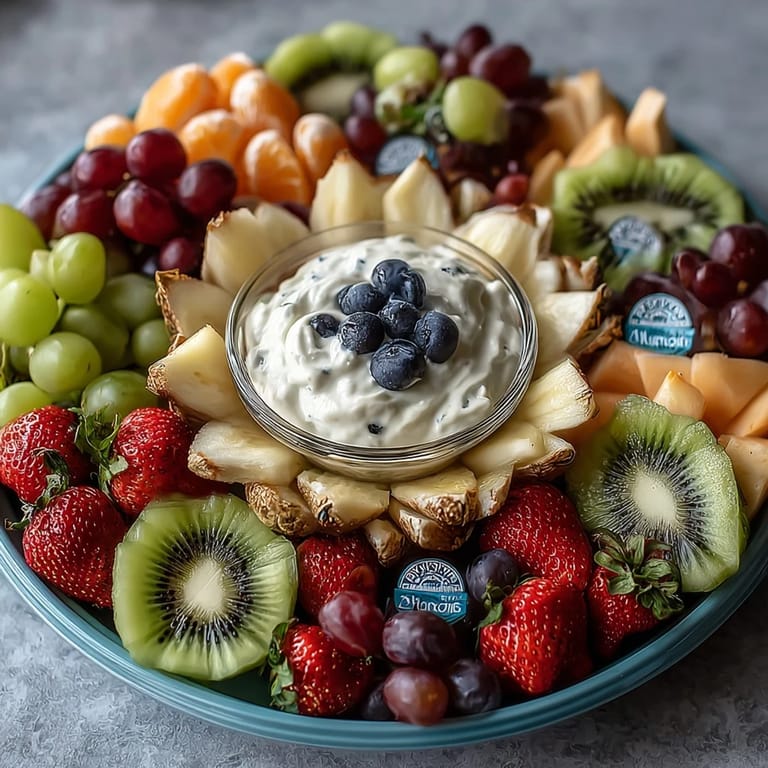
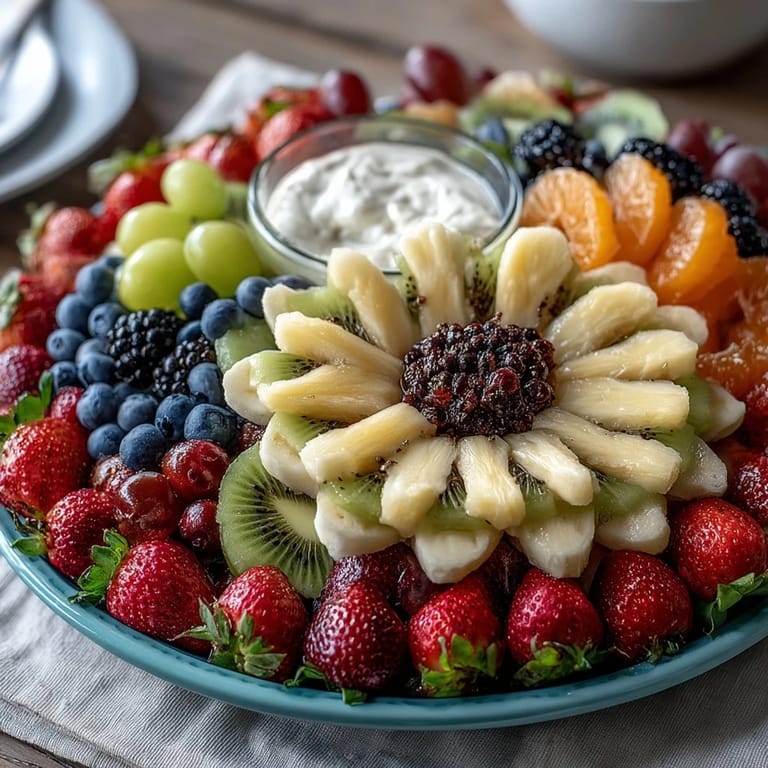
 My sister called me in a panic three days before her baby shower, asking if I could bring something that looked Instagram-worthy but didn't require an actual cooking degree. That's when this fruit platter came to life—a beautiful, blooming arrangement that honestly feels more like edible art than food. The first time I assembled it, I realized how satisfying it is to create something colorful and fresh without turning on the stove. Now it's become my go-to for any celebration where you want guests to feel welcomed by something bright and nourishing.
I watched my mom arrange fruit once at a neighbor's garden party, moving each piece with the precision of someone placing flowers in a vase, and I finally understood why presentation matters so much. It wasn't about perfection—it was about the little moment when someone walks in and their face lights up because the platter is genuinely beautiful. That's what this arrangement does; it transforms simple fruit into something that feels celebratory.
Ingredients
- Strawberries: Hull them carefully to keep them whole-ish; the contrast of red against orange and kiwi green is what makes the platter visually pop.
- Seedless grapes: Red and green mixed create natural color blocking, and they're forgiving if your arrangement isn't perfectly symmetrical.
- Blueberries: These fill gaps beautifully and add unexpected pops of deep color throughout the pattern.
- Pineapple: Cut into small wedges so they fan nicely; the golden yellow becomes the platter's warm accent.
- Cantaloupe or honeydew: A melon baller creates uniform spheres that nestle perfectly between larger fruit pieces.
- Kiwi: The bright green and those tiny black seeds make it visually stunning at the center of your bloom.
- Orange: Segmented instead of sliced creates a softer, more elegant look than typical orange rounds.
- Apple: Optional, but if you use it, brush with lemon juice immediately to prevent that disappointing gray-brown oxidation.
- Edible flowers or mint: These feel like the finishing touch that makes someone say it's too pretty to eat.
- Greek yogurt: Full-fat tastes creamier than nonfat, and that richness pairs better with honey.
- Honey: Warm it slightly before stirring so it dissolves into the yogurt smoothly without lumps.
- Vanilla extract: Just one teaspoon, but it adds a subtle warmth that makes the dip taste more sophisticated than it has any right to.
- Lemon zest: Optional but worth it—that bright citrus note cuts through the sweetness beautifully.
Tired of Takeout? 🥡
Get 10 meals you can make faster than delivery arrives. Seriously.
One email. No spam. Unsubscribe anytime.
Instructions
- Wash and prepare your fruit:
- Rinse everything thoroughly and pat dry—water droplets will make your arrangement look sloppy and cause fruit to slide around as you're arranging. Take your time hulling strawberries and peeling kiwi so you don't have any sad, mangled pieces.
- Choose your canvas:
- A large round platter works best because it naturally suggests the bloom pattern, but an oval works fine too. If you're nervous about arranging, lightly sketch the pattern with your finger first—no one will see it.
- Build the center:
- Start with orange segments and kiwi slices arranged in the very middle, overlapping slightly like petals of an opened flower. This gives you an anchor point and makes the rest feel intentional rather than random.
- Fan out your petals:
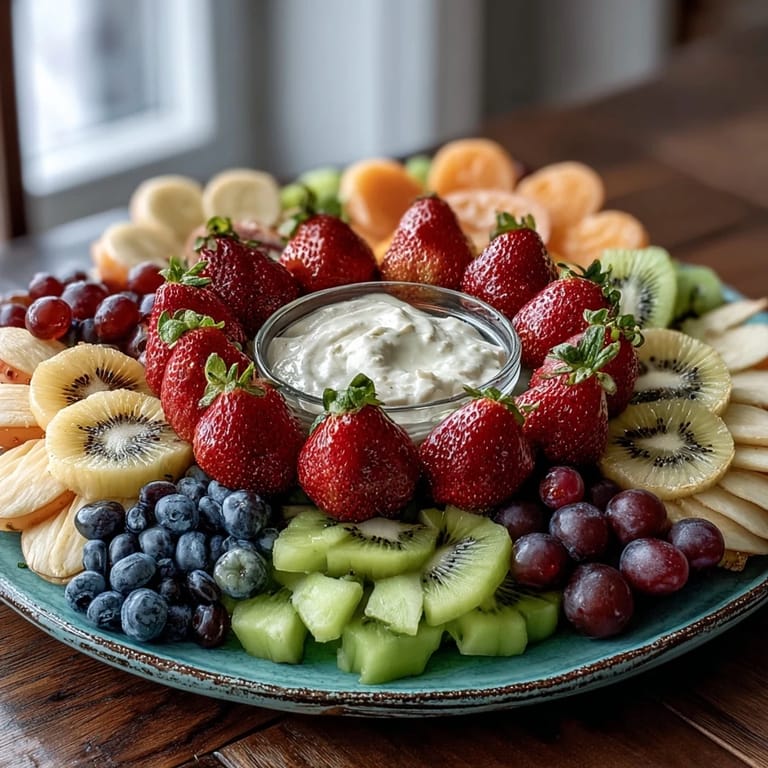
- Moving outward in concentric circles, alternate strawberries, grapes, pineapple, and melon chunks, rotating colors as you go. Trust me—it doesn't need to be perfect; slight variations actually look more organic and beautiful.
- Fill the gaps:
- Scatter blueberries wherever you see white space; they nestle into crevices and add depth. Step back and look at your work; it's weirdly satisfying to see a pattern emerge from what felt like chaos five minutes ago.
- Make the dip:
- Combine yogurt, honey, vanilla, and lemon zest in a small bowl, stirring until completely smooth. Taste it and adjust—if it needs more honey, add it tablespoon by tablespoon because it's easier to make it sweeter than to undo it.
- Arrange and garnish:
- Pour the dip into a small bowl and nestle it into the center or place it alongside the platter. Top with fresh mint leaves or edible flowers if you have them, and serve immediately or cover loosely and refrigerate.
 Save to Pinterest
 I once brought this to a baby shower where a older guest mentioned she hadn't seen a fruit platter arranged this way in decades, and she stood there for a solid minute just looking at it with this soft smile. Food has this quiet power to make moments feel special, and sometimes it's not about the taste—it's about someone feeling seen and celebrated through what you've placed in front of them.
The Dip Is What They'll Remember
People always think the dip must be complicated because it tastes so much better than store-bought versions, but honestly, it's just quality yogurt and good honey having a conversation. I learned this from watching a friend casually combine ingredients at her kitchen counter—she didn't measure, didn't stress, just tasted and adjusted. That's the real secret: the dip is only as good as its ingredients, so buy Greek yogurt you'd actually eat on its own and honey that actually smells like flowers.
Fruit Selection and Seasonality
The magic of this platter is that it works year-round because you can swap fruits based on what's actually in season and tastes good where you live. Summer screams strawberries and peaches, fall wants grapes and pears, and winter can lean into citrus and pomegranate seeds. I stopped trying to force specific fruits and started asking myself what looked vibrant at the market that week—that's when arrangements started feeling effortless instead of like I was following instructions.
Making It Your Own
This platter is genuinely forgiving if you want to experiment, and honestly, some of my favorite versions came from happy accidents. A friend once added pomegranate arils because that's what she had, and they looked like jewels scattered across the arrangement. You could add coconut flakes for texture, or swap the yogurt dip for a honey-mascarpone version if you're feeling fancy, or go completely dairy-free by using almond milk yogurt.
- Don't stress about having exactly the ingredients listed—work with what you can actually find and afford.
- If serving to anyone with nut allergies, double-check yogurt labels because cross-contamination happens in manufacturing.
- Remember that this feeds about 8-10 people as an appetizer, but it stretches further if you're serving it alongside other dishes.
 Save to Pinterest
 This platter has become my answer to the question of how to celebrate without exhaustion, and somehow that's become its own kind of beautiful. It reminds me that sometimes the most meaningful things we offer people aren't complicated—they're just thoughtful, colorful, and made with actual care.
Your Questions Answered
- → What fruits are best for a vibrant fruit platter?
Choose colorful fruits such as strawberries, grapes, blueberries, pineapple, melon, kiwi, orange, and apple for a visually appealing arrangement.
- → How do I make the yogurt dip creamy and flavorful?
Mix Greek yogurt with honey, vanilla extract, and a touch of lemon zest to create a smooth, subtly sweet dip that complements fresh fruits.
- → Can I substitute the yogurt dip for dietary needs?
Yes, use coconut or almond milk yogurt for a dairy-free alternative while keeping the honey and vanilla flavors intact.
- → How should the fruit be arranged for the bloom effect?
Arrange fruits in concentric circles or flower petals, placing smaller slices like kiwi and orange in the center as the bloom’s core.
- → How long can the platter be prepared ahead of time?
The platter can be assembled and refrigerated for up to 2 hours before serving to maintain freshness and appearance.
- → Are there any allergen considerations for this platter?
Contains dairy from Greek yogurt and honey, which is unsuitable for children under one year; check for nut traces in yogurt if allergies are a concern.