 Save to Pinterest
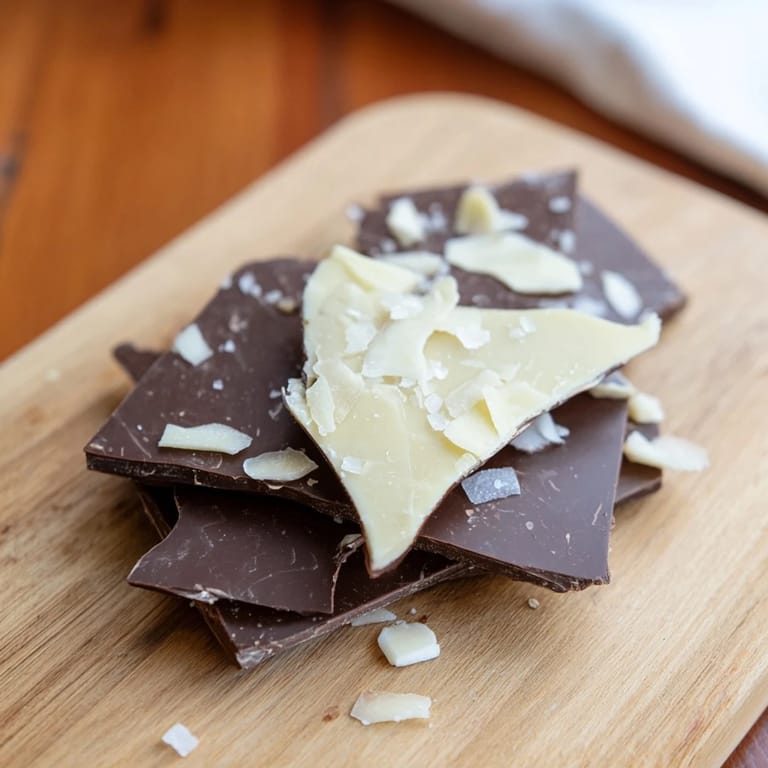
 I discovered this dessert by accident during a winter evening when I was playing with leftover white chocolate and a block of parmesan I'd been meaning to use. The moment I spread that chocolate thin and watched it set into brittle sheets, something clicked—it looked like actual ice, frozen and gleaming under the kitchen light. I've never forgotten how my dinner guests fell silent when I set the board down, their eyes tracing the shards like they were seeing an edible landscape. That reaction taught me that dessert doesn't always need to be sweet in every direction; sometimes contrast is everything.
The first time I served this was at a dinner party where someone had just returned from Iceland, and they kept saying the board reminded them of ice floes in glacial lakes. I watched their face as they tasted the combination—that moment when your brain catches up to your taste buds and realizes sweet and savory can actually belong together. That's when I knew this wasn't just a fancy plate; it was a conversation starter.
Ingredients
- White Chocolate (250 g, high-quality): This is your canvas, so don't cheap out—good white chocolate melts smooth and sets with that beautiful snap you want. I learned this the hard way with grocery store brands that turned grainy and weird.
- Coconut Oil (1 tsp, optional): A tiny bit helps the chocolate flow thinner and gives it an extra gloss, like fresh ice catching sunlight.
- Parmigiano-Reggiano (60 g, block form): The pre-grated stuff won't work here; you need a real block so you can shave it into actual shards that catch the light.
- Flaky Sea Salt: Just enough to finish—it amplifies everything, the sweetness and the savory both.
Tired of Takeout? 🥡
Get 10 meals you can make faster than delivery arrives. Seriously.
One email. No spam. Unsubscribe anytime.
Instructions
- Melt Your Chocolate Gently:
- Set up a double boiler or use the microwave in 20-second bursts, stirring between each round. You want it completely smooth, almost liquid silk, without any scorched edges.
- Spread Like You're Making Thin Ice:
- Pour onto parchment and use an offset spatula to spread it to about 2 mm thick—think of how ice forms on a pond, thin and uneven. Let it chill for 20 minutes until it's set but still has a slight give.
- Shave Your Parmesan Into Fragments:
- A vegetable peeler works beautifully here, pulling long thin shards that catch light like frozen crystal. A sharp knife works too if you take your time with thin, angled cuts.
- Break the Chocolate Into Pieces:
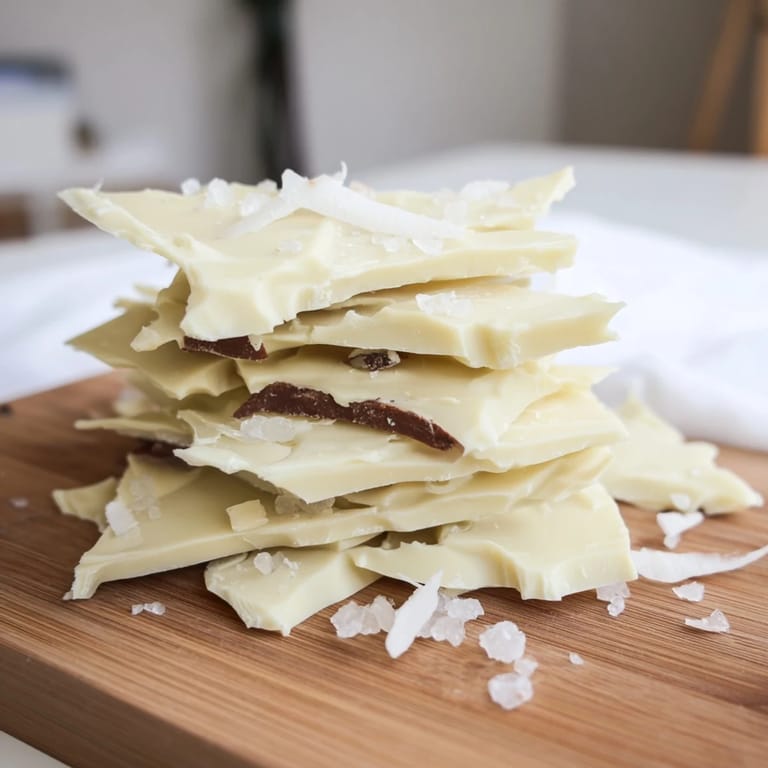
- Once set, carefully crack it into large, jagged pieces—you're going for that broken ice floe look, not perfect squares.
- Arrange on a Chilled Board:
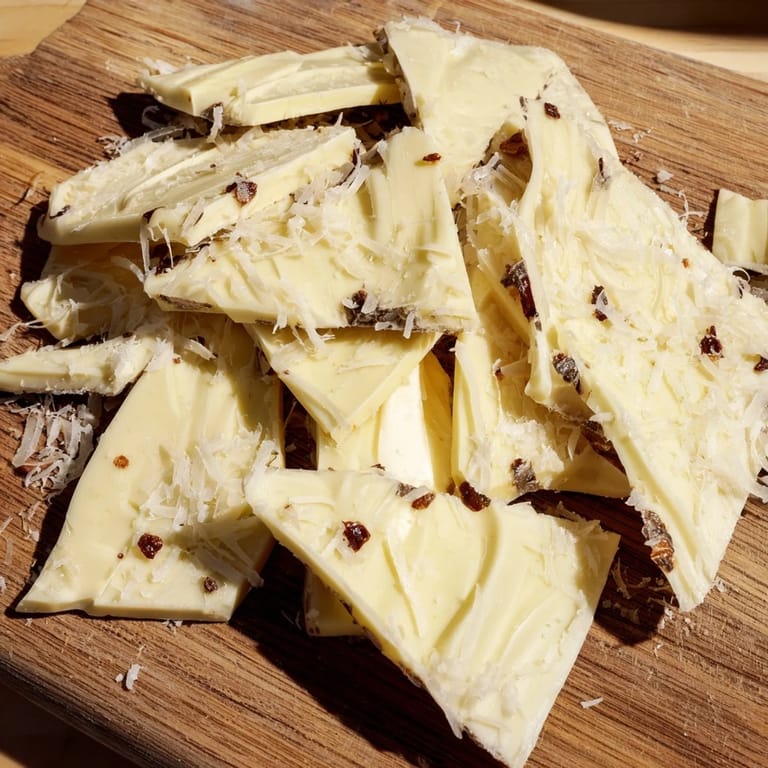
- Layer the white chocolate sheets and scatter parmesan shards across the surface like you're composing a landscape. The arrangement matters as much as the taste here.
- Finish and Serve Right Away:
- A light snow of flaky sea salt over everything, then get it to the table while the textures are still contrasting beautifully.
 Save to Pinterest
 There was this moment mid-dinner when someone broke a piece of the chocolate with their spoon and the parmesan shards crumbled with it, mixing together on the wooden grain like they belonged there all along. That's when I realized this wasn't just about the flavors—it was about the texture story, the contrast, the surprise of finding something savory in your dessert course.
The Theater of Simplicity
What I love about this recipe is how it breaks the unspoken rules of dessert without apologizing. You're not trying to hide the savory notes or sneak them in; you're putting them front and center. It teaches you that sometimes the most elegant thing you can do is stop adding and start editing. Every element here has a job—the white chocolate, the parmesan, the salt, the wood of the board. Nothing is decoration.
Texture and the Element of Surprise
I've made this dozens of times now, and the part that never gets old is watching people's confusion turn into curiosity the moment they taste it. The crispness of the chocolate, the slight crumble of aged cheese, the pinch of sea salt—it's like your mouth is experiencing three desserts at once, except they're all one thing. This is what happens when you let contrast do the talking instead of trying to blend everything into harmony.
Variations and Moments of Experimentation
I've played with dark chocolate on quieter evenings when I wanted something more intense, and I've scattered edible flowers for friends who needed color more than drama. A friend once suggested microgreens, and while it sounds weird, it somehow worked—that peppery note layering into the umami and salt. The recipe is minimal enough that you can riff on it without breaking it, but not so delicate that you can't make it your own.
- Dark chocolate creates a bolder, less sweet presentation if you're serving this after a rich meal.
- A whisper of edible flowers or microgreens adds color without competing with the flavors.
- Serve alongside a dry sparkling wine or a chilled dessert wine to turn it into something genuinely special.
 Save to Pinterest
 This dessert taught me that sometimes restraint is the most sophisticated thing you can offer. It's minimalist, a little bit unexpected, and completely unforgettable—which is exactly how I want people to remember the meal.
Your Questions Answered
- → How do you achieve thin white chocolate sheets?
Melt white chocolate gently and spread it evenly in a thin layer on parchment paper, then chill until fully set.
- → What is the purpose of coconut oil in the chocolate?
Coconut oil adds extra sheen and smoothness to the white chocolate sheets but is optional.
- → How should parmesan be prepared for this dish?
Use a vegetable peeler or sharp knife to shave thin, irregular shards from the parmesan block for texture contrast.
- → What kind of board works best for serving?
A light wood board or platter with a chilled surface enhances the dramatic icy presentation.
- → Can dark chocolate be used instead?
Yes, substituting dark chocolate offers a more intense flavor and a different visual effect.