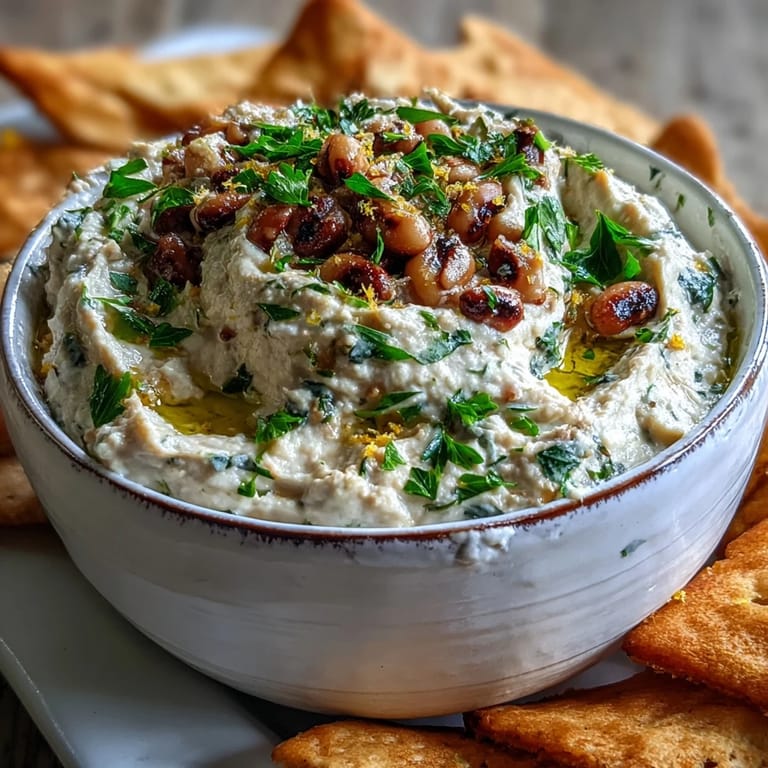
 Save to Pinterest
 My grandmother kept a cast iron pot on the back of her stove year-round, and black-eyed peas seemed to be perpetually simmering in it. One afternoon, watching her mash a batch with the back of a wooden spoon, I asked why she never puréed them smooth. She smiled and said texture was where the soul lived. That lesson stuck with me, and now whenever I make this creamy, intentionally chunky dip, I think of her hands working the spoon, the steam rising, the way a simple ingredient transforms into something generous and alive.
I served this at a backyard dinner last summer, and someone I barely knew went back for thirds, asking if it was store-bought. The honesty in that question made me laugh—there's something quietly satisfying about fooling people with simplicity. By the end of the night, it was gone, the bowl scraped clean, and I realized I'd stumbled onto one of those dishes that bridges every table.
Ingredients
- Black-eyed peas: Use canned if you're short on time, but drain and rinse them well so you control the seasoning from the start.
- Garlic: Mince it fine so it dissolves slightly into the peas as you mash, giving you flavor without harsh bites.
- Extra-virgin olive oil: This is where the silkiness comes from, so don't skimp or substitute with regular oil.
- Fresh lemon juice and zest: The zest adds brightness that juice alone can't deliver; don't skip it.
- Sea salt and black pepper: Taste as you go because the beans absorb salt differently depending on how they were cooked.
- Ground cumin: Optional but worth the small effort if you have it—it deepens the earthiness without announcing itself.
- Fresh parsley: A garnish that adds a whisper of green and freshness right before serving.
Tired of Takeout? 🥡
Get 10 meals you can make faster than delivery arrives. Seriously.
One email. No spam. Unsubscribe anytime.
Instructions
- Combine and breathe:
- Dump your drained peas and minced garlic into a bowl and just pause for a second—smell that? That's where flavor starts. Let the garlic sit with the warm peas for a moment if they're still warm.
- Build the foundation:
- Pour in the olive oil, lemon juice, and zest, then add your salt, pepper, and cumin if using. The acid and oil work together to soften the beans and create that creamy texture you're after.
- Mash with intention:
- Use a potato masher or fork and work through the peas with steady pressure—you want some parts completely broken down and others still holding their shape. This is what gives the dip character and keeps it from tasting like baby food.
- Taste the moment:
- This is crucial. Pinch a bit on a cracker or your finger and really taste it. Does it need more salt? More brightness? Adjust before you serve because seasoning after the fact never quite lands the same way.
- Finish and present:
- Scoop it into a serving bowl, drizzle a little extra olive oil on top so it glistens, and scatter parsley over it if you have fresh herbs nearby. This small touch makes it look intentional, not rushed.
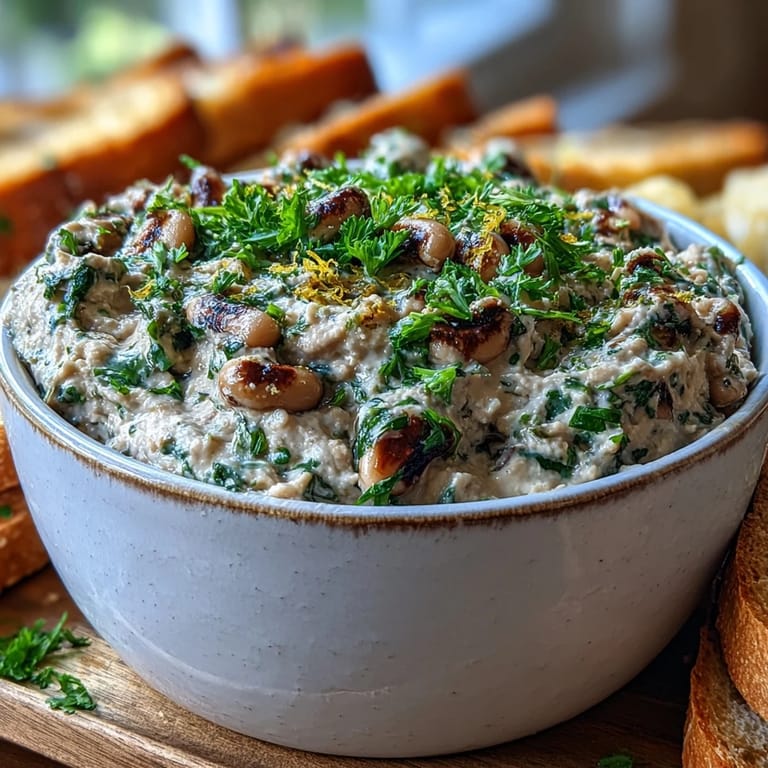 Save to Pinterest
 There's a moment when hot peas meet cold olive oil and lemon juice, and everything softens and becomes something greater than the sum of those parts. That's when you know you've nailed it.
Warm or Cold, It Works
Some nights I serve this still warm, when the flavors are bright and the texture is almost creamy. Other times I make it ahead and let it sit in the refrigerator for an hour, and it takes on a different personality—more settled, more sophisticated somehow. Both versions are right; it just depends on your mood and what else is on the table.
The Versatility Question
A dip is only as good as what you serve it with, but more importantly, it's only as adventurous as you let it be. If you're feeling creative, a pinch of smoked paprika brings a campfire-like warmth, while red pepper flakes add a gentle heat that builds slowly. Fresh mint instead of parsley completely changes the story, steering it toward Mediterranean instead of Southern. This is one of those recipes that invites you to play.
Making It Your Own
The beauty of this dish is that it asks almost nothing of you except attention and a willingness to taste as you cook. Roasted red peppers, a tablespoon of tahini for extra creaminess, a splash of hot sauce—all of these live happily inside this recipe if you want them there. I've also made it with roasted garlic instead of raw when I wanted something softer and sweeter.
- If you prefer it completely smooth, pulse it in a food processor just until you reach your desired consistency.
- A squeeze more lemon juice at the very end wakes everything up if it tastes flat.
- Leftover dip stays fresh in the refrigerator for up to four days, and honestly, it's even better the next day.
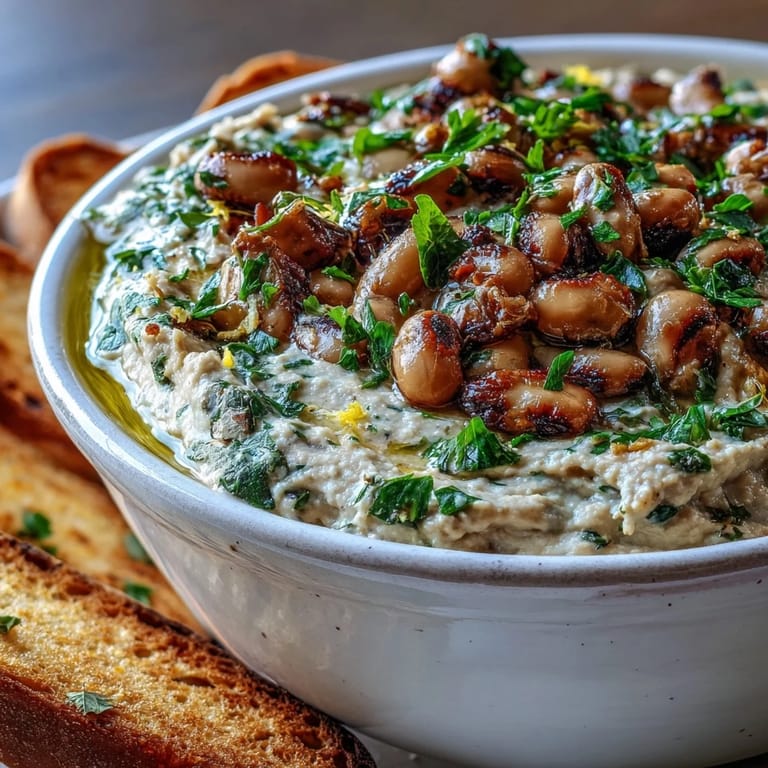 Save to Pinterest
 This is comfort food that doesn't pretend to be anything other than what it is: honest, forgiving, and built to feed the people you care about. Make it, serve it, and watch what happens.
Your Questions Answered
- → Can I use dried black-eyed peas instead of canned?
Yes, soak dried peas overnight and cook until tender before mashing. This method allows for better control over sodium content and texture.
- → How long does this keep in the refrigerator?
Store in an airtight container for up to 4-5 days. The flavors actually develop and improve after a day or two in the refrigerator.
- → Can I freeze smashed black-eyed peas?
Yes, freeze in portion-sized containers for up to 3 months. Thaw overnight in the refrigerator and stir well before serving. You may need to add a splash of olive oil when reheating.
- → What's the difference between smashed and pureed?
Smashing leaves a chunky, rustic texture perfect for dipping. Pureeing creates a completely smooth, hummus-like consistency if you prefer a creamier result.
- → What can I serve with this dish?
Pair with warm pita bread, crackers, or fresh vegetables for dipping. It also complements grilled chicken, lamb, fish, or roasted vegetables beautifully as a side dish.
- → Can I make this spicy?
Absolutely! Add smoked paprika, red pepper flakes, or a dash of hot sauce to the mixture. You can also drizzle with harissa or chili oil before serving.