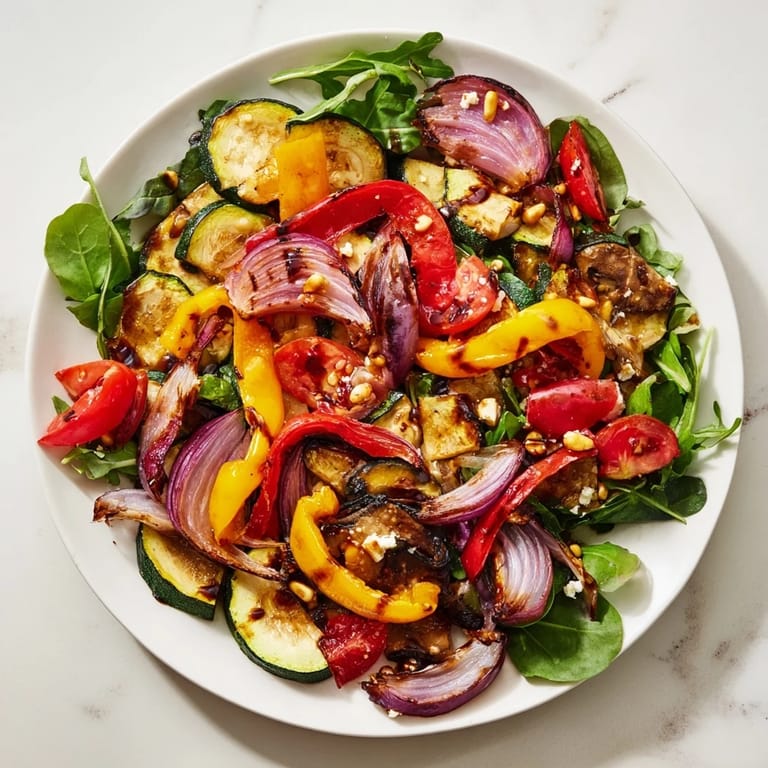
 Save to Pinterest
 There's something about a kitchen filled with the smell of caramelizing vegetables that makes you want to abandon your plans for the day. I discovered this salad on a lazy Sunday when I had too many peppers and zucchini sitting in my crisper drawer, refusing to be ignored any longer. Instead of roasting them separately like I normally would, I threw everything onto one sheet pan with a handful of herbs and let the oven do the heavy lifting. What emerged was nothing short of magic—tender vegetables with crispy, golden edges that tasted nothing like their raw selves. That one experiment became the salad I now make whenever I need something that feels both nourishing and indulgent.
I remember bringing this to a potluck where everyone was stressed about the main dishes, and somehow this simple roasted vegetable salad became the thing people kept coming back to. A friend who swore she hated eggplant ate three helpings, and I finally understood what makes a recipe worth keeping: it's not fancy, it's just genuinely good.
Ingredients
- Zucchini: Cut into half-inch slices so they caramelize without falling apart or turning to mush in the oven.
- Red and yellow bell peppers: One-inch pieces roast evenly and develop sweet, slightly charred edges that are impossible to resist.
- Red onion: The wedges soften and become almost candy-like as they roast, adding a gentle sweetness to balance the other vegetables.
- Eggplant: Cube it into one-inch pieces so it absorbs the oil and herbs while still holding its shape.
- Cherry tomatoes: Halving them means they release their juices during roasting and get jammy and concentrated.
- Olive oil: Use a generous two tablespoons for coating; this is what creates those golden, crispy edges.
- Dried Italian herbs: A teaspoon covers the vegetables beautifully without being heavy-handed.
- Salt and black pepper: Season boldly before roasting so the flavors have time to settle in.
- Mixed salad greens: A mild variety lets the roasted vegetables be the star without competing for attention.
- Extra virgin olive oil: Use three tablespoons for the dressing because it's what carries all the other flavors.
- Balsamic vinegar: Two tablespoons give the dressing its signature tangy sweetness.
- Dijon mustard: One teaspoon acts as an emulsifier and adds a quiet complexity that makes people wonder what that flavor is.
- Garlic: Finely mince one clove so it disperses evenly rather than sitting in little sharp chunks.
- Honey or maple syrup: Just a half teaspoon rounds out the acidity of the vinegar.
- Pine nuts or walnuts: Toasting them brings out their flavor and adds a satisfying crunch.
- Parmesan or feta cheese: Either one works; shave the Parmesan thin or crumble the feta so it melts slightly from the warm vegetables.
Tired of Takeout? 🥡
Get 10 meals you can make faster than delivery arrives. Seriously.
One email. No spam. Unsubscribe anytime.
Instructions
- Heat your oven and prep your pan:
- Set the oven to 425 degrees Fahrenheit and line a large baking sheet with parchment paper so nothing sticks. This temperature is hot enough to create real caramelization without burning the delicate vegetables.
- Coat the vegetables:
- Toss all your cut vegetables in a large bowl with two tablespoons of olive oil, the dried herbs, salt, and pepper until everything is glossy and evenly coated. Take a moment to taste the seasoning here; it's your last chance before they hit the oven.
- Spread and roast:
- Lay the vegetables in a single layer on your baking sheet and slide them into the oven for 25 to 30 minutes, stirring them halfway through. You'll know they're done when the edges are lightly browned and everything is fork-tender, and the kitchen smells incredible.
- Make the dressing:
- While the vegetables roast, whisk together the extra virgin olive oil, balsamic vinegar, Dijon mustard, minced garlic, and honey in a small bowl until the mixture comes together and looks emulsified. Taste it and adjust the seasoning, remembering that the warm vegetables will magnify these flavors.
- Assemble your salad:
- Arrange the fresh salad greens on a platter or on individual plates, building a bed that will hold the warm vegetables.
- Layer and dress:
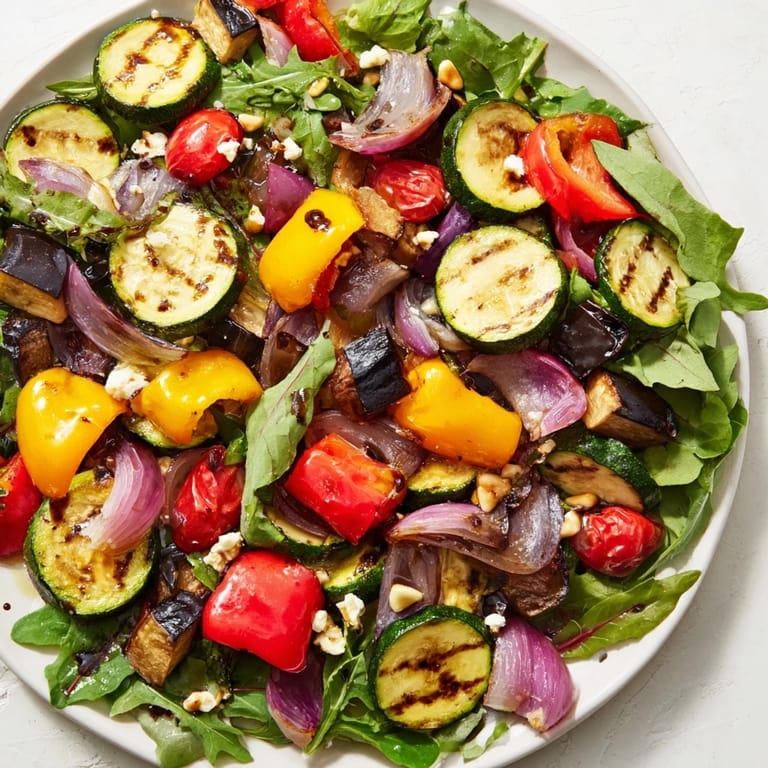
- Top the greens with your warm or room-temperature roasted vegetables, letting them settle into the greens slightly. Drizzle generously with the balsamic dressing, and scatter with toasted nuts and cheese if you're using them.
- Serve:
- Bring everything to the table while the vegetables are still warm, so people experience that perfect moment when the greens just barely wilt from the heat.
 Save to Pinterest
 This salad taught me that sometimes the simplest ideas are the ones that stick around longest. I make it now for weeknight dinners, potlucks, and those mornings when I need lunch and want it to feel special.
The Magic of High Heat
Roasting vegetables at 425 degrees feels almost aggressive until you pull that baking sheet out and see the transformation. The high heat draws out the natural sugars and caramelizes them slightly, creating a depth of flavor that you simply cannot achieve by cooking them any other way. Those crispy, slightly browned edges taste like something you'd order at a restaurant, but they're the result of understanding that vegetables need real heat to reach their best selves.
Make It Your Own
This salad is forgiving enough to accept whatever vegetables you have on hand and bold enough to still taste like itself. I've made it with roasted sweet potato and carrots on the side, added chickpeas for protein, and even tossed in some fresh herbs at the end. The framework stays the same, but your kitchen version will always taste a little different based on what you choose to add or leave out. That flexibility is part of what makes it so reliable to reach for when you're not sure what to cook.
Serving and Storing
This salad is one of the rare dishes that tastes good at any temperature, which means it's perfect for meal prep or for stretching one batch across a few days of lunches. Warm vegetables on fresh greens feels like comfort, but the same salad eaten cold from a container tastes equally bright and satisfying. Store the roasted vegetables and dressing separately if you're planning ahead, and bring them together just before eating to keep the greens from becoming soggy and sad.
- Make the dressing a day ahead; it actually tastes better once the flavors have had time to mingle.
- Roasted vegetables keep well in the refrigerator for up to four days, so you can roast a batch when you have time and assemble salads throughout the week.
- Toast your nuts and wash your greens just before serving so everything arrives at the table with the crispness it deserves.
 Save to Pinterest
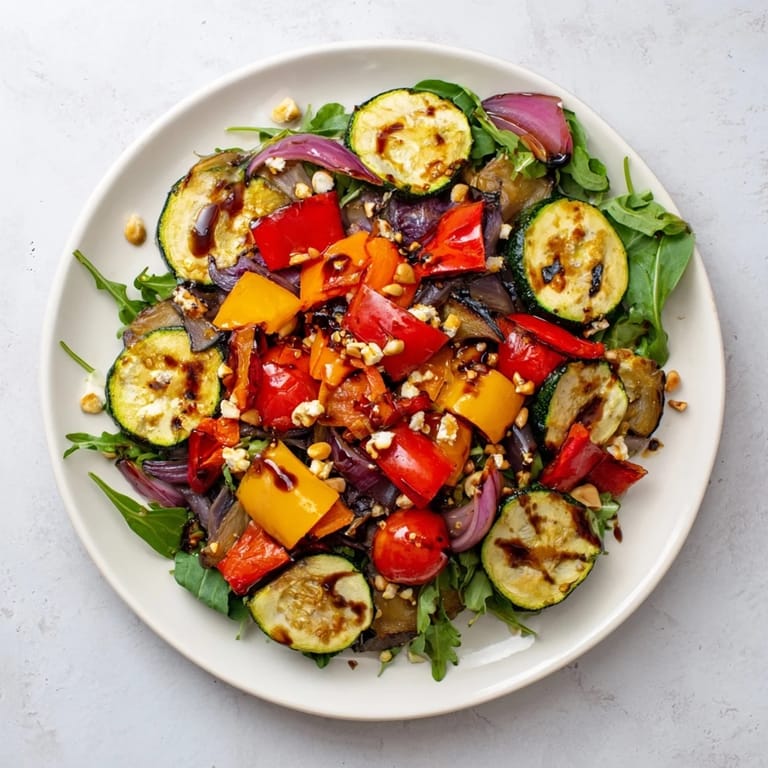
 There's a reason this salad keeps finding its way back onto my table: it's the kind of food that makes you feel good while you're eating it and doesn't leave you feeling sluggish afterward. Keep making it until it becomes second nature, and then it's yours.
Your Questions Answered
- → What vegetables are best for roasting in this dish?
Zucchini, bell peppers, eggplant, cherry tomatoes, and red onion roast well, becoming tender and caramelized.
- → How do I prevent the vegetables from drying out when roasting?
Coat vegetables evenly with olive oil and roast at 425°F, stirring halfway to ensure moisture retention and even cooking.
- → Can I prepare this salad ahead of time?
Yes, roast vegetables in advance and store separately. Dress greens just before serving to keep them crisp.
- → What is a good substitute for pine nuts in the garnish?
Toasted walnuts or almonds provide similar crunch and complement the flavors well.
- → How can I make the dressing without honey?
Maple syrup or agave work as natural sweeteners that blend well with balsamic and Dijon mustard.