 Save to Pinterest
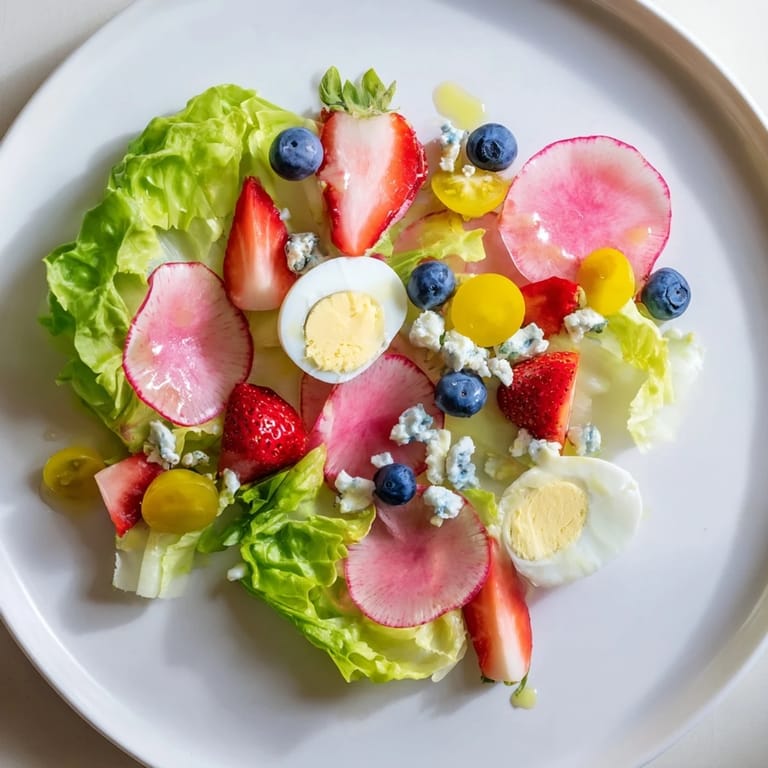
 I'll never forget the afternoon I was asked to bring something special to my best friend's baby shower. She'd mentioned wanting a palette of soft pastels to decorate the tables, and as I stood in my kitchen that morning, I realized the most beautiful thing I could bring wouldn't be store-bought—it would be edible. I started gathering ingredients almost like I was painting: pale pink grapefruit segments, blushing strawberries, cheerful yellow tomatoes, and jewel-toned blueberries. That's when this salad was born—a dish that became the centerpiece everyone talked about, not just because it was gorgeous, but because it tasted like someone had made it with their whole heart.
That baby shower taught me something I've carried into my kitchen ever since: the most memorable dishes aren't always the most complicated ones. As I arranged those delicate pink radish slices on the emerald greens that afternoon, watching my friend's face light up—that moment right there, that's when food becomes memory.
Ingredients
- Baby butter lettuce or mixed baby greens (4 cups): The foundation that matters more than you'd think—tender butter lettuce has a delicate sweetness that doesn't compete with the fruit, and it catches light beautifully on a platter
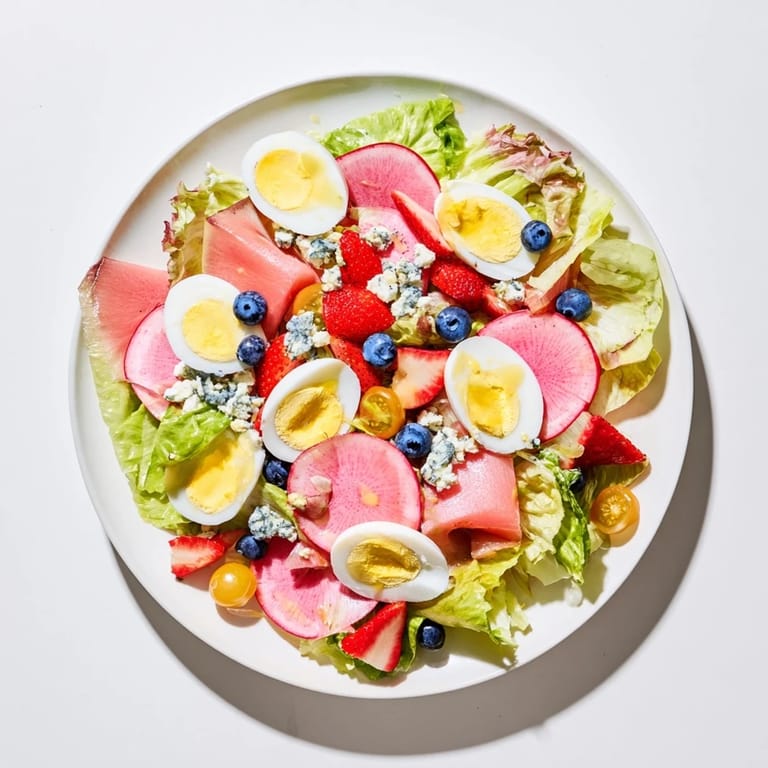
- Watermelon radish, thinly sliced (1 cup): This is your secret weapon for that blush-pink color; the thin slices let light pass through and create an almost stained-glass effect when arranged overlapping
- Pink grapefruit segments (1 cup): Supremed if you have the patience, but honestly, carefully separated segments work just fine and taste sweeter
- Strawberries, thinly sliced (½ cup): Slice these just before serving or they'll weep slightly, but that gentle pink juice adds to the magic
- Fresh blueberries (½ cup): The most forgiving ingredient—they don't bruise easily and provide those perfect little bursts of tartness
- Blue cheese, crumbled (½ cup): A good quality blue cheese gives you depth of flavor without being overpowering; if you go vegan, skip it entirely rather than forcing an alternative
- Yellow cherry tomatoes, halved (1 cup): The sweetness of cherry tomatoes in yellow variety is almost floral—they're what make this feel celebratory rather than ordinary
- Yellow bell pepper, diced (½ cup): Raw pepper adds a gentle crunch that keeps the texture interesting throughout
- Hard-boiled eggs, sliced (2, optional): If you include them, they add both protein and another layer of soft color
- Extra virgin olive oil (3 tbsp): Use something you actually like tasting—this is where quality matters since there's nowhere to hide
- White balsamic vinegar (1 tbsp): Clear and subtle, it won't darken your pale palette like regular balsamic would
- Honey (1 tsp): Just enough to round out the vinegar's sharpness
- Fine sea salt (¼ tsp) and freshly ground black pepper: Season to your taste—you might want more depending on how salty your blue cheese is
Tired of Takeout? 🥡
Get 10 meals you can make faster than delivery arrives. Seriously.
One email. No spam. Unsubscribe anytime.
Instructions
- Start with a blank canvas:
- Find your platter—preferably something white or pale so the colors sing. Spread those tender baby greens evenly across the surface, creating a soft bed that will cushion everything else. This is the moment it starts feeling like art.
- Paint with pink:
- Take your watermelon radish slices and arrange them in small clusters, letting them overlap slightly. Tuck the grapefruit segments between them, creating little pockets of color. Scatter the strawberries where there are gaps—think of this as deliberate but natural, not rigidly neat.
- Add the blue notes:
- Sprinkle your blueberries in small groups around the platter, pressing them gently into the greens so they stay put. Take your blue cheese and crumble it into delicate little piles—these provide that sophisticated moment of flavor and visual contrast.
- Fill with yellow:
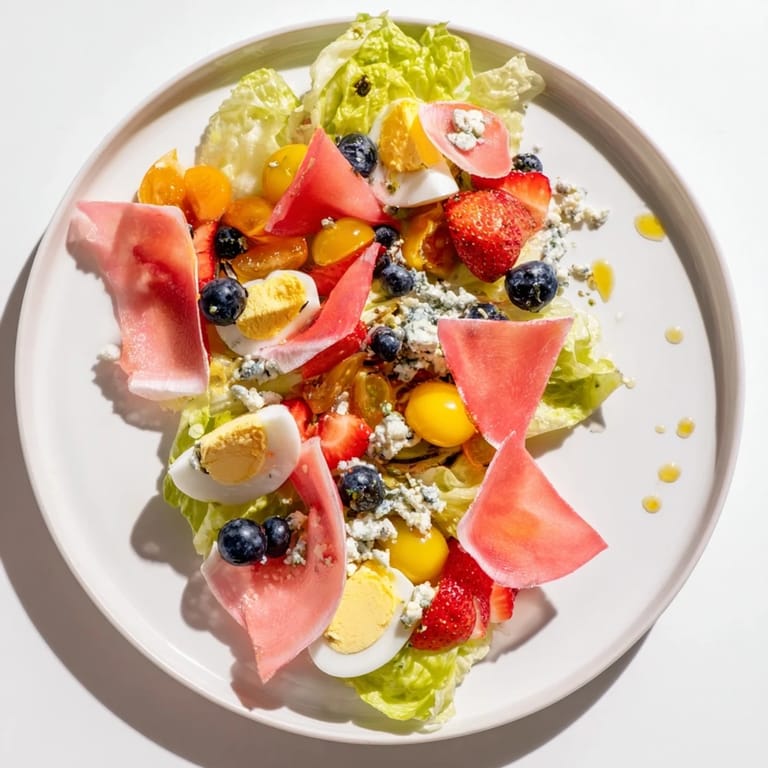
- This is where you finish the composition. Halve those sunny cherry tomatoes and distribute them to fill any empty spaces. Add your diced yellow pepper in little clusters. If using eggs, arrange the slices artfully—they become small focal points.
- Make the dressing:
- In your small bowl, whisk the olive oil and white balsamic together first—they'll emulsify faster. Add the honey and let it dissolve slightly. Season with salt and pepper, tasting as you go. The dressing should taste bright and slightly sweet, never harsh.
- The moment of truth:
- Drizzle that dressing gently over everything just before serving—this is crucial. Too early and the greens start to wilt; too late and you haven't distributed the flavors. A light hand and a steady pour create rivulets that catch the light.
- Serve with intention:
- Bring it to the table immediately. Watch people's faces. That moment, when something beautiful also tastes good—that's the whole point.
 Save to Pinterest
 My friend still talks about that salad—not just the way it looked, but how it made everyone feel like they were part of something special. That's when I understood: beautiful food is an act of love, and this one became a tradition we've made together ever since.
Why This Salad Changes the Game
Most salads fade into the background of a party, but this one commands attention in the best way. It's the kind of dish that makes your host look thoughtful and creative without requiring you to spend hours in the kitchen. The combination of fresh fruit, vegetables, and that peppery blue cheese creates a symphony of flavors that somehow feels both indulgent and nutritious. Every bite has texture—the tender lettuce, the crisp pepper, the juicy fruit, the subtle crunch of the cheese—and because there's no dressing soaking everything, it maintains that pristine, just-picked quality throughout the meal.
Adapting This Salad to Your Needs
The beauty of working with a color palette is that you can swap ingredients while keeping the visual spirit intact. Don't have pink grapefruit? Try beets or watermelon. No blueberries? Purple cabbage ribbons or purple grapes work. The yellow can be mango instead of tomatoes, corn kernels, or golden beets. Even the blue cheese can become goat cheese, feta, or simply omitted if you're cooking vegan. The principle remains the same: cool, fresh ingredients arranged with intention, dressed simply so the natural flavors shine.
The Details That Make It Memorable
Small decisions matter here more than in most recipes. The quality of your olive oil will taste noticeably better when it's not masked by heavy creams or cooked components. Slicing things thinly means more surface area catches the light and the flavors distribute evenly with each bite. Taking time to arrange thoughtfully—rather than just dumping ingredients on a plate—transforms this from side dish into centerpiece. It's in these moments that cooking becomes something more than feeding people; it becomes creating an experience they'll remember and want to recreate.
- If you're making this ahead, slice all your produce and keep it in separate containers in the fridge, then compose the salad about thirty minutes before serving
- A chilled platter (pop it in the freezer for ten minutes before plating) keeps everything fresher longer
- Bring the dressing to room temperature before serving—cold olive oil tastes muffled compared to room temperature oil
 Save to Pinterest
 This salad taught me that the simplest dishes, made with intention and care, are often the ones people never forget. Bring this to your next celebration and watch it become the thing everyone asks about.
Your Questions Answered
- → What greens work best for this pastel salad?
Baby butter lettuce or mixed baby greens provide a tender, fresh base that complements the delicate fruits and cheese.
- → Can I substitute the blue cheese for a vegan alternative?
Yes, vegan blue cheese alternatives or omitting the cheese altogether works well to maintain flavor while keeping it vegan.
- → How is the pastel color effect achieved?
Softly colored ingredients like watermelon radish, grapefruit, blueberries, and yellow tomatoes are artfully scattered to create a gentle pastel palette.
- → What dressing pairs well with these ingredients?
A light dressing of olive oil, white balsamic vinegar, honey, salt, and pepper balances the sweetness and acidity without overpowering the colors.
- → Are there any recommended serving suggestions?
Serving with toasted brioche or crostini adds texture, while a sparkling rosé wine complements the fresh flavors.