 Save to Pinterest
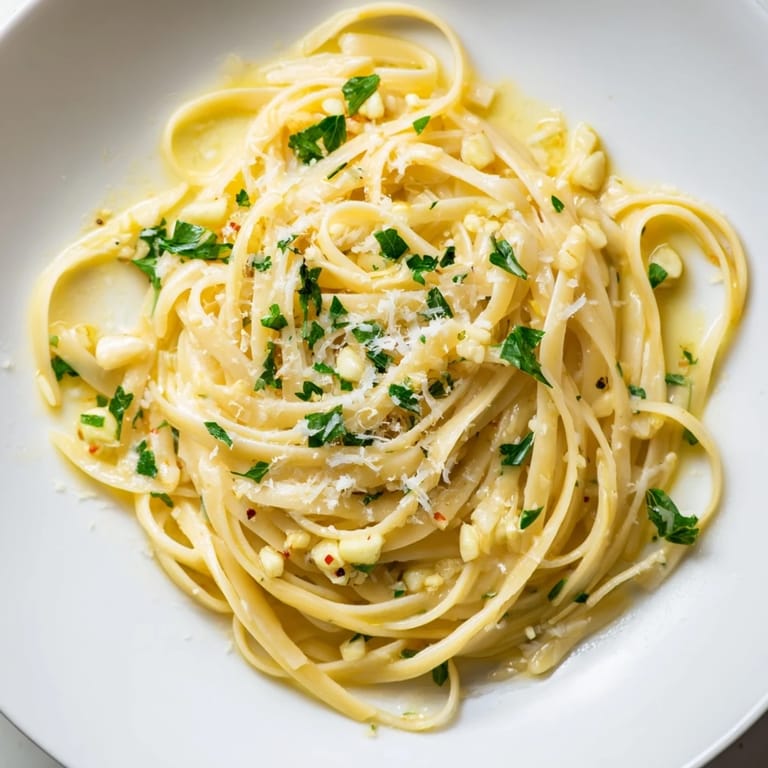
 There's something almost meditative about the way garlic transforms in butter—how those sharp, raw slivers soften into something golden and sweet, filling your kitchen with a smell that makes you lean over the pan just to breathe it in. I discovered this version of garlic butter linguine on a Tuesday night when I had nothing in my pantry except dried pasta, a few cloves of garlic, and butter I'd been saving. Twenty minutes later, I was twirling silky strands of pasta onto my fork, amazed at how such simple ingredients could taste so complete.
I made this for a friend once who'd had a rough week, and watching her twirl that first bite and close her eyes made me realize that sometimes the most meaningful dishes are the ones that let other flavors sing rather than compete. She asked for the recipe immediately, and I loved that I could write it down in under a minute—no fancy equipment, no pretentious technique, just honest cooking.
Ingredients
- Linguine: Use 400 g of dried linguine, or fresh if you have it—fresh cooks faster but dried holds the sauce beautifully.
- Unsalted butter: Good butter matters here since it's doing the heavy lifting; 80 g (6 tablespoons) is enough to coat without overwhelming.
- Garlic cloves: Six large cloves, minced fine, release more flavor than chunky pieces and distribute evenly through every bite.
- Red pepper flakes: A quarter teaspoon adds a gentle warmth if you like subtle heat; skip it if you prefer pure garlic sweetness.
- Lemon zest: Optional, but it brightens everything—just a single lemon's worth prevents the dish from feeling heavy.
- Sea salt and black pepper: Season to taste; freshly ground black pepper tastes noticeably fresher than pre-ground.
- Fresh parsley: 30 g chopped by hand just before serving keeps it tender and vibrant green.
- Parmesan cheese: 40 g freshly grated adds a salty umami note, though the dish stands alone without it.
- Lemon wedges: Serve these on the side for squeezing—they're the final adjustment each person makes to their own plate.
Tired of Takeout? 🥡
Get 10 meals you can make faster than delivery arrives. Seriously.
One email. No spam. Unsubscribe anytime.
Instructions
- Boil your water and pasta:
- Fill a large pot with salted water (it should taste like the sea) and bring it to a rolling boil. Add linguine and cook to al dente—tender but with a slight resistance when you bite it. Before draining, scoop out 120 ml of that starchy pasta water; it's liquid gold for silkening your sauce.
- Wake the garlic:
- In a large skillet over medium heat, melt your butter slowly, watching it foam gently. Add minced garlic and let it sizzle for just 1–2 minutes until fragrant and pale golden—the moment it smells incredible, that's when you stop so it doesn't brown and turn bitter.
- Build the sauce:
- Toss in your drained pasta right into that garlicky butter and stir gently to coat every strand. Pour in your reserved pasta water a splash at a time, watching as the starch creates a silky coating that clings to the linguine.
- Season and finish:
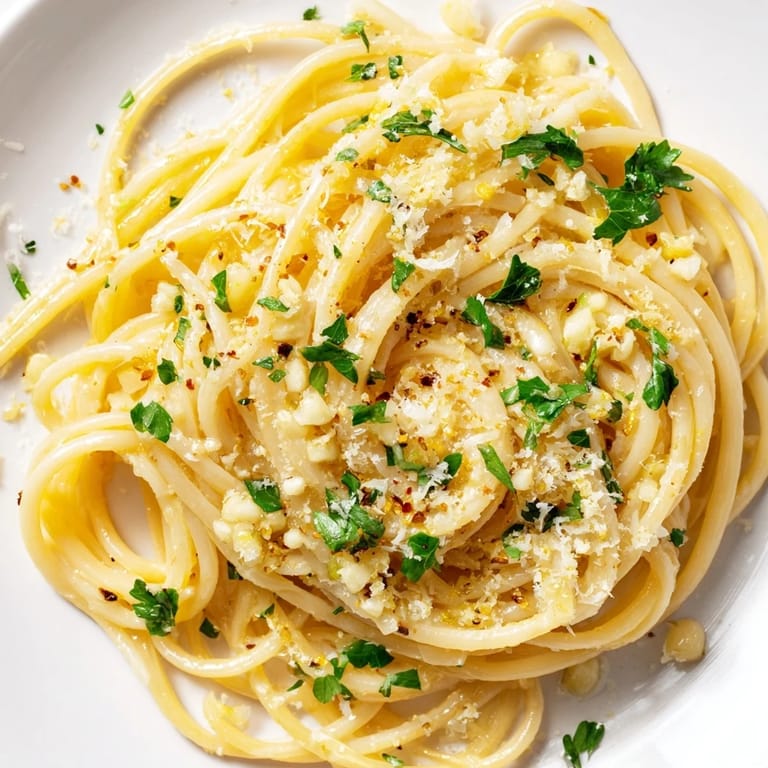
- Taste as you go, adding salt and pepper until it sings. Stir in your chopped parsley and half the Parmesan if you're using it, then toss everything together one final time.
- Serve right now:
- Transfer to warm bowls immediately, top with remaining Parmesan, and let each person squeeze fresh lemon over their own plate.
 Save to Pinterest
 There's a moment that happens almost every time I make this—right when someone takes that first bite and their shoulders relax—and I'm reminded that food doesn't need to be complicated to feel like love. This dish is proof that simplicity, when done with care, speaks louder than anything fussy ever could.
Why Butter Matters Here
Butter is the entire foundation of this sauce, which means it deserves respect. Good unsalted butter has a sweet, almost nutty flavor that shines when it's front and center like this. If your butter tastes greasy or one-dimensional, try switching brands—you'll taste the difference immediately. I learned this the hard way after wondering why one batch tasted so much better than another, only to realize I'd grabbed a different butter brand.
The Science of Silky Pasta
Pasta water is starchy and emulsifying, which means it helps fat and water blend into something smooth rather than separate and slick. When you add it gradually to your butter-coated linguine, the starch molecules do the work of creating that signature silky texture without any cream. This is why you must use pasta water from your cook, not plain water; plain water won't have the same effect and you'll end up with a greasy coating instead.
Simple Variations and Swaps
The beauty of this recipe is how it welcomes additions without needing them. Some nights I add sliced mushrooms sautéed in butter until golden, other times a handful of fresh spinach wilts right in, or if I'm feeling it, some cooked shrimp tossed in at the end. You can also mix olive oil with the butter if you want a lighter taste, or add a pinch of Aleppo pepper instead of red pepper flakes for a fruitier heat.
- Sautéed mushrooms add earthiness without overwhelming the garlic.
- Fresh spinach or arugula wilts in seconds and adds a gentle green note.
- Cooked shrimp transforms this into something elegant enough for guests.
 Save to Pinterest
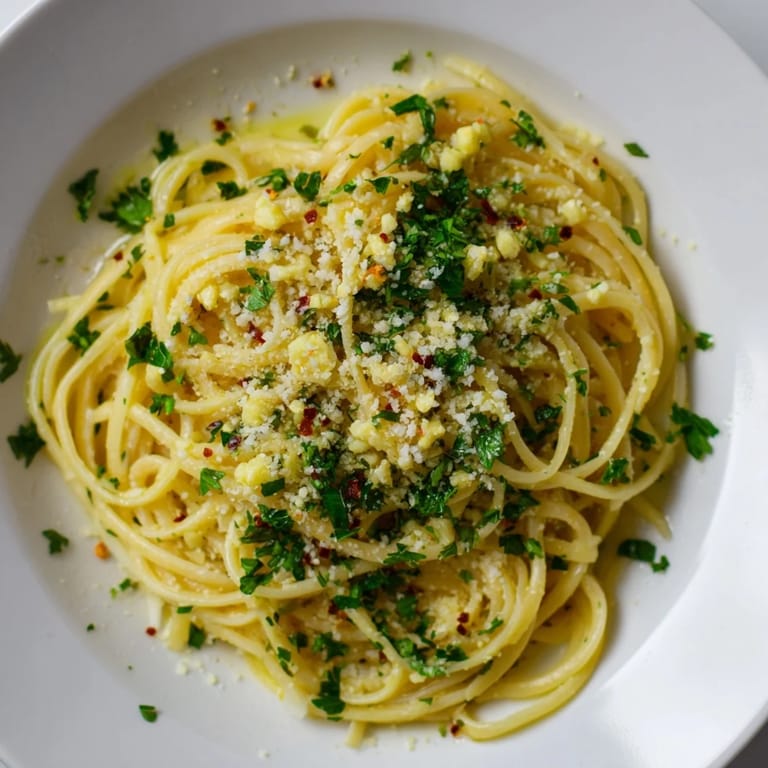
 This is the kind of dish that taught me that the best meals don't come from trying to impress anyone—they come from using good ingredients with intention and serving them while they're still warm. That's it.
Your Questions Answered
- → How do I prevent the garlic from burning?
Sauté the garlic over medium heat and stir frequently. Cook just until fragrant and lightly softened, about 1-2 minutes, to avoid bitterness.
- → Can I use other herbs instead of parsley?
Yes, fresh basil or oregano can be used, but parsley provides a bright, fresh flavor that complements the garlic butter well.
- → What is the purpose of reserving pasta water?
Reserved pasta water helps loosen the sauce, allowing it to coat the noodles smoothly and adds a subtle starchiness for better texture.
- → How can I add protein to this dish?
Consider adding sautéed shrimp, grilled chicken, or cooked mushrooms to enhance the dish while keeping it balanced.
- → Is it necessary to add Parmesan cheese?
Parmesan adds a savory depth and creamy finish but can be omitted or substituted with vegan alternatives for dietary preferences.