 Save to Pinterest
 There's something oddly satisfying about discovering that cottage cheese belongs in flatbread. I'd been making yogurt-based doughs for years, but one Tuesday afternoon, staring into the fridge at a half-full container of cottage cheese with an expiration date circled in red, I wondered what would happen if I stirred it into the dough alongside the yogurt. The result was impossibly tender, with a subtle tang that didn't announce itself but made everything taste somehow better. Now, whenever someone asks for a flatbread recipe, this is the one I reach for—it's become the kind of recipe that sits at the bridge between weeknight necessity and intentional cooking.
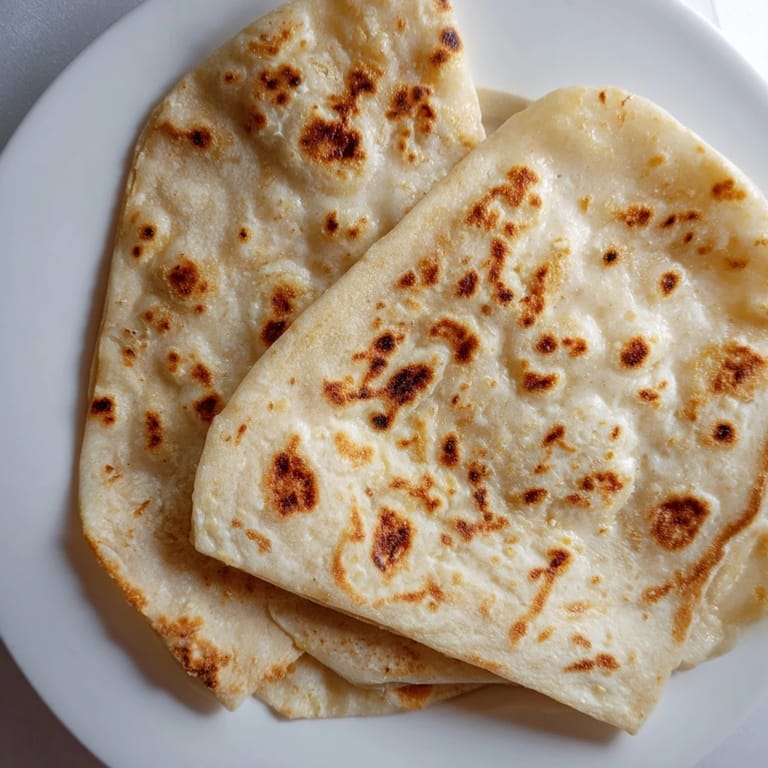
The first time I served these to my neighbor mid-morning, she was skeptical about the cottage cheese until she bit into one still warm from the pan, golden and blistered on both sides. She went quiet for a moment, then asked for the recipe before finishing the second one. That moment—watching someone's expression shift from polite curiosity to genuine delight—reminded me that the best recipes are often the simplest ones, hidden in plain sight.
Ingredients
- Plain flour (200 g): This is your structure; don't sift it unless your flour feels lumpy, and keep a little extra nearby for dusting because dough humidity varies with the weather.
- Greek yogurt (120 g): The tanginess and moisture come from here—full-fat makes the flatbreads richer, but regular works too if that's what you have.
- Cottage cheese (100 g): This is the secret ingredient that makes the crumb so tender; use the small-curd variety if you can find it, and don't worry about small lumps—they soften during cooking.
- Baking powder (1/2 tsp): Just enough to give them a gentle lift without making them puffy or cake-like.
- Fine sea salt (1/2 tsp): Enhances the subtle tang and brings out the grain flavor in the flour.
- Olive oil or melted butter (2 tbsp): For the pan; I prefer butter for warmth, but use whatever you're reaching for that day.
Tired of Takeout? 🥡
Get 10 meals you can make faster than delivery arrives. Seriously.
One email. No spam. Unsubscribe anytime.
Instructions
- Bring the dry ingredients together:
- Combine flour, baking powder, and salt in a large bowl, stirring with your fingers to distribute the salt evenly so you don't get pockets of oversalted dough.
- Add the dairy and mix:
- Dollop in the Greek yogurt and cottage cheese, then mix with a spoon or your hands until everything comes together into a shaggy, slightly wet mess—it should look rough and unpolished, not smooth.
- Knead gently into submission:
- Turn the dough onto a lightly floured surface and knead for just 2 to 3 minutes, handling it as little as possible so it stays tender; add flour only if it's sticking to your hands, not to the counter.
- Divide and shape into balls:
- Cut the dough into 6 roughly equal pieces and roll each one between your palms until it forms a smooth ball, which makes the next step easier.
- Roll thin and even:
- Working with one ball at a time, flatten it with a rolling pin into a circle about 5 to 6 mm thick, dusting lightly with flour as you go to prevent sticking without drying out the dough.
- Heat your pan with intention:
- Set a nonstick or cast iron skillet over medium heat and let it warm for a minute or two—you want it hot enough to create golden spots but not so hot that the outside burns before the inside cooks.
- Cook flatbreads until speckled and tender:
- Brush the pan lightly with oil or butter, then lay a flatbread in and let it cook for 2 to 3 minutes on the first side until golden spots appear, then flip and cook the other side until cooked through and speckled with darker spots.
- Keep them warm as you finish:
- Transfer each cooked flatbread to a plate and cover loosely with a clean kitchen towel so they soften slightly and stay warm while you cook the rest.
 Save to Pinterest
 There was an evening when I made these for a small dinner and found myself standing at the stove, watching the steam rise from each warm flatbread as my guests gathered in the kitchen. Someone called them "the best part of the meal," which mattered more than any main course ever could. It's those moments that turn a recipe from something you make into something you remember.
Flavor Variations to Try
Once you've made them plain once or twice, the dough becomes a canvas for whatever's calling to you. I've stirred in chopped fresh dill and a brush of garlic oil, folded herbs directly into the dough before rolling, and even added a pinch of nigella seeds for texture and earthiness. The cottage cheese base stays constant and forgiving, so your experiments rarely fail.
Storage and Reheating
These flatbreads are best eaten warm and fresh, but they keep beautifully in an airtight container for up to three days. To bring them back to life, warm them in a dry skillet over medium heat for a minute or two per side—they'll regain their softness and taste almost as good as the day you made them. Cold, they're still pleasant, but warm is where the magic happens.
How to Serve Them
I think of these flatbreads as the bridge between bread and a tool for eating. They wrap around curries and roasted vegetables, they dip into hummus and labneh, they cradle soft cheeses and cured meats, or they simply sit next to soup and get torn into pieces. The subtle tang from the yogurt and cottage cheese means they work equally well with bold flavors or simple spreads.
- Brush warm flatbreads with melted butter and sprinkle with sea salt for the simplest pleasure.
- Serve alongside soups or stews where they'll absorb the liquid and become part of the meal itself.
- Keep them wrapped loosely in a towel so they stay warm long enough for everyone to eat together.
 Save to Pinterest
 These flatbreads are a quiet kind of revelation—nothing fancy, nothing that requires special techniques, just simple ingredients that somehow become greater than the sum of their parts when they hit a hot pan. Make them when you need something real and warm to share.
Your Questions Answered
- → What makes these flatbreads tender?
The addition of cottage cheese and Greek yogurt adds moisture and a slight tang, resulting in a soft and tender texture.
- → Can I add herbs or spices to the dough?
Yes, mixing chopped parsley, chives, dill, or minced garlic into the dough enhances the flavor without altering the texture.
- → What type of pan works best for cooking?
A nonstick skillet or cast iron pan provides even heat and prevents sticking while achieving golden spots.
- → How should flatbreads be stored and reheated?
Store in an airtight container and reheat gently in a dry pan to maintain softness and warmth.
- → Are these flatbreads suitable for vegetarians?
Yes, they contain dairy but no meat, making them suitable for a vegetarian diet.