 Save to Pinterest
 There's a particular moment in early spring when the farmers market suddenly explodes with color, and I found myself standing in front of a pile of the most impossibly bright radishes, their greens still attached, practically glowing pink against the weathered wooden stand. The vendor mentioned she'd just harvested them that morning, and something about their crispness made me think of a salad that could actually taste like the season itself—no heavy dressings, just the bright snap of fresh vegetables and a lemon vinaigrette that would cut through everything with purpose.
I made this for a friend who'd just moved into a new apartment and invited me over on a Saturday afternoon when the kitchen was still mostly empty boxes. She had a cutting board and a bowl, and somehow assembling this salad in that sparse space felt like the first real meal of her new chapter—something that mattered more because of the circumstances than the ingredients themselves.
Ingredients
- Mixed spring greens: The combination of arugula, baby spinach, and watercress creates a flavor base that's peppery enough to hold its own against the brightness of lemon without disappearing into it.
- Sugar snap peas: These are the ones you can eat whole, and their sweetness is crucial—they're what makes this salad feel like spring rather than just a vegetable assembly.
- Fresh or frozen green peas: I learned the hard way that thawed frozen peas work just as well as fresh, so there's no reason to feel bad about using them on a Tuesday in February.
- Radishes: Slice them thin enough that they're delicate but not so thin they turn into translucent nothing—aim for the thickness of a coin, which gives you structure without toughness.
- Red onion: The sharp bite of raw onion is what keeps this salad from tasting too gentle and agreeable.
- Extra virgin olive oil: Use one you actually like tasting on its own, because you can taste it here.
- Fresh lemon juice: Bottled lemon juice will make your dressing taste like a tired imitation of itself, so squeeze actual lemons.
- Lemon zest: This is where so much of the brightness lives—don't skip it.
- Dijon mustard: It acts as an emulsifier and adds a subtle complexity that you might not be able to name but would definitely miss.
- Honey: Just enough to soften the vinegar's edge without making the dressing sweet.
- Sea salt and black pepper: Season to taste rather than trusting measurements exactly, because lemon juice varies in intensity.
- Fresh chives: A last-minute whisper of onion flavor that brightens the whole thing further.
- Feta cheese: Optional, but if you use it, crumble it into uneven pieces so some bites have more cheese than others.
Tired of Takeout? 🥡
Get 10 meals you can make faster than delivery arrives. Seriously.
One email. No spam. Unsubscribe anytime.
Instructions
- Gather your vegetables and get them ready:
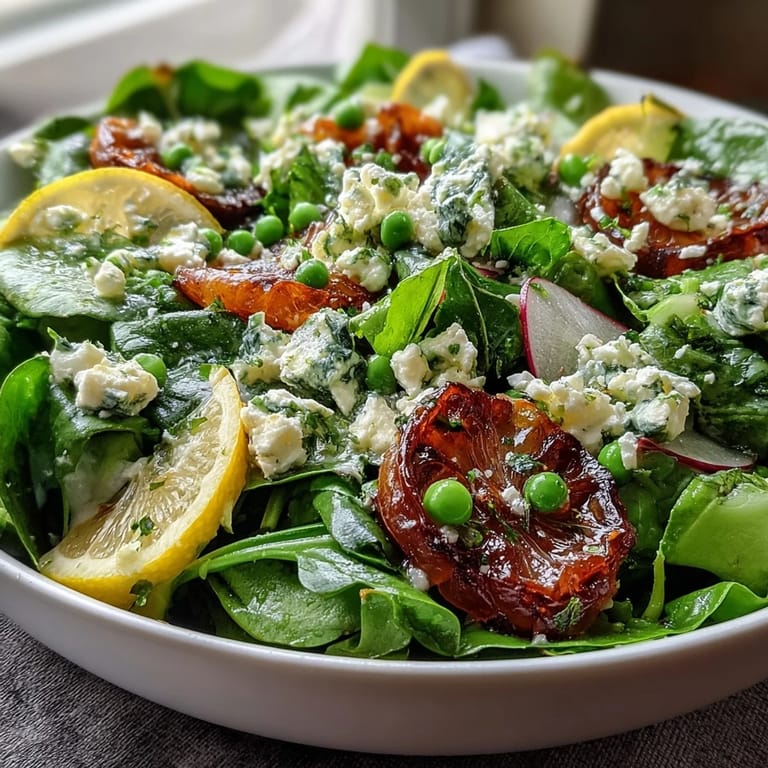
- Start with a clean, dry salad bowl and add your mixed greens first, then the snap peas (sliced on the diagonal, which is really just a way to make them look intentional), both types of peas, the thinly sliced radishes, and a small handful of red onion. Don't overthink the proportions—just layer them loosely together.
- Make the vinaigrette come alive:
- In a small bowl or even a mason jar, combine the olive oil, fresh lemon juice, lemon zest, Dijon mustard, honey, salt, and pepper, then whisk or shake until the whole thing looks creamy and emulsified. You'll see the moment it comes together, when the oil stops looking separate and becomes part of something unified.
- Bring it all together gently:
- Drizzle the vinaigrette over the salad and toss it with your hands or two forks, moving slowly enough that you're coating everything but not crushing the delicate greens into submission. The goal is confidence without aggression.
- Plate and finish:
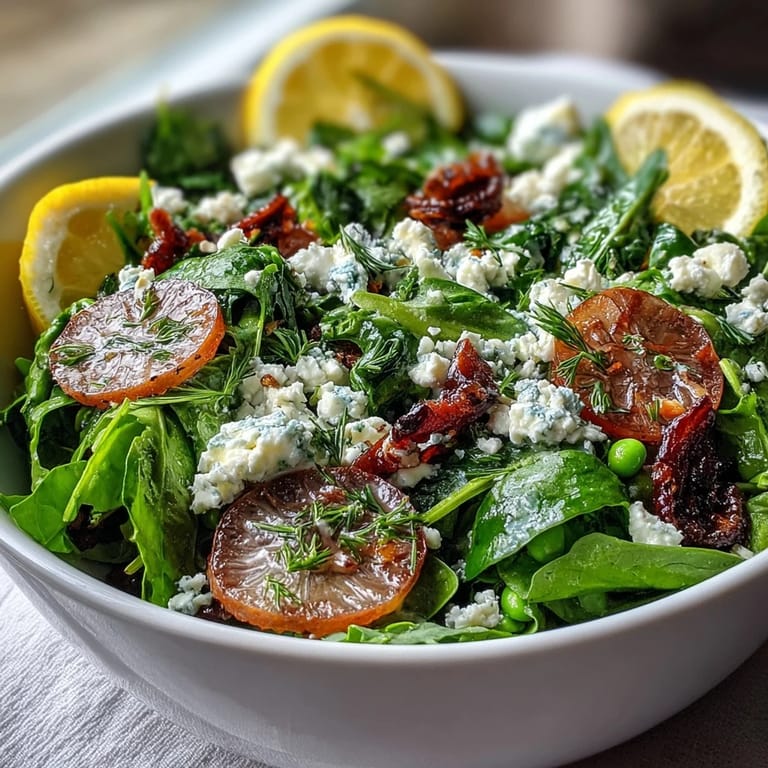
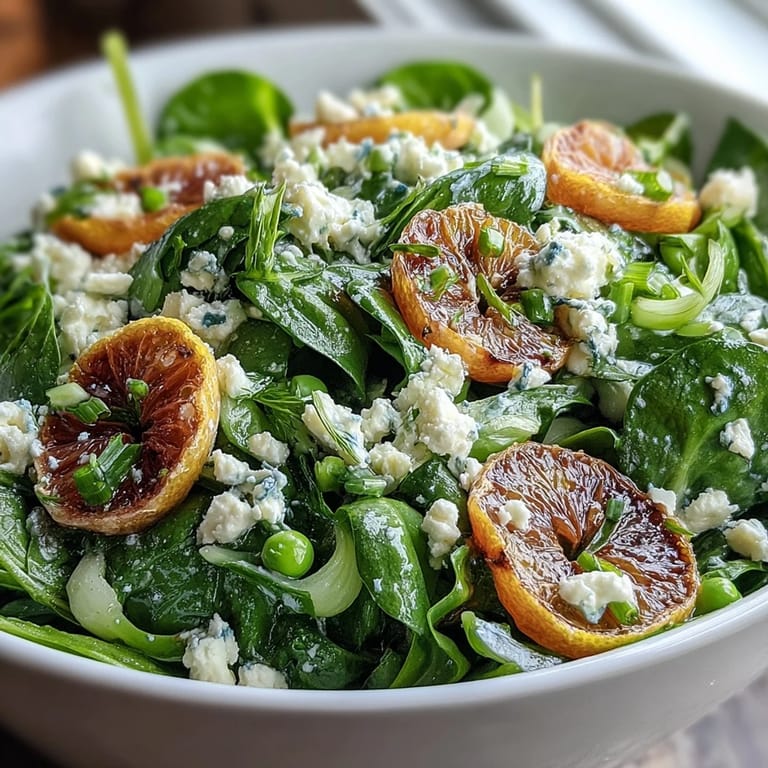
- Transfer to a serving platter or divide among individual bowls, then scatter the chopped chives across the top and crumble feta over everything if you're using it. Serve immediately, before the greens have a chance to get weepy.
 Save to Pinterest
 There was an evening when I made this salad for my mother who'd been saying she felt depleted, and she took one bite and actually smiled—not out of politeness but because something about the brightness of it seemed to matter. That's when I understood that sometimes the simplest meals carry the most weight.
When to Make This Salad
Spring arrives differently depending on where you live, but there's always that particular week when suddenly the farmers market has peas and radishes that didn't exist the week before. This is the salad for that exact moment, when you want to taste the season without complicating it.
Building Flavor Without Weight
The real skill in making something like this is understanding that brightness comes from acid and zest and fresh aromatics, not from heavy components. The lemon juice does almost all the work, and the zest backs it up—together they create a flavor that's sharp enough to matter but not so intense that it overshadows the vegetables themselves.
Variations and Possibilities
The beauty of this salad is that it's a frame you can work within rather than a prescription you have to follow exactly. Add grilled chicken or salmon if you want protein, sprinkle toasted sunflower seeds or sliced almonds for crunch, or swap the feta for goat cheese if that's what you have. Some people add fresh herbs like dill or tarragon, and they're not wrong to do so.
- For a vegan version, leave off the feta entirely or use a plant-based substitute that you actually enjoy eating.
- This salad pairs remarkably well with a crisp Sauvignon Blanc, if you're the type who drinks wine with lunch.
- You can make the vinaigrette up to a day in advance and shake it again before using, which at least solves the problem of advance preparation for part of the dish.
 Save to Pinterest
 This is the kind of salad that reminds you why fresh ingredients matter so much, and why sometimes the most satisfying meals are the ones that feel closest to their origins. Make it when you need something bright, and watch how people respond to that simplicity.
Your Questions Answered
- → What kinds of greens work best in this salad?
Mixed spring greens like arugula, baby spinach, and watercress provide a tender, peppery base that complements the lemon vinaigrette and crisp vegetables.
- → Can I use frozen peas in the salad?
Yes, thawed frozen green peas are a convenient option, adding sweetness and texture similar to fresh peas.
- → How should I prepare the radishes for the best texture?
Thinly slice radishes using a sharp knife or mandoline to achieve crisp, crunchy bites that balance well with softer greens and peas.
- → Is feta cheese necessary for this dish?
Feta adds a creamy, tangy contrast but can be omitted or replaced with vegan alternatives for dietary preferences.
- → What vinegar alternatives can be used in the vinaigrette?
This vinaigrette relies on fresh lemon juice for acidity, but white wine vinegar or apple cider vinegar can be substituted for a slightly different flavor.
- → How long can this salad be stored after assembling?
Best enjoyed immediately to maintain crispness, but it can be refrigerated for a few hours; toss before serving to redistribute the dressing.