 Save to Pinterest
 There's something about assembling a Buddha bowl that feels less like cooking and more like creating art on a plate. One Saturday morning, I was rushed, genuinely out of ideas for breakfast, and found myself staring at a half-empty fridge with a curious mix of roasted vegetables and greens. Instead of giving up, I grabbed a bowl, started layering, drizzled some tahini sauce I'd made the night before, and suddenly had this luminous breakfast that tasted far better than it had any right to. That's when I realized these bowls work because they're forgiving, colorful, and somehow make you feel like you've accomplished something before 9 a.m.
I made this for my sister during a lazy Sunday when she was visiting, and she actually asked me to write down the recipe—not as a favor, but because she genuinely wanted to make it again at home. Watching her taste the crispy chickpeas with the creamy dressing and the bright greens, I saw that moment where food becomes something worth remembering. That bowl didn't feed just hunger; it sparked a conversation about how eating well doesn't have to be complicated or time-consuming.
Ingredients
- Mixed greens (spinach, arugula, or kale): Use 2 cups—the base of everything, so pick leaves you actually enjoy eating raw because they're the foundation of your bowl.
- Sweet potato: One small one, peeled and diced into roughly 1/2-inch cubes so they roast evenly and get caramelized at the edges.
- Chickpeas: One can, drained and rinsed thoroughly—this step matters because excess liquid prevents crisping.
- Cucumber: One small one, sliced however feels right, adding freshness and crunch that balances the warm roasted vegetables.
- Cherry tomatoes: About 1 cup halved, bringing acidity and brightness that wakes up your palate.
- Avocado: One small one, sliced just before assembly so it doesn't brown and lose that buttery appeal.
- Shredded carrot: One small carrot adds subtle sweetness and that satisfying raw crunch.
- Olive oil: Two tablespoons divided between the roasting components—use good quality oil you'd actually taste.
- Smoked paprika and ground cumin: Half a teaspoon each, warming spices that make the chickpeas taste restaurant-quality.
- Tahini: Three tablespoons for the dressing—it's the glue that ties everything together with creamy, nutty richness.
- Lemon juice: One tablespoon, cutting through the richness and keeping flavors bright.
- Maple syrup or honey: One tablespoon balances the tahini's earthiness with subtle sweetness.
- Garlic clove: One small one, minced, adding depth to the dressing without overpowering it.
Tired of Takeout? 🥡
Get 10 meals you can make faster than delivery arrives. Seriously.
One email. No spam. Unsubscribe anytime.
Instructions
- Heat your oven and prep your pan:
- Preheat to 400°F and line a baking sheet with parchment paper—this prevents sticking and makes cleanup almost enjoyable.
- Prepare the sweet potatoes for roasting:
- Toss your diced sweet potatoes with 1 tablespoon olive oil, salt, and pepper, then spread them on one half of the baking sheet. They'll need about 25-30 minutes to turn tender with caramelized edges, so spacing matters.
- Season and spread the chickpeas:
- Pat your drained chickpeas dry with a paper towel—this is crucial because moisture is the enemy of crispiness. Toss them with the remaining 1 tablespoon olive oil, smoked paprika, cumin, salt, and pepper, then spread on the other half of the baking sheet.
- Roast everything together:
- Slide the sheet into the oven and set a timer for about 15 minutes, then give everything a good stir so nothing sticks or browns unevenly. Return for the final 10-15 minutes until the sweet potatoes are fork-tender and the chickpeas sound crispy when you shake the pan.
- Whisk together the tahini dressing:
- While things roast, combine tahini, lemon juice, maple syrup, minced garlic, and salt in a small bowl. Whisk vigorously—it'll look thick at first, almost stubborn—then add water one tablespoon at a time until you reach a pourable consistency that still clings to a spoon.
- Assemble your bowl:
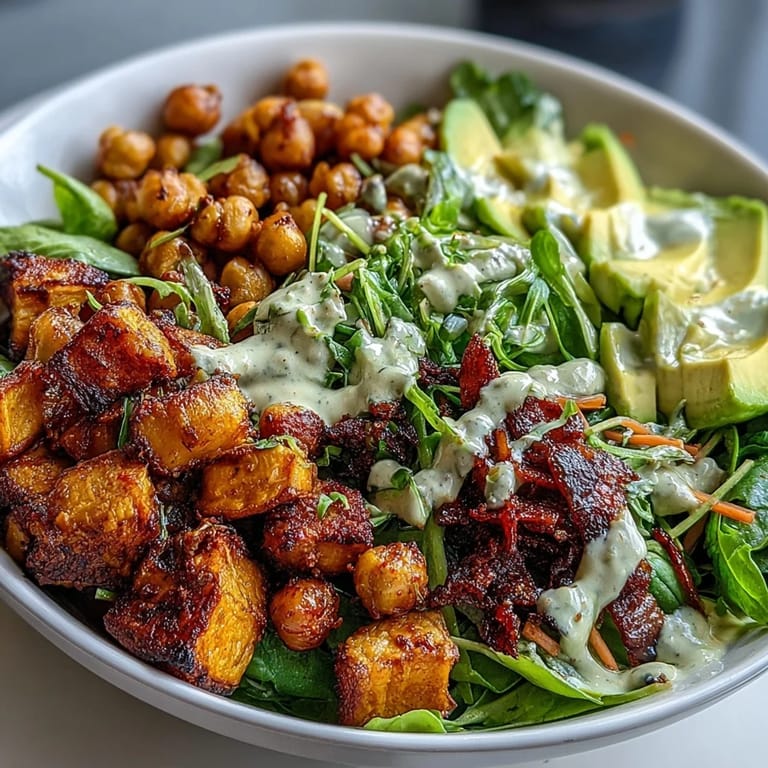
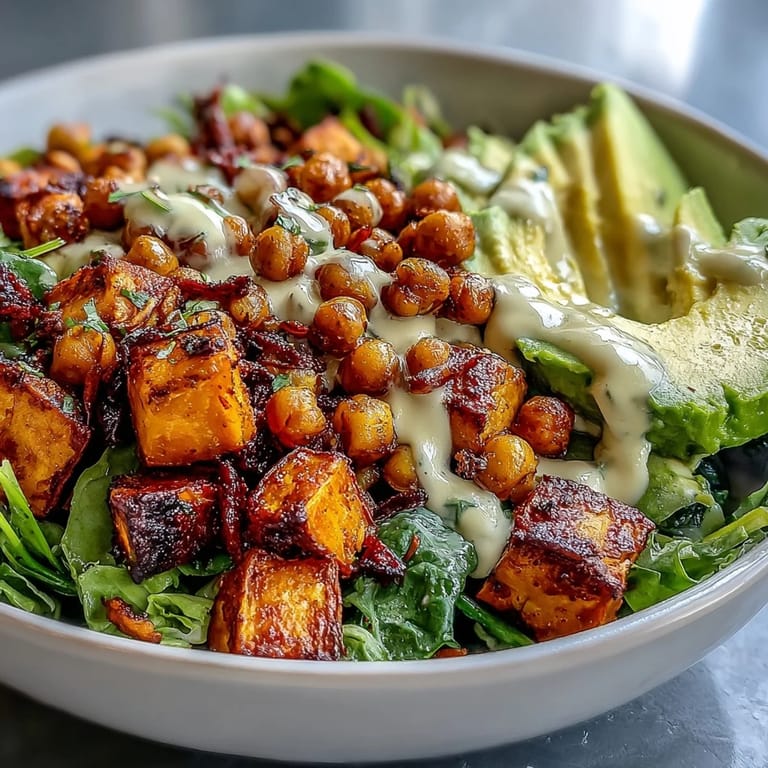
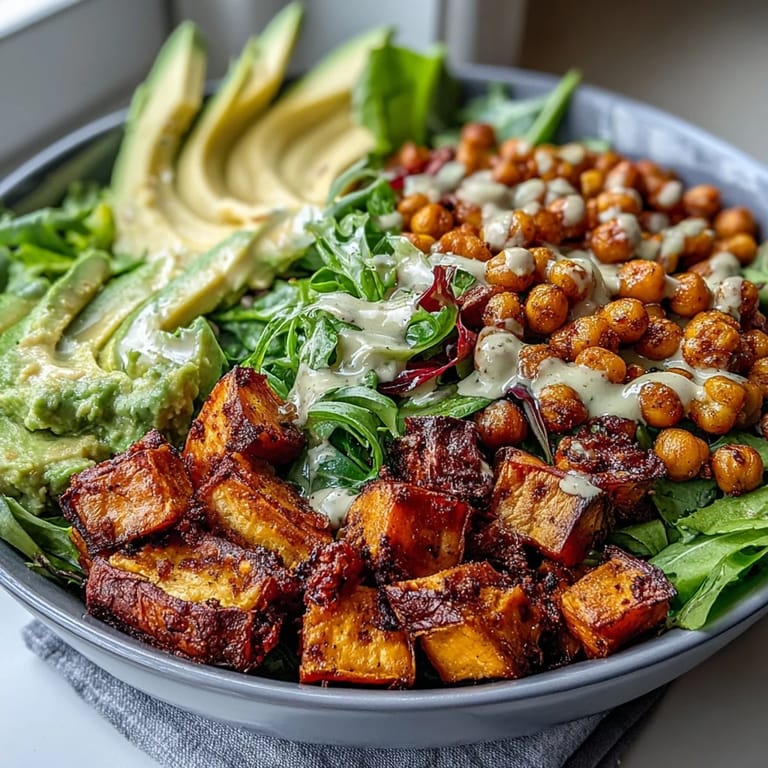
- Divide the mixed greens between two bowls as your base, then arrange the roasted sweet potatoes, crispy chickpeas, fresh cucumber slices, halved cherry tomatoes, shredded carrot, and avocado slices in whatever pattern feels right to you. There's no wrong way to arrange a bowl.
- Finish and serve:
- Drizzle generously with the tahini dressing—don't be shy, it's the element that transforms all these separate components into something cohesive and craveable. Serve immediately while the roasted vegetables are still warm and everything feels fresh.
 Save to Pinterest
 There was a morning when my partner took one bite and said, 'You should make this every week,' and I realized that sometimes the simplest meals become the ones you look forward to most. What started as breakfast evolved into something we'd request on busy mornings, a ritual of sorts, proof that nourishing food doesn't require complexity.
The Magic of Roasting Vegetables Together
Roasting sweet potatoes and chickpeas side by side is smarter than it seems because they cook at the same temperature and timeline, but they need different attention. The sweet potatoes go soft and yielding, while the chickpeas transform into little crispy spheres with creamy centers—two different textures from one oven, which feels like winning at efficiency. I've learned to stir them both at the halfway mark, but honestly, the chickpeas benefit from that stir more than the sweet potatoes do.
Why This Dressing Changes Everything
Tahini dressing intimidates people, but it's actually just emulsification with an attitude—tahini, acid, sweetness, and water coming together to create something creamy without dairy. The first time I made it, I was convinced I'd ruined it because it looked like wet sand, but then the whisking happened and suddenly it transformed. Now I make extra because it lasts in the fridge and elevates roasted vegetables, grain bowls, and even raw salads with effortless grace.
Build Your Own Bowl Philosophy
This recipe is a template, not a law, which is exactly what makes Buddha bowls so satisfying to make at home. Butternut squash works beautifully instead of sweet potato, regular potatoes offer a different texture if you prefer something sturdier, and honestly, any roasted vegetable you have on hand becomes part of the story. I've made versions with Brussels sprouts, carrots, beets, and even broccoli, each one slightly different but equally nourishing.
- A soft-boiled egg or poached egg adds richness and extra protein if you're not vegan.
- Toasted seeds like pumpkin or sunflower seeds bring crunch that elevates the entire bowl.
- A splash of hot sauce or sriracha transforms this into something with personality if you crave heat.
 Save to Pinterest
 Breakfast Buddha bowls taught me that eating well is just about showing up with intention, choosing ingredients you actually want to eat, and taking the time to make them taste good. Everything else unfolds from there.
Your Questions Answered
- → Can I prepare this ahead of time?
Yes, you can roast the sweet potatoes and chickpeas up to 3 days in advance. Store them separately in airtight containers in the refrigerator. The tahini dressing can also be made ahead and kept for up to a week. Assemble everything just before serving to maintain optimal texture.
- → What protein alternatives work well?
Beyond chickpeas, you can use black beans, lentils, or tofu cubes. If you're not following a vegan diet, a soft-boiled egg, grilled chicken, or smoked salmon would be excellent additions for extra protein.
- → How do I make the tahini dressing smoother?
If your tahini is separated, whisk the jar thoroughly before measuring. Add warm water gradually, one tablespoon at a time, while whisking continuously. This creates a silky, pourable consistency. The dressing will thicken slightly when refrigerated.
- → Can I use different vegetables?
Absolutely. Roasted vegetables like bell peppers, zucchini, or butternut squash work beautifully. Raw options include shredded cabbage, sliced radishes, or fresh herbs like cilantro and parsley. Adapt based on what's in season or your personal preferences.
- → Is this suitable for other diets?
This bowl is naturally vegan and gluten-free. For paleo diets, omit the chickpeas and add more vegetables or protein. Those with sesame allergies can substitute the tahini dressing with avocado sauce or cashew cream instead.