 Save to Pinterest
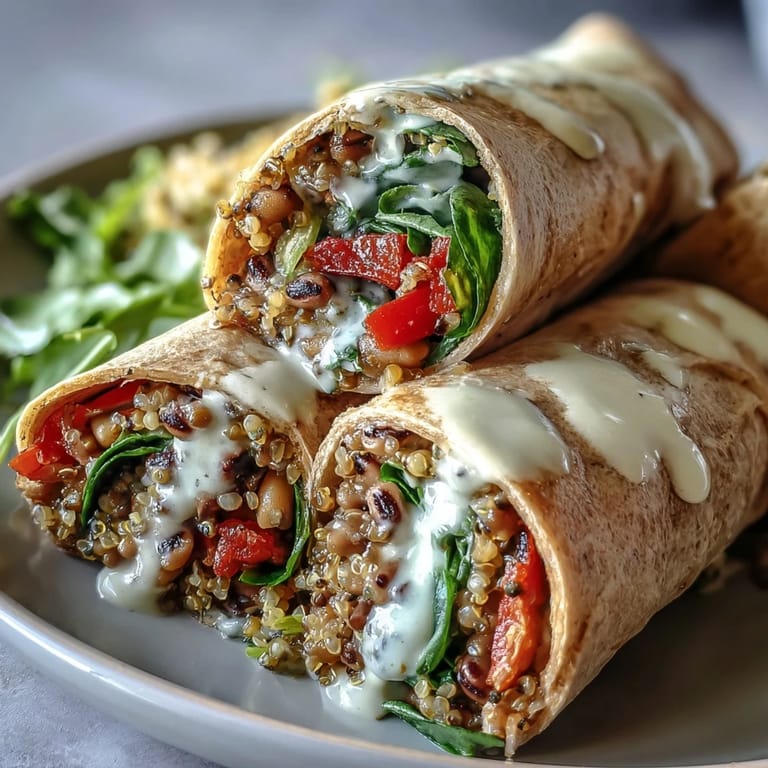
 My partner came home with a bag of fresh spinach from the farmer's market on a Tuesday, and we stood in the kitchen trying to figure out dinner without repeating the same salad we'd made three nights running. I grabbed a can of black-eyed peas from the pantry, some brown rice that was already cooked, and suddenly these wraps came together in the time it took to chop vegetables. What surprised me most was how the tahini sauce tied everything together—one drizzle transformed what could have been a random collection of ingredients into something genuinely craveable.
Last month I brought four of these to a potluck where everyone else showed up with heavy casseroles, and I watched person after person reach for a wrap instead of the expected comfort food. A friend who usually steers toward meat-heavy plates ate two and asked for the recipe, which felt like quiet vindication that vegetables and legumes could hold their own in a room full of traditional expectations.
Ingredients
- Black-eyed peas (1 cup cooked): These humble legumes have a mild, earthy flavor that doesn't compete with other ingredients, and they bring real staying power to the wrap so you're not reaching for a snack an hour later.
- Brown rice or quinoa (1 cup cooked): Either grain works beautifully here, though quinoa has a slightly nuttier taste if you want to elevate the whole thing; brown rice is the safer bet if you're feeding skeptics.
- Fresh spinach (1 cup): Raw spinach wilts slightly when it contacts the warm sauce, creating a tender base that cradles everything else—use baby spinach because mature leaves can be tough to roll.
- Carrot, julienned: Cut them thin so they stay crisp and don't tear the tortilla as you roll; thicker cuts make the wrap unwieldy and harder to hold.
- Red bell pepper, thinly sliced: The sweetness balances the earthiness of the beans, and the color makes these look vibrant and appealing.
- Red onion, thinly sliced (1/4 cup): This small amount provides sharp brightness without overpowering; any more and your wrap becomes a red onion sandwich.
- Cucumber, cut into strips: These add crunch and a cooling element that plays well against the richness of the tahini sauce.
- Tahini (1/4 cup): This is non-negotiable—it's the glue and the soul of the wrap, turning separate components into something cohesive and luxurious.
- Lemon juice (2 tbsp): This brightens the tahini and prevents it from tasting flat or one-note; it's the difference between a good sauce and one you'll remember.
- Olive oil (1 tbsp): Just enough to add richness and help the sauce come together smoothly.
- Garlic (1 clove, minced): Use fresh and finely minced so it distributes evenly throughout the sauce and doesn't create harsh bites.
- Water (2–3 tbsp): Add gradually while whisking so you can control the consistency—you want pourable, not pourable enough to drip through your wrap.
- Ground cumin (1/4 tsp): This warm spice connects all the Mediterranean-inspired elements and adds complexity without announcing itself loudly.
- Whole wheat tortillas (4 large): Large matters here because you need enough real estate to layer ingredients without them spilling out; thin tortillas tear more easily than thick ones.
Tired of Takeout? 🥡
Get 10 meals you can make faster than delivery arrives. Seriously.
One email. No spam. Unsubscribe anytime.
Instructions
- Build the tahini sauce first:
- In a small bowl, whisk together tahini, lemon juice, olive oil, garlic, cumin, salt, and pepper until combined, then gradually add water while whisking until the sauce reaches the consistency of thin yogurt. This step first means your sauce is ready to go when you need it, and the flavors have time to meld while you're prepping everything else.
- Warm your tortillas gently:
- Either pass them through a dry skillet for 10 seconds per side or wrap them in a damp towel and microwave for 20 seconds—this makes them pliable enough to fold without cracking. Cold tortillas are brittle and will split as you roll them, ruining the whole wrap.
- Lay out your assembly line:
- Place a tortilla on a clean, flat surface and arrange a quarter of the spinach in the center as your base. Layer the black-eyed peas, rice, carrot, bell pepper, red onion, and cucumber on top, keeping everything in the center third of the tortilla so you have room to fold.
- Sauce generously:
- Drizzle a generous spoonful of tahini sauce over the vegetables—this is not the place to hold back, because the sauce binds everything together and prevents ingredients from shifting as you roll. The sauce should pool slightly but not run off the sides.
- Fold and roll with intention:
- Fold in the left and right sides of the tortilla first, then roll from the bottom up toward you, keeping tension as you go so the wrap stays tight. A loose wrap will fall apart on first bite; a tight wrap holds together beautifully.
- Finish and serve:
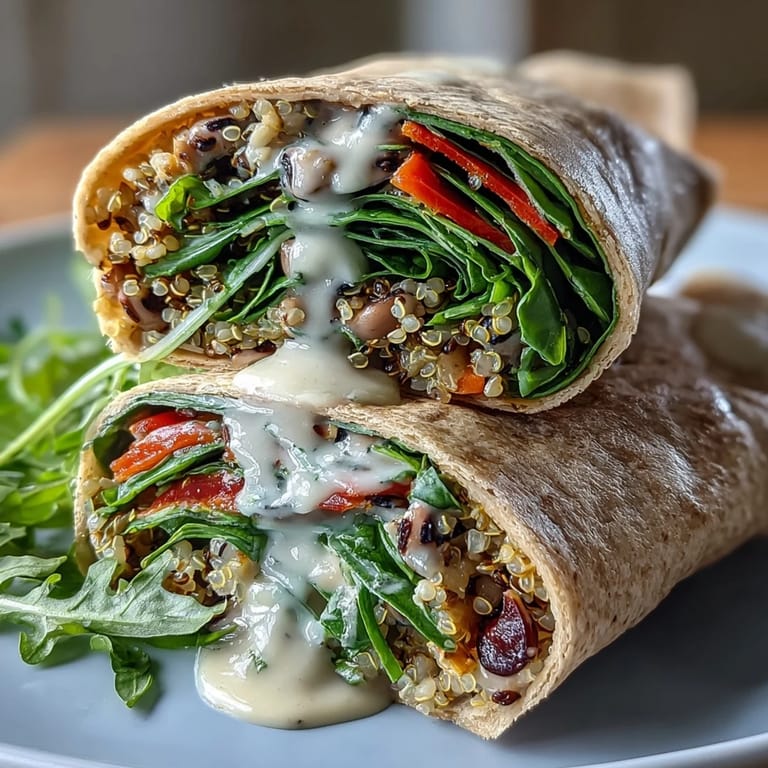
- Slice each wrap in half on the diagonal so you can see all the pretty layers inside, then serve immediately while everything is still warm and the tortilla is flexible. If you need to wrap them for later, use foil or parchment to keep them from drying out.
 Save to Pinterest
 These wraps have become my answer to the eternal question of what to bring to someone's house when they've asked for vegetarian options. There's something about handing someone a beautiful, sturdy wrap filled with whole foods and watching them realize that eating well doesn't have to be boring or complicated.
Building Flavor Without Heaviness
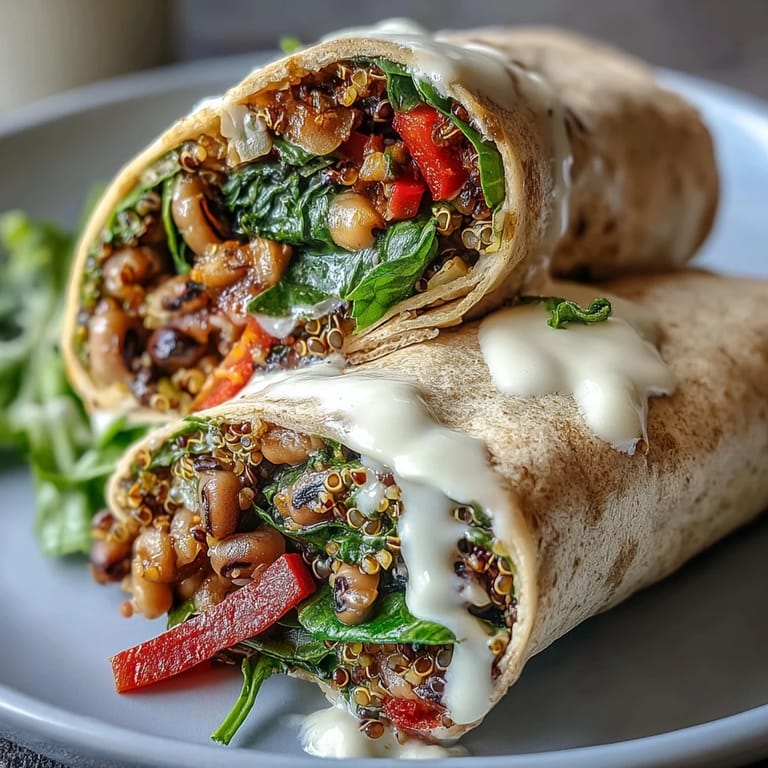
The magic of this wrap lies in how it achieves satisfaction without heaviness—the black-eyed peas and grain provide substance, but the tahini sauce and fresh vegetables keep everything feeling light and bright. I learned this by accident the first time I made these; I'd been so focused on the protein that I nearly skipped the sauce, and my partner politely said the wrap needed something to tie it all together. That comment changed how I think about vegetable-forward cooking—it's not about stacking ingredients, it's about creating harmony between them.
Customization That Actually Works
One of the reasons I keep making these is how forgiving they are to substitution and personal preference. I've swapped the brown rice for farro when I had it on hand, added avocado on days when my budget allowed, and included hot sauce for friends who wanted more spice—every version has been delicious because the foundation is solid.
Packing and Storage Tips
These wraps are genuinely transportable, which makes them ideal for packing in a lunch box or bringing to a picnic, though they're best eaten the same day you make them. The tahini sauce doesn't separate, the tortilla doesn't get soggy, and if you wrap them tightly in foil or parchment, they hold together perfectly through a morning of jostling around in a bag.
- If you're making these ahead, wrap each one individually in parchment or foil so they don't stick together or dry out.
- Pack any extra tahini sauce in a small container and drizzle it fresh just before eating if you want to avoid sogginess.
- These are best served the day they're made, but leftovers keep in the refrigerator for up to two days if wrapped tightly.
 Save to Pinterest
 Every time I make these wraps, I'm reminded that the simplest meals are often the ones that stick with people the longest. They're the kind of food that doesn't ask for applause, just gratitude.
Your Questions Answered
- → Can I make these wraps ahead of time?
Yes, these wraps store beautifully. Wrap them tightly in foil or parchment paper and refrigerate for up to 24 hours. The tortillas may soften slightly, but the flavors will meld beautifully. Add the tahini sauce just before serving if you prefer to keep the tortillas crisp.
- → What can I substitute for tahini?
You can use Greek yogurt for a creamier, lighter version, or try hummus for extra garbanzo bean flavor. Almond butter or sunflower seed butter also work well if you need a sesame-free alternative while maintaining that nutty richness.
- → Are black-eyed peas necessary?
Black-eyed peas provide a classic earthy flavor and creamy texture, but you can substitute with chickpeas, kidney beans, or black beans. Each legume brings its own character while maintaining the hearty, protein-packed foundation of these wraps.
- → How do I prevent the tortillas from cracking?
Warming your tortillas makes them more pliable—use a dry skillet for 30 seconds per side or microwave them for 15-20 seconds wrapped in a damp paper towel. This step ensures they roll smoothly without tearing or splitting.
- → Can I make this gluten-free?
Absolutely. Swap the whole wheat tortillas for certified gluten-free tortillas or large lettuce leaves for a low-carb twist. Always verify your other ingredients, especially seasonings and sauces, are certified gluten-free as well.
- → What vegetables work best in these wraps?
The suggested vegetables offer perfect crunch and color contrast, but shredded cabbage, kale, sliced radishes, or roasted sweet potatoes work beautifully. Aim for a mix of textures and colors to keep each bite interesting and visually appealing.