 Save to Pinterest
 There's something quietly satisfying about assembling a grain bowl on a Tuesday afternoon when you're tired of the same old lunch routine. I was standing in my kitchen, staring at a half-empty can of black-eyed peas and some vegetables that needed rescuing from the crisper drawer, when it hit me that these humble ingredients could become something genuinely nourishing and beautiful. That first bowl I made wasn't planned or precious, just honest food layered into a dish that somehow made a regular day feel a bit more intentional. Now it's become my go-to when I want something that feels both comforting and clean.
I made this for a dinner party once when I wanted to feed vegetarian and vegan friends without fussing over separate plates, and what surprised me was how everyone went back for seconds. The roasted vegetables had caramelized edges that made even the skeptics reach for more, and something about the combination of warm grains, tender peas, and bright herbs felt both substantial and light. That night taught me that wholesome food doesn't need to apologize or perform, it just needs to be honest and well-seasoned.
Ingredients
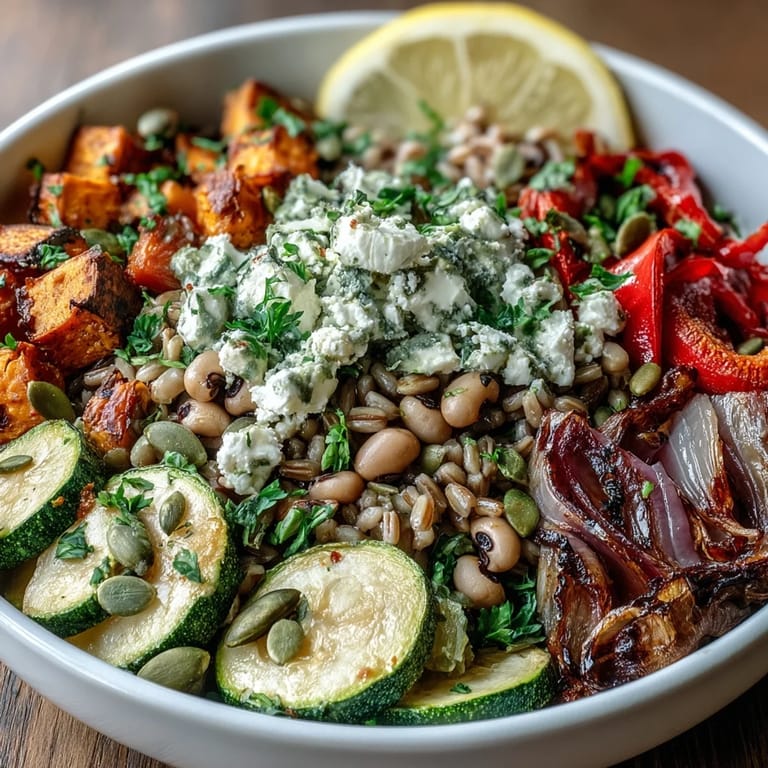
- Farro or wild rice: The nutty grain base that actually has enough personality to stand up to bold roasted vegetables, and farro especially has a pleasant chewy texture that keeps things interesting.
- Water or vegetable broth: Broth adds subtle depth that plain water can't quite manage, so I use it whenever I have it on hand.
- Black-eyed peas: Canned is perfectly fine and saves you the soaking step, but if you cook them from scratch you'll notice their earthiness is somehow more pronounced.
- Sweet potato, bell pepper, zucchini, and red onion: This mix of vegetables gives you color, sweetness, earthiness, and a hint of sharpness all at once.
- Olive oil, smoked paprika, and ground cumin: The paprika and cumin are what transform ordinary roasted vegetables into something you'll actually crave.
- Fresh parsley or cilantro: A small handful brings everything into focus right at the end, cutting through the richness with brightness.
- Toasted pumpkin or sunflower seeds: They add a textural snap that every bowl needs, plus a little protein boost you'll actually feel satisfied by.
- Feta cheese and lemon wedges: Optional but recommended, as the tang rounds out all those warm spices perfectly.
Tired of Takeout? 🥡
Get 10 meals you can make faster than delivery arrives. Seriously.
One email. No spam. Unsubscribe anytime.
Instructions
- Heat your oven and get the grains going:
- Preheat to 425°F while you combine your grain, liquid, and salt in a medium saucepan. Bring it to a boil, then settle it into a gentle simmer, cover it, and let it do its thing for about 25 to 30 minutes if you're using farro, or longer for wild rice. You'll know it's ready when the grains are tender and the liquid has mostly been absorbed.
- Prepare and roast your vegetables:
- While the grain is cooking, toss your cubed sweet potato, diced bell pepper, sliced zucchini, and wedged onion with olive oil, smoked paprika, cumin, salt, and pepper until everything has a light coating. Spread them out on a baking sheet in a single layer and slide them into the oven for 20 to 25 minutes, stirring them around halfway through until they're tender and the edges are caramelized.
- Warm the black-eyed peas gently:
- Either heat them in a small saucepan over low heat or give them a quick spin in the microwave if you prefer, just enough so they're warm and ready to absorb a bit of flavor. You're not trying to cook them further, just take away any chill.
- Build your bowls with intention:
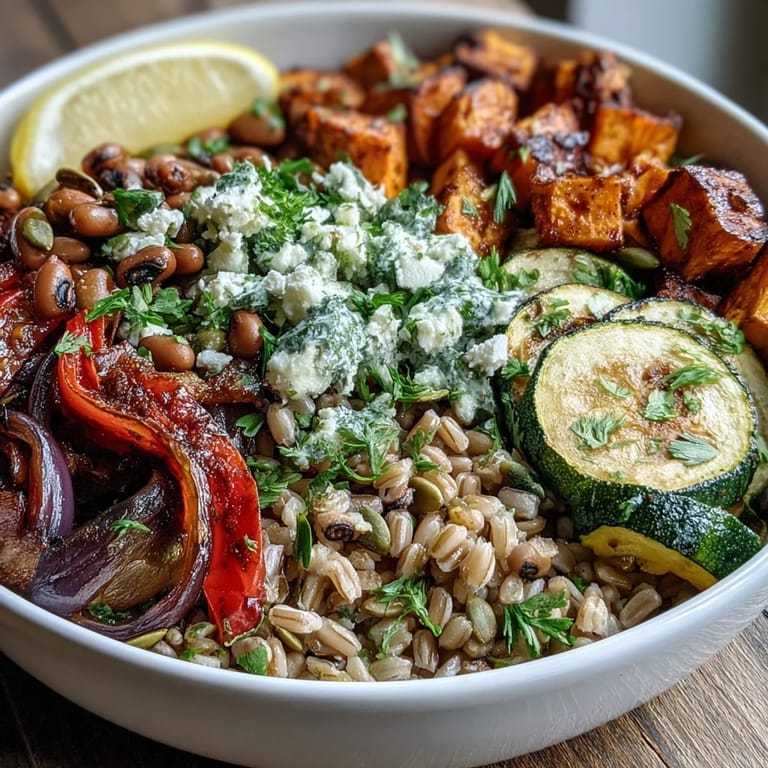
- Divide the cooked grains evenly among four bowls, then top each one with a share of the black-eyed peas and roasted vegetables. The layering matters less than making sure each bite gets a little of everything.
- Finish with brightness and texture:
- Scatter fresh herbs, a crumble of feta if you're using it, and those toasted seeds across the top of each bowl. Serve with lemon wedges so everyone can squeeze them over their bowl to taste.
 Save to Pinterest
 There was an evening when a friend brought this bowl to a potluck and someone asked for the recipe before they'd even finished eating, which is always the sign that simple food executed well never goes out of style. What makes it special isn't any fancy technique, just the care of roasting things until they caramelize and the wisdom of seasoning early.
Why This Bowl Works as Meal Prep
These bowls actually improve slightly after a day in the refrigerator because the flavors have time to mingle and deepen. I've learned to assemble them in glass containers at the beginning of the week, and by Wednesday they taste even more cohesive than when freshly made. The only thing I add at the last minute is the lemon juice and fresh herbs, so they don't wilt or get soggy.
Flavor Combinations That Go Beyond the Basics
Once you've made this bowl once, you'll start seeing it as a template rather than a fixed recipe, and that's where the real fun begins. A drizzle of tahini-lemon vinaigrette ties everything together with a subtle creaminess, while a poached egg on top adds richness that feels indulgent without being heavy. I've also discovered that a small handful of avocado slices, a pinch of chili flakes, or even a dash of hot sauce can shift the whole mood of the bowl depending on what you're craving.
Adjusting for What You Have on Hand
The beauty of this bowl is that it's endlessly adaptable without losing its heart, so don't stress if you don't have exactly the vegetables listed. Brown rice, quinoa, or barley work just as well as farro or wild rice, and honestly I've used all of them depending on what's in my pantry. Consider these your building blocks rather than your law:
- Swap the vegetables for whatever needs to be used, whether that's broccoli, cauliflower, carrots, or Brussels sprouts roasted the same way.
- If you're avoiding dairy, skip the feta entirely and let the seeds provide crunch and nuttiness instead.
- Add extra protein through a poached egg, some crumbled tofu, or even leftover roasted chickpeas if you have them.
 Save to Pinterest
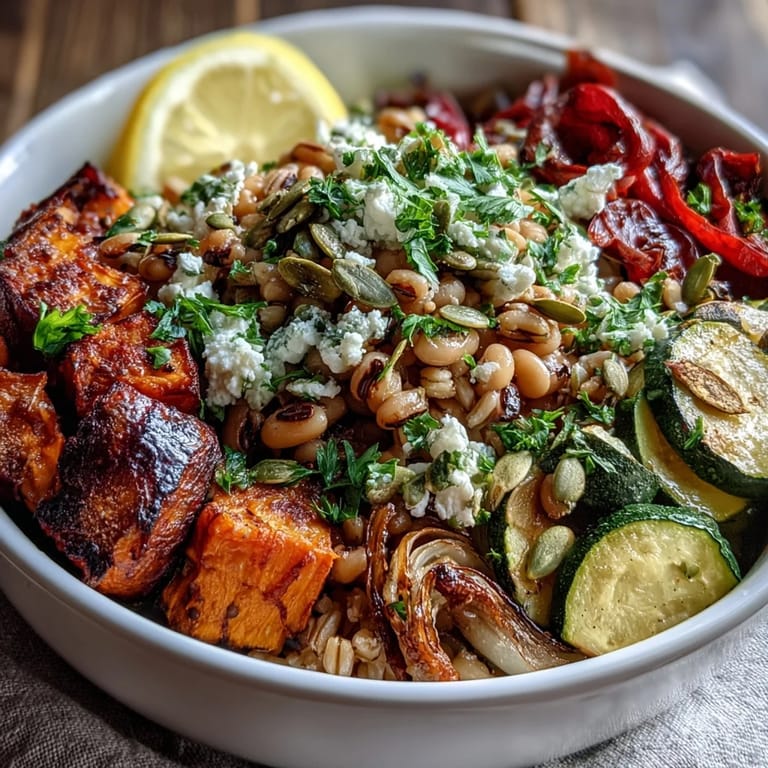
 This bowl taught me that the most satisfying meals don't need to be complicated, just thoughtfully assembled with ingredients that actually speak to each other. Make it once as written, then trust yourself to make it again however you want.
Your Questions Answered
- → What grains work best in this bowl?
Farro provides a chewy, nutty texture that holds up well, while wild rice offers earthy flavor and visual appeal. Brown rice, quinoa, or barley make excellent substitutes depending on what you have available.
- → Can I use dried black-eyed peas instead of canned?
Absolutely. Cook dried peas according to package directions until tender, typically about 45-60 minutes. One cup of dried peas yields approximately three cups cooked, so adjust accordingly.
- → What vegetables can I substitute?
Butternut squash, Brussels sprouts, carrots, or eggplant all roast beautifully with these spices. Adjust cooking time based on vegetable density—root vegetables may need extra minutes.
- → How long does this keep for meal prep?
Stored in airtight containers, assembled bowls last 4-5 days in the refrigerator. Keep toppings like herbs, seeds, and feta separate and add just before serving for best texture.
- → What dressings complement these flavors?
A tahini-lemon dressing adds creaminess, while a herbed vinaigrette with olive oil and apple cider vinegar brightens the roasted vegetables. A sprinkle of hot sauce provides welcome heat.
- → Is this bowl gluten-free?
Using wild rice instead of farro makes this completely gluten-free. Double-check all packaged ingredients, especially seasonings and broths, to ensure no hidden gluten contamination.