 Save to Pinterest
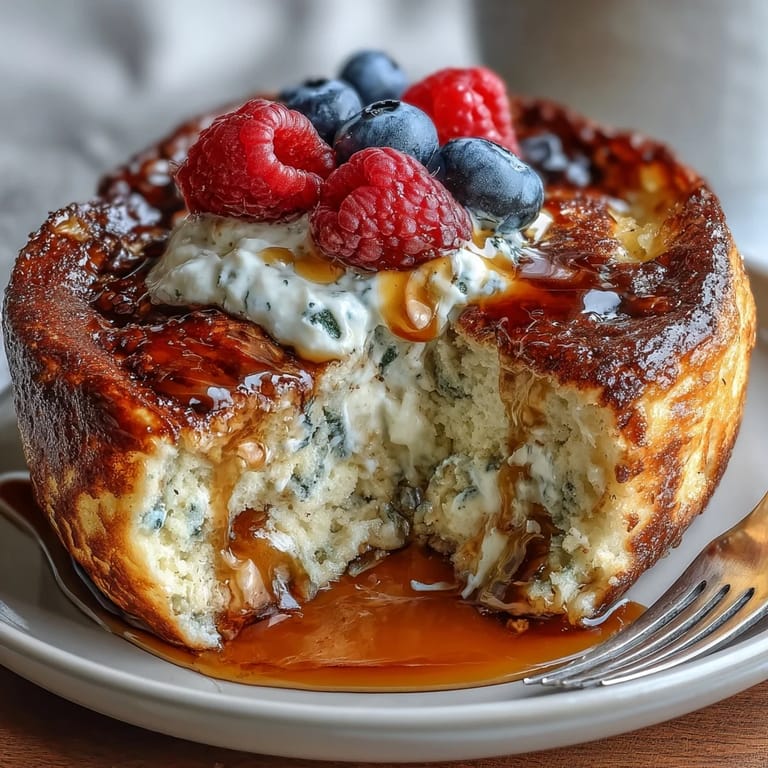
 I stumbled onto this baked protein pancake bowl on a Tuesday morning when I was tired of scrambling eggs and wanted something that felt like dessert but packed actual nutrition. My kitchen smelled like vanilla and maple syrup for the first time in weeks, and I realized I'd been overthinking breakfast for years—this one oven-safe dish does all the work while you shower and check your phone. It's become my secret weapon for staying full until lunch, and honestly, it tastes indulgent enough that I don't feel like I'm being virtuous.
I made this for my roommate last Saturday when she complained that high-protein breakfasts were boring, and watching her face when she took that first bite reminded me why I love cooking for people—the moment when they realize healthy food can actually taste good. She's now made it three times, and the smell of it baking has become our weekend ritual, the kind of small thing that makes a shared apartment feel like home.
Ingredients
- Large egg: This is your binding agent and adds richness—use room temperature eggs if you want the batter to mix smoothly, though cold ones work fine too.
- Plain Greek yogurt: The tanginess cuts through sweetness and adds moisture without making the pancake dense or rubbery like some protein-heavy recipes do.
- Milk (dairy or plant-based): A quarter cup creates the right consistency—too thick and you'll have a pancake that's heavy, too thin and it spreads thin across the dish.
- Maple syrup or stevia: Use maple syrup for depth if you're not watching sugar; stevia works but tastes slightly different, which taught me to use a touch less stevia than you'd think.
- Flax meal: One to two tablespoons add fiber and nuttiness—I learned this makes a real difference in how the pancake holds together after a few days in the fridge.
- All-purpose flour: A third cup keeps the texture light—this isn't a dense protein bar situation, it's an actual pancake that happens to be loaded with protein powder.
- Vanilla protein powder: Buy a quality powder with at least 25g per scoop, or your pancake will taste chalky and hollow, which I discovered the hard way with a bargain brand.
- Baking powder: Three-quarters of a teaspoon makes it rise and puff—don't skip this or you'll end up with something that feels more like a dense cake.
- Pre-bake toppings: Fresh berries or sliced fruit sink slightly as it bakes and create pockets of flavor; chocolate chips melt into the edges beautifully.
- Post-bake toppings: Nut butter, syrup, or yogurt added after baking stay on top with texture intact—this is the difference between a good pancake and one you actually crave.
Tired of Takeout? 🥡
Get 10 meals you can make faster than delivery arrives. Seriously.
One email. No spam. Unsubscribe anytime.
Instructions
- Preheat and prepare:
- Heat your oven to 350°F and spray a 12-14 oz oven-safe glass dish or ramekin with nonstick spray—glass works better than ceramic because you can see the bottom browning slightly, which tells you when it's done.
- Build the batter:
- Combine your egg, Greek yogurt, milk, flax meal, flour, protein powder, maple syrup, and baking powder in a bowl and whisk until smooth—you'll feel the texture shift from lumpy to silky, which is your sign the dry ingredients are fully hydrated. Don't overmix or the pancake gets tough, but don't undermix or you'll have floury pockets when it bakes.
- Add your toppings:
- Pour the batter into your prepared dish, then scatter your chosen fruit or chocolate chips across the top in an even layer—they'll sink slightly as the pancake rises, distributing flavor throughout rather than sitting on top.
- Bake until golden:
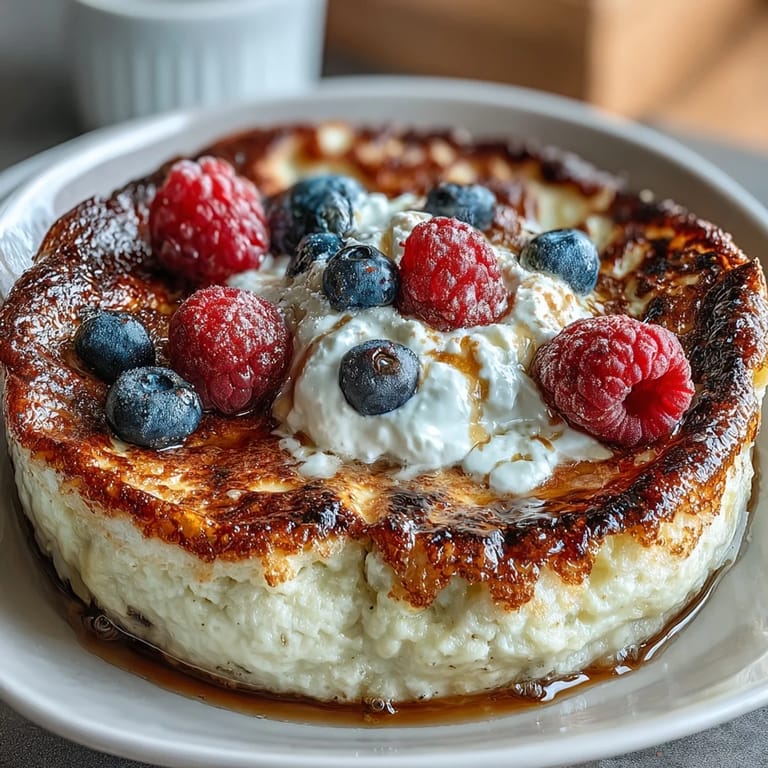
- Slide it into the oven for 22-25 minutes until the edges are light golden and the center is set when you gently shake the dish—it should jiggle just slightly in the very middle, not wave around. The smell at minute 20 will make you want to pull it out early, but those last few minutes matter for structure.
- Cool and customize:
- Let it rest for 5-10 minutes so it firms up enough to hold its shape, then top with nut butter, extra yogurt, syrup, or jam if you like. Eat it warm straight from the dish—this is not one of those recipes where plating feels necessary.
 Save to Pinterest
 The morning my mom tried this, she texted me from her kitchen that she'd finally found a breakfast that made her feel full and energized instead of crashed by ten a.m., and that's when I understood this recipe wasn't just convenient—it actually changed how her body felt through the day. That's worth more than any fancy breakfast I could make.
Why This Works as a Make-Ahead Breakfast
Most high-protein breakfasts demand you be present and focused—scrambled eggs need attention, smoothie bowls get soggy, overnight oats taste chalky. This pancake bowl bakes while you're doing something else, then waits patiently in your fridge all week, tasting just as good reheated as it did the morning you made it. You can bake three or four on Sunday afternoon, cool them completely, cover them loosely with foil, and have an actual breakfast waiting every morning—not something that requires assembly or feels like a compromise.
Customization That Actually Changes Everything
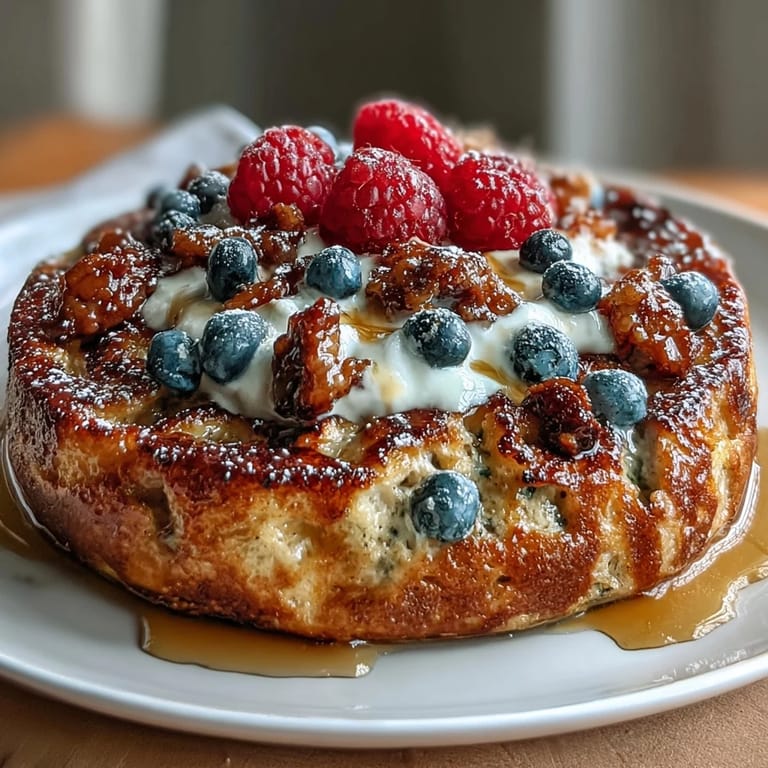
The toppings aren't just decoration—they're the difference between this feeling boring after the third time and staying exciting all week. I've made it with raspberries and almond butter on Monday, blueberries and maple syrup on Wednesday, then chocolate chips and coconut on Friday, and each version feels totally different. The batter is your canvas, and once you understand the base, you can play with seasonal fruit, different nut butters, or even a sprinkle of cinnamon before baking for someone who wants earthiness instead of sweetness.
Reheating and Storage Secrets
Cold pancake from the fridge tastes fine, but warm pancake tastes like breakfast, which is why I learned to always reheat before eating. A low oven brings it back to life better than a microwave, though if you're in a rush, thirty seconds in the microwave works if you accept it'll be slightly less fluffy. If you're meal prepping for the week, don't add wet post-bake toppings like nut butter or syrup until you're about to eat it—they soak in and make everything soggy by day three, which I learned from one regrettable Wednesday.
- Store covered loosely with foil so condensation doesn't make the top mushy.
- Reheat at 300°F for about 8 minutes or microwave for 30-45 seconds depending on how thick your bowl is.
- Keep wet toppings separate and add them right before eating to maintain texture and flavor integrity.
 Save to Pinterest
 This pancake bowl stopped being just a breakfast recipe and became the thing I make when I want to feel like I'm taking care of myself—no guilt, no compromise, just a warm bowl that tastes good and keeps you full. That's the whole point.
Your Questions Answered
- → Can I use a dairy-free yogurt?
Yes, dairy-free yogurt options like coconut or almond-based varieties work well in this bowl's batter without compromising texture.
- → How do I store leftovers?
Cover and refrigerate baked bowls for up to five days, then reheat in the microwave or oven until warmed through.
- → Is gluten-free flour suitable?
Gluten-free 1:1 flour blends are recommended to maintain a tender, fluffy texture suitable for gluten sensitivities.
- → What protein powders work best?
Choose a vanilla protein powder with at least 25 grams of protein per scoop for optimal flavor and nutrition.
- → Can I add extra fiber?
Yes, adding more berries or a sprinkle of cinnamon before baking can boost fiber and flavor.