 Save to Pinterest
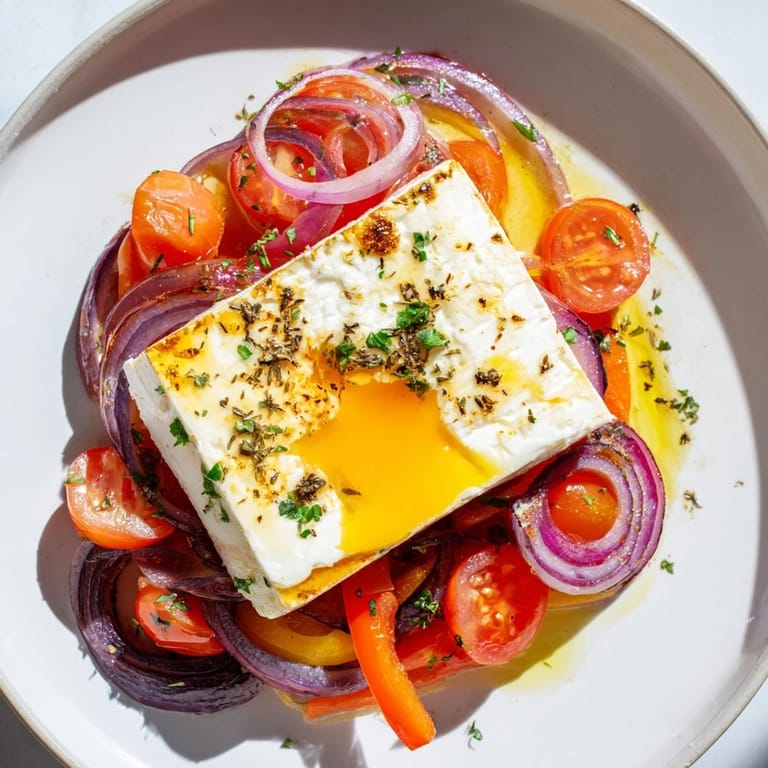
 There's something about a baking dish that transforms ordinary ingredients into something you want to share immediately. I discovered this Mediterranean baked feta while standing in a small Athens kitchen, watching my friend's mother casually layer tomatoes and cheese like she'd done it a thousand times. She didn't measure anything, just moved with the kind of confidence that comes from cooking by instinct. When those eggs slipped into the hot vegetables, I understood why this dish had stuck around for generations—it's pure simplicity that somehow feels luxurious.
I made this for my partner on a Sunday morning when we'd both slept in, and I wanted breakfast to feel like a small celebration rather than a rushed obligation. The apartment filled with the smell of baking tomatoes and oregano, and somehow that aroma alone made the day feel different. He came into the kitchen, took one look at the golden feta and runny yolks, and we both knew we'd be making this every few weeks from that point forward.
Ingredients
- Cherry tomatoes: Halve them so they release their sweetness into the oil—whole ones tend to roll around stubbornly.
- Red onion: Thin slices mellow out during baking and add a gentle sweetness that balances the salty feta.
- Garlic: Mince it fine so it distributes evenly and doesn't dominate any single bite.
- Red bell pepper: Adds color and a subtle sweetness that plays nicely with the Mediterranean herbs.
- Feta cheese block: Use a proper block, not crumbles—it creates that beautiful golden crust and melts into pockets throughout the dish.
- Large eggs: They need enough space to cook gently; cramming them in doesn't work well.
- Extra virgin olive oil: This is where flavor lives, so don't skimp on quality.
- Dried oregano and thyme: Together they create that unmistakable Mediterranean backbone that makes everything taste intentional.
- Red pepper flakes: Optional, but they add a whisper of heat that wakes everything up.
- Fresh parsley: Finish with this—it's the brightness that cuts through the richness.
Tired of Takeout? 🥡
Get 10 meals you can make faster than delivery arrives. Seriously.
One email. No spam. Unsubscribe anytime.
Instructions
- Heat your oven properly:
- Preheat to 400°F so the vegetables actually caramelize instead of just softening. A properly heated oven is non-negotiable here.
- Build your base:
- Combine tomatoes, onion, bell pepper, and garlic in a medium baking dish, then coat everything generously with olive oil and seasonings. Toss until every piece glistens—you want the oil to do the work of flavoring everything.
- Introduce the feta:
- Nestle the feta block right in the center like it's the anchor of the whole dish. This positioning matters because it gets direct heat and creates little pockets of melted cheese around the vegetables.
- First bake:
- Bake for 15 minutes until the vegetables are beginning to soften and the feta's edges turn golden brown. This is when you'll start smelling that incredible oregano-tomato aroma.
- Create egg wells:
- Remove the dish carefully—it's hot—and use the back of a spoon to gently press four small indentations in the vegetable mixture around the feta. These wells keep your eggs from rolling around.
- Crack and nestle:
- Crack one egg into each well, being gentle so the yolks stay intact. The whites will cook faster than the yolks, which is exactly what you want.
- Final bake:
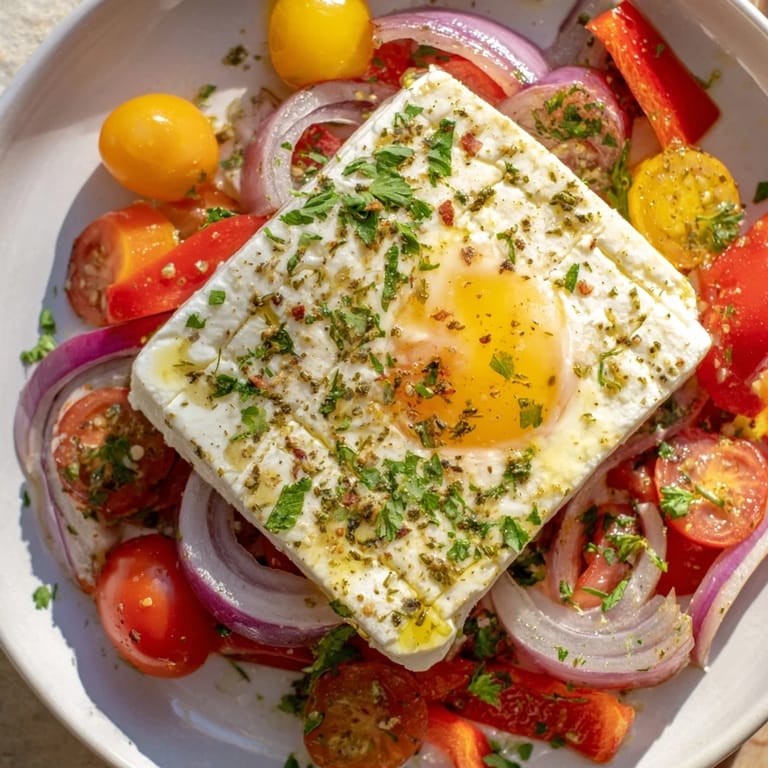
- Return to the oven for 8–10 minutes, watching closely toward the end. The egg whites should be set but the yolks should still jiggle slightly when you gently shake the dish—that's the sweet spot.
- Finish and serve:
- Remove from the oven, scatter fresh parsley over the top, and serve immediately while everything is still warm. The feta will continue to soften slightly from residual heat.
 Save to Pinterest
 The first time I overcooked the eggs by two minutes, I almost convinced myself it was still delicious, but my partner caught me trying to sneak runny yolks from the pan to hide the mistake. We laughed about it, but that's when I learned to trust the early signs—when the whites just barely set, you pull it out. Since then, it's never let me down.
Timing and Temperature Matter
Oven temperatures vary, and some run hotter than others, so the first time you make this, stay nearby during that final 8–10 minutes. You're looking for a gentle set, not a firm scramble. The carry-over heat will keep cooking the eggs even after you remove the dish, so slightly underdone is actually your target. If you prefer fully cooked yolks, add an extra minute or two, but know that you're trading richness for safety.
Building Flavor Layers
The magic here is that the vegetables release their juices during the first bake, creating a light sauce that the olive oil and herbs emulsify into something almost velvety. The feta adds salinity and richness, while the fresh parsley at the end prevents the dish from feeling heavy. It's a study in restraint—nothing fancy, nothing complicated, just ingredients that respect each other enough to shine individually while supporting the whole.
Variations and Serving Ideas
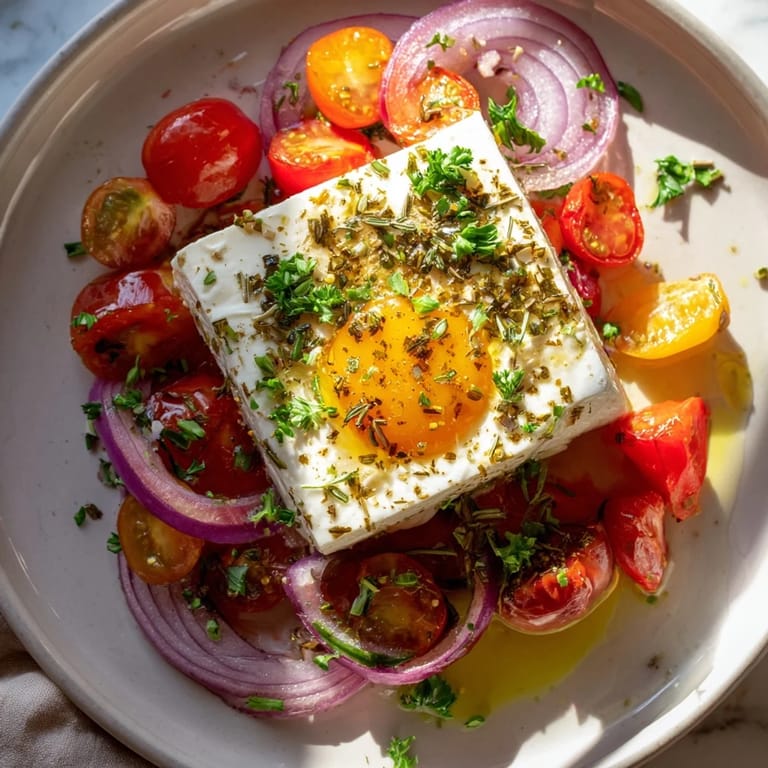
While this is beautiful on its own, you can easily adapt it based on what's in your kitchen or what you're craving that morning. Kalamata olives add a briny punch, baby spinach wilts in during the first bake, and a handful of fresh dill can replace some of the parsley if you're in that mood. Serve it with thick slices of crusty bread for soaking up the oil and broken yolk—that's not optional, that's the whole reason to make this.
- Try adding pitted Kalamata olives or fresh baby spinach for deeper flavor.
- A sprinkle of za'atar on top adds earthiness and visual appeal.
- This reheats beautifully in a 300°F oven if you need to make it ahead for a crowd.
 Save to Pinterest
 This dish taught me that some of the best meals come from understanding a few techniques deeply rather than trying to do everything. Make this when you want to feel like you've cooked something special without needing to be a chef.
Your Questions Answered
- → Can I use different cheeses instead of feta?
While feta offers a distinct tangy creaminess, you can substitute with similar crumbly cheeses like goat cheese or queso fresco, though flavors will vary.
- → What variations can be added to the dish?
Additions like Kalamata olives or baby spinach elevate the overall flavor and texture, providing a fresh twist to the dish.
- → How do I achieve runny egg yolks when baking?
Bake eggs for 8–10 minutes after adding them; this ensures the whites are set while yolks remain slightly runny.
- → Is this suitable for gluten-free diets?
Yes, as long as bread is omitted or substituted with gluten-free options, this dish remains gluten-free.
- → What herbs best complement the flavors here?
Dried oregano and thyme provide authentic Mediterranean notes that enhance the natural flavors of feta and vegetables.