 Save to Pinterest
 The first time I attempted The Gilded Cage, I was hosting a dinner party for friends I hadn't seen in years, and I wanted something that would make them pause mid-conversation and simply stare. I'd spent an afternoon sketching the dome design on paper, imagining how the golden breadsticks would catch the light against the jewel-toned cheeses beneath. When I finally assembled it—my hands trembling slightly as I positioned the last breadstick—something clicked. It wasn't just food. It was theater, elegance, and the quiet confidence that comes from knowing you've created something unforgettable.
I remember my neighbor Maria watching me arrange the breadstick dome for the first time, and she kept circling the platter, studying it from different angles like it was a sculpture. When she finally tasted it—a piece of Comté balanced on a breadstick with a touch of honey—her eyes went wide. That moment taught me that food that requires a little theater always tastes better, because people approach it with intention rather than habit.
Ingredients
- All-purpose flour: The foundation of your breadsticks—use good quality flour, as it genuinely makes a difference in how they crisp.
- Instant dry yeast: This is your timer and your magic; warm water activates it, so don't use water hotter than your inner wrist can comfortably touch.
- Sugar and salt: Sugar feeds the yeast gently, while salt strengthens the gluten structure—both are non-negotiable.
- Lukewarm water: Temperature matters here; too cold and the yeast sleeps, too hot and it dies.
- Olive oil: Adds tenderness to the dough and helps breadsticks stay pliable rather than brittle.
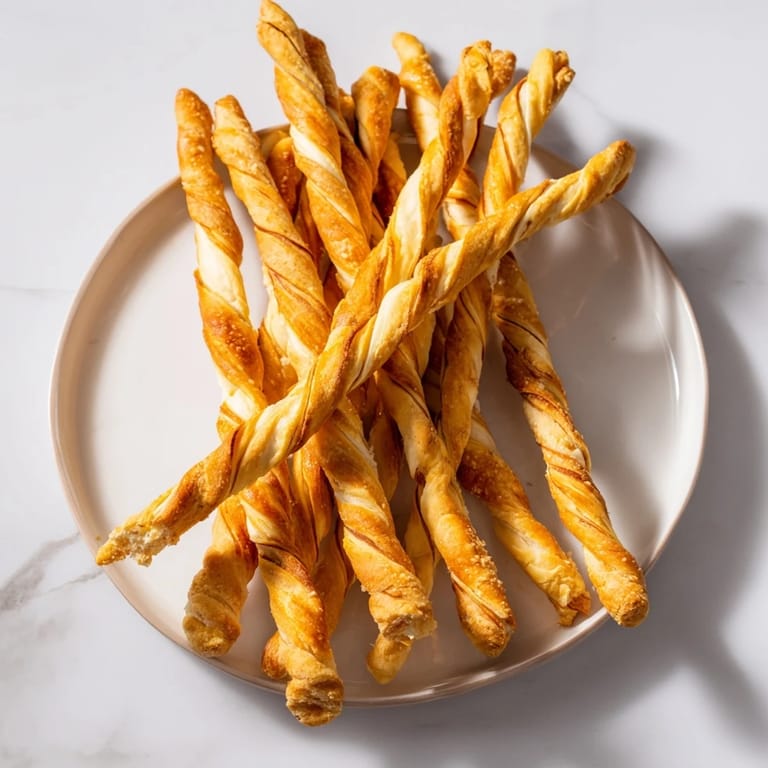
- Egg yolk glaze: This is what gives your breadsticks that beautiful golden sheen and crispy exterior.
- Triple-cream Brie: The luxurious, soft anchor of your cheese selection—creamy enough to cradle other flavors.
- Aged Comté: Brings nutty, caramel notes that make people pause and ask what it is.
- Truffled goat cheese: The unexpected note of earthiness and sophistication—this is where guests discover something new.
- Blue cheese: A bold counterpoint; choose Roquefort if you want elegance, or another blue if you prefer something slightly milder.
- Parmigiano Reggiano shavings: Use a vegetable peeler to create thin curls; they add texture and a salty, umami depth.
- Grapes, honey, and fresh herbs: These aren't decoration—they're flavor bridges that help each cheese shine.
Tired of Takeout? 🥡
Get 10 meals you can make faster than delivery arrives. Seriously.
One email. No spam. Unsubscribe anytime.
Instructions
- Mix your dough with intention:
- Combine flour, yeast, sugar, and salt in a large bowl, then add water and olive oil. The mixture will look shaggy at first—this is normal. Mix until all the flour is incorporated, then knead for 8 to 10 minutes until the dough becomes smooth, elastic, and slightly tacky. You'll feel when it's right: it'll resist your hands gently rather than sticking.
- Let time do the work:
- Cover your bowl loosely with a damp cloth and leave it in a warm spot (near a sunny window is ideal) for 30 minutes or until the dough has roughly doubled in size. This isn't just about volume—the yeast is creating flavor complexity that you'll taste in every breadstick.
- Prepare your oven and workspace:
- Preheat your oven to 200°C (390°F) and line a baking tray with parchment paper. Have your egg yolk mixed with a tablespoon of water ready in a small bowl, and scatter sesame seeds on a plate nearby if you're using them.
- Divide and shape with precision:
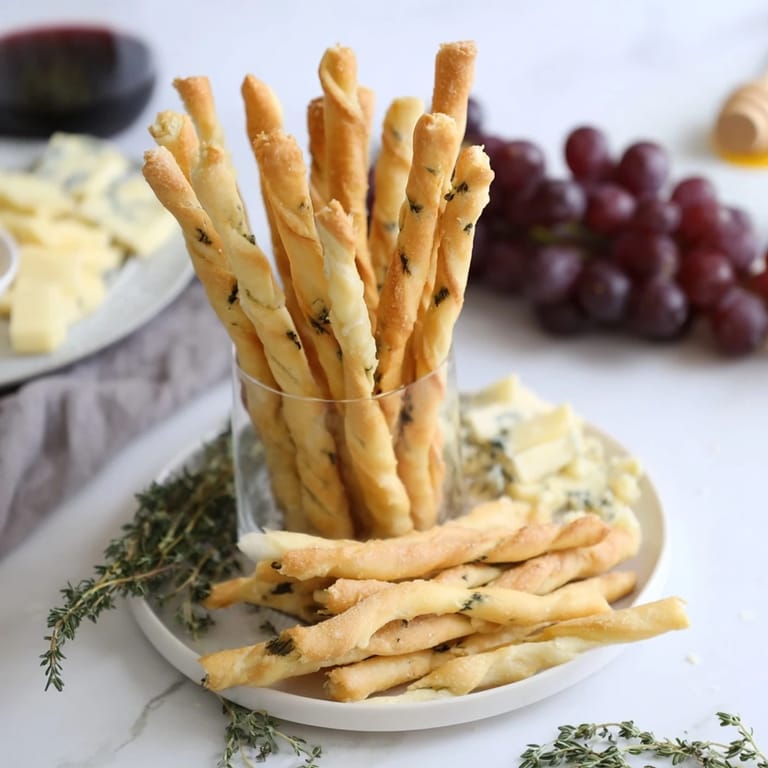
- Divide your risen dough into 18 to 20 small pieces—roughly the size of a large walnut. Using your hands, roll each piece into a thin stick about 3 mm thick and 25 cm long. The thickness matters: too thick and they won't be crispy, too thin and they'll snap during assembly.
- Glaze and garnish:
- Place breadsticks on your prepared tray in a single layer. Using a pastry brush, lightly coat each one with egg yolk glaze (this is what creates that burnished gold color), then sprinkle with sesame seeds if desired. Don't oversaturate—a light hand gives you a delicate finish.
- Bake until golden:
- Bake for 15 to 18 minutes, turning the tray halfway through to ensure even coloring. You're looking for breadsticks that are golden, crisp to the touch, and slightly darker on the edges. Let them cool completely on the tray—they'll continue to crisp as they cool.
- Arrange your cheese stage:
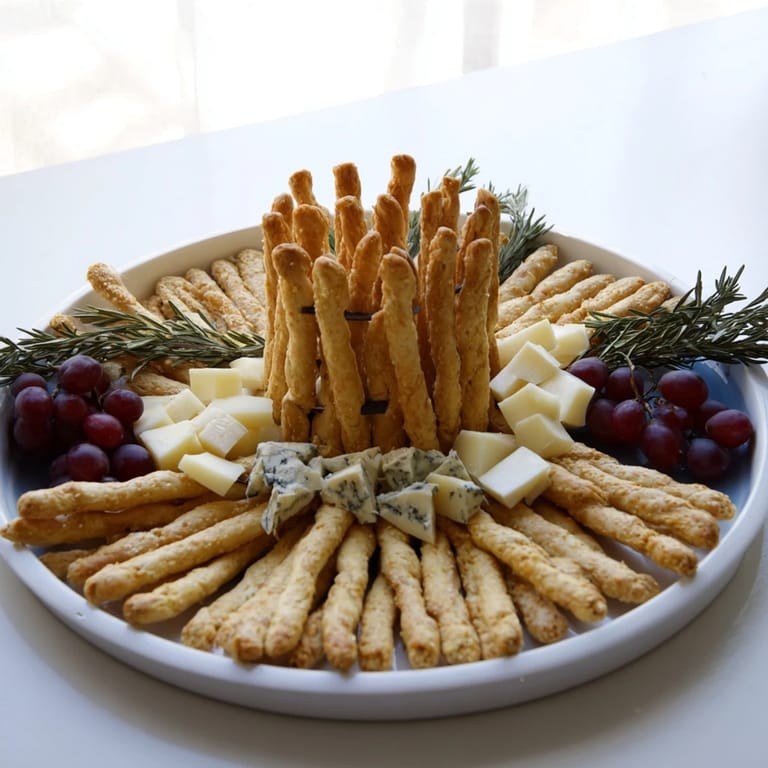
- On a serving platter, create a mound of cheeses at the center, mixing the Brie cubes, Comté cubes, goat cheese balls, and blue cheese crumbles. Scatter Parmigiano shavings over the top, then tuck grapes, honey or jam, and fresh herb sprigs into the gaps—this creates visual interest and flavor bridges.
- Build your dome with confidence:
- Carefully arrange the cooled breadsticks into a dome shape over the cheese pile, using the mound itself for support. Start from the base and work upward in a circular pattern, leaning breadsticks against each other like a game of pickup sticks. If you need extra stability, use a small bowl as a mold while assembling, then gently remove it before serving.
 Save to Pinterest
 The moment someone first lifted a breadstick from The Gilded Cage—that moment of gentle resistance as it finally yielded, the careful navigation of choosing which cheese to pair with it—that's when I understood why this dish works. It's not just elegant; it invites participation, turning a simple cheese course into an interactive, memorable experience.
Why This Combination of Cheeses Works
Each cheese plays a specific role in the story of the plate. The triple-cream Brie is your cushion, creamy and forgiving; the Comté adds complexity and warmth; the truffled goat cheese brings intrigue and earthiness. Blue cheese provides the bold counterpoint that makes people lean back and say, 'Oh, now that's interesting.' Together, they're not competing—they're conversing. I discovered this by accident, actually, after a trip to a French fromagerie where the cheesemonger spent twenty minutes explaining how cheeses reveal different facets of themselves depending on what they're paired with. That afternoon changed how I approach cheese boards entirely.
The Breadstick Foundation
Homemade breadsticks elevate this dish from impressive to unforgettable. Store-bought versions lack the tender crumb and delicate crispness that makes people wonder if you learned to bake in Italy. The egg yolk glaze—that's the secret that makes them look like they came from a professional kitchen. A chef friend once told me that the glaze isn't just for color; it seals the surface just enough that the breadstick stays crisp on the outside while remaining slightly tender within. It's a small detail that changes everything.
Serving and Pairing Philosophy
The Gilded Cage is at its best with a crisp white wine or Champagne—the acidity and bubbles cut through the richness of the cheeses and cleanse the palate between bites. I've found that serving this as a first course sets the tone for an elegant meal; people arrive, they gather around this centerpiece, and suddenly the evening feels special. If you're feeling particularly theatrical, use edible gold leaf to decorate some of the breadsticks—it catches the light beautifully and adds an unexpected flourish. You can also personalize the cheese selection entirely; aged cheddar, Manchego, or Taleggio work beautifully if you want to tell a different story with your board.
- Make this up to four hours ahead and assemble the dome within an hour of serving for optimal crispness.
- If you need to substitute cheeses, choose ones with contrasting textures: soft, semi-firm, and bold flavors work together like instruments in an orchestra.
- The beauty of this dish is that it's forgiving—if a breadstick cracks during assembly, just tuck it in; no one will notice once people start eating.
 Save to Pinterest
 The Gilded Cage has become my signature dish for the moments when I want to say something without words—that you matter, that this gathering matters, that food can be both nourishment and art. Make it, and watch what happens around the table.
Your Questions Answered
- → How do I make the breadsticks crisp and golden?
Bake at 200°C (390°F) for 15–18 minutes, turning once halfway to ensure even browning and crispness.
- → What cheeses work best for this centerpiece?
Use a mix of creamy and aged cheeses like triple-cream Brie, aged Comté, truffled goat cheese, blue cheese, and Parmigiano Reggiano for a rich, balanced flavor.
- → Can I add garnish to enhance presentation?
Yes, sprinkle sesame seeds on the breadsticks before baking and garnish the assembled dome with fresh herbs, seedless grapes, and a drizzle of honey or fig jam.
- → How can I ensure the breadstick dome stays stable?
Press breadsticks gently into the cheese mound or use a small bowl as a mold while building the dome, then carefully remove it once assembled.
- → Are there any substitutions for dietary needs?
For gluten-free options, replace breadsticks with a suitable gluten-free version. Cheese selections can be adjusted to suit personal preferences or dietary restrictions.