 Save to Pinterest
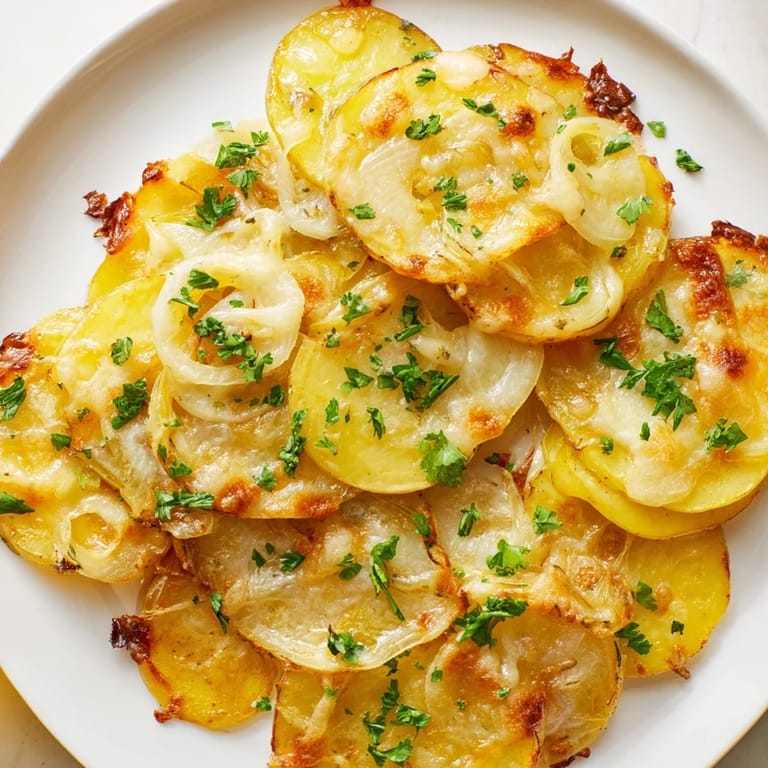
 My kitchen filled with the most intoxicating smell one autumn evening—not from a fancy recipe, but from layers of golden potatoes and onions that had been slowly turning into liquid gold in the oven. I'd been thinking about French onion soup all week but didn't have bread for the traditional version, so I improvised by layering everything over roasted potatoes instead. That first bite was a revelation: crispy potato edges, sweet caramelized onions, and melted Gruyère all working together like they'd been meant for each other all along.
I served this to my partner on a night when neither of us felt like cooking anything complicated, and watching him go back for seconds while the cheese was still bubbling told me everything I needed to know. What started as a "let's use what we have" moment became something we request regularly now, usually when the weather turns crisp and we're in the mood for something that tastes like autumn tastes like home.
Ingredients
- Yukon Gold potatoes: Their buttery texture and natural sweetness make them perfect here—waxy enough to hold their shape while roasting, but tender enough to absorb all those caramelized onion flavors.
- Unsalted butter and olive oil for the onions: The butter brings richness and helps the onions caramelize faster, while the olive oil prevents it from burning.
- Sugar and thyme: Just a pinch of sugar helps trigger the caramelization without making anything sweet, and thyme is the herb that screams French kitchen.
- Gruyère cheese: This aged cheese has a nutty complexity that pairs beautifully with caramelized onions—it's worth seeking out, but good Swiss works too if that's what you find.
- Fresh parsley for garnish: It's optional, but a scattered handful adds brightness and reminds you that something green existed before you covered everything in cheese.
Tired of Takeout? 🥡
Get 10 meals you can make faster than delivery arrives. Seriously.
One email. No spam. Unsubscribe anytime.
Instructions
- Get your potatoes ready and roasting:
- Toss those thin potato slices with oil and salt, then spread them in a single layer where they can brown properly—don't crowd them. Flip them halfway through so both sides get that golden, slightly crispy edge that makes them irresistible.
- Start the onions while potatoes roast:
- Low heat is your friend here; you're coaxing the natural sugars out slowly, not trying to char them in a rush. Stir occasionally, let them get soft and sweet, then keep going until they're a deep mahogany color—this takes patience, but there's no shortcut.
- Layer everything together:
- Once the potatoes are tender and golden, arrange them slightly overlapping in your baking dish like you're building something beautiful. Spread those jammy onions over the top, then shower with cheese.
- Final melt and bubble:
- A quick bake until the cheese is melted and bubbly, maybe a minute or two under the broiler if you want extra browning. Pull it out when it smells irresistible—that's your signal it's ready.
 Save to Pinterest
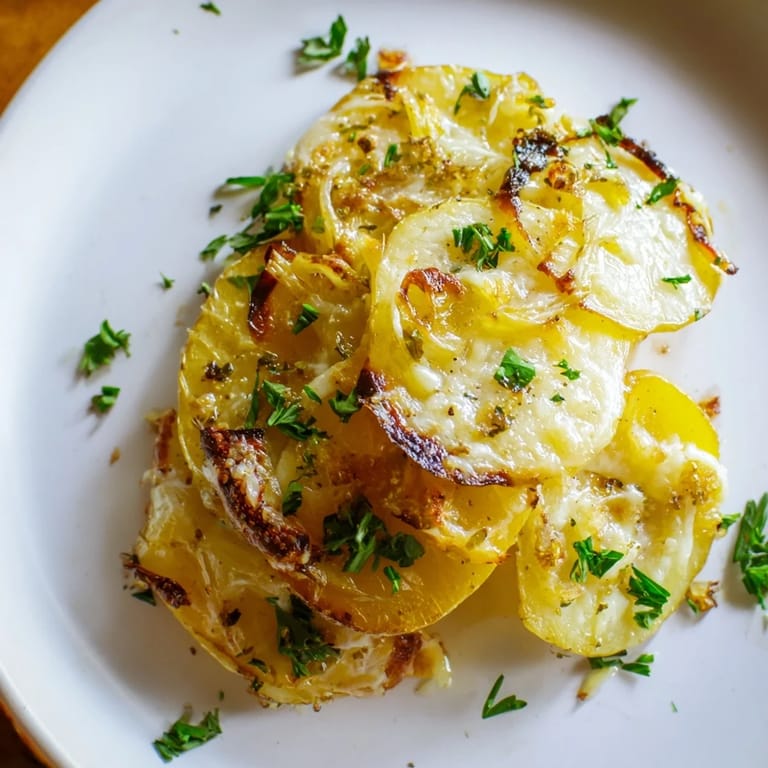
 There's something magical about when that dish comes out of the oven and you see the cheese bubbling over the edges, golden and slightly browned from the broiler—it feels like you've accomplished something that took much more effort than it actually did. That's the real magic of this recipe: it tastes like you spent hours in the kitchen when you barely broke a sweat.
Why Caramelized Onions Change Everything
The first time I tried to caramelize onions, I cranked the heat thinking it would speed things up and ended up with a burnt, bitter mess that taught me patience in the kitchen. Now I understand that caramelization is about coaxing sweetness out slowly—each minute of gentle cooking breaks down the onion's structure and concentrates its natural sugars until they taste almost like jam. This technique is what separates a good dish from something that tastes homemade in the best way possible.
Cheese Choices and Substitutions
Gruyère is traditional because its nutty, slightly sharp character plays beautifully against sweet caramelized onions, but I've successfully used Swiss, Emmental, or even a blend when that's what I had on hand. The important thing is choosing a good melting cheese—avoid pre-shredded varieties when possible because they contain anti-caking agents that make them grainy instead of creamy. I once grabbed pre-shredded cheddar in a rush and the texture was disappointingly separated; a fresh block of good cheese makes all the difference in how luxurious this tastes.
Serving and Storage Tips
This dish is best served hot and fresh from the oven, but leftovers keep beautifully in the refrigerator for up to three days and reheat wonderfully in a 350°F oven. I like serving it alongside roasted chicken or steak, where it acts like an elevated side dish, but it's also substantial enough to be the main event with just a simple green salad alongside.
- You can prep the onions and potatoes a few hours ahead, then assemble and bake everything right before serving.
- A splash of dry white wine or sherry stirred into the onions during the final minutes of cooking adds a subtle sophistication.
- Leftover caramelized onions freeze beautifully and work wonders on soups, sandwiches, or even pizza.
 Save to Pinterest
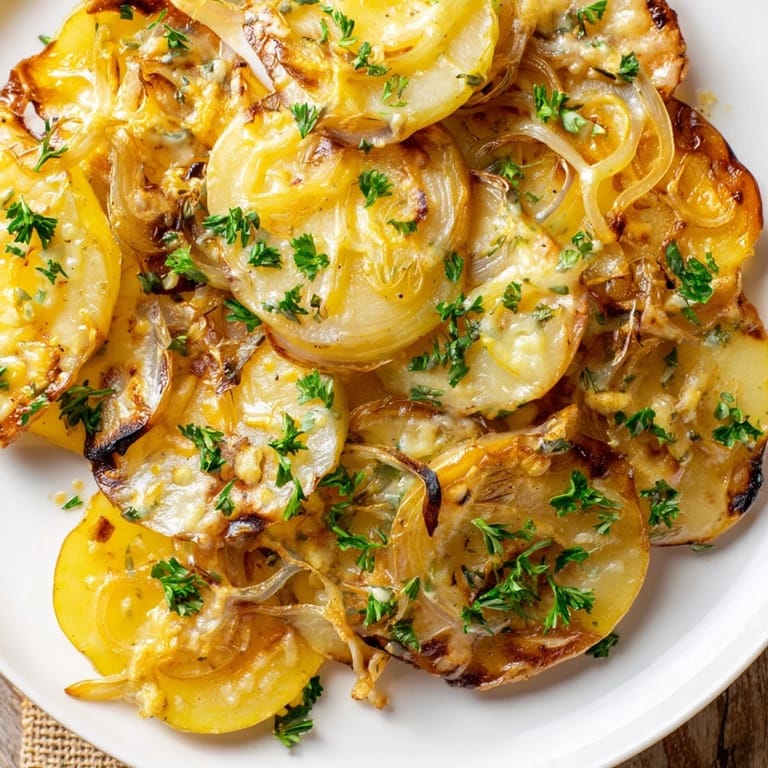
 This recipe reminds me that sometimes the best dishes come from improvisation and working with what you have, not from following a rigid plan. It's become one of those meals I make when I want to feel like I'm taking care of the people at my table.
Your Questions Answered
- → What type of potatoes work best?
Yukon Gold potatoes are preferred for their creamy texture and ability to roast evenly without falling apart.
- → How do I caramelize onions properly?
Cook sliced onions slowly over medium-low heat with butter and olive oil, stirring frequently until they become deeply golden and sweet, usually about 30-35 minutes.
- → Can I substitute Gruyère cheese?
Yes, Swiss or Emmental cheese can replace Gruyère for a similar melt and texture, though flavor profiles will vary slightly.
- → Is this dish gluten-free?
Yes, the ingredients used are naturally gluten-free, but always check cheese packaging for potential cross-contamination.
- → How can I add extra flavor to the onions?
A splash of dry white wine or sherry added near the end of caramelizing enriches the onion’s depth of flavor without overpowering the dish.