 Save to Pinterest
 My friend Sarah texted me one Wednesday afternoon: "I'm craving pizza but I can't do the carbs anymore." I hung up and immediately thought of cauliflower—not in some virtuous, health-conscious way, but because I'd tried a crispy cauliflower crust at a dinner party months before and couldn't stop thinking about how satisfying it actually was. That night, standing in my kitchen with a head of cauliflower and some mozzarella, I realized this wasn't about restriction at all. It was about discovering that sometimes the thing you didn't expect to love becomes the thing you crave.
I made this for my in-laws last summer, and my mother-in-law—who's traditionally suspicious of anything "healthy"—ate three slices without comment, then asked for the recipe. That moment, sitting around the kitchen table with sauce on everyone's napkins and nobody discussing carbs or keto, told me everything I needed to know about this crust.
Ingredients
- 1 medium head cauliflower (about 650 g): Fresh is best; you'll pulse it into tiny rice-like pieces that become the foundation of your crust.
- 1 large egg: Acts as the binder, holding everything together without adding heaviness.
- 60 g (½ cup) grated mozzarella cheese: Use full-fat and avoid pre-shredded if you can—it melts more smoothly.
- 30 g (¼ cup) grated Parmesan cheese: Adds that nutty, salty depth that makes people wonder what the secret ingredient is.
- ½ tsp dried oregano: Just enough to remind your brain this is pizza.
- ½ tsp garlic powder and ½ tsp salt: These two work together to season the cauliflower base without overwhelming it.
- ¼ tsp freshly ground black pepper: Freshly ground makes a real difference in how the flavor develops.
Tired of Takeout? 🥡
Get 10 meals you can make faster than delivery arrives. Seriously.
One email. No spam. Unsubscribe anytime.
Instructions
- Pulse the cauliflower into rice:
- Cut your cauliflower into florets and pulse them in a food processor until they look like coarse breadcrumbs or rice. Don't over-process—you want texture, not cauliflower paste.
- Soften it with heat:
- Spread the cauliflower rice in a microwave-safe bowl and microwave on high for 4–5 minutes until it's soft and steaming. This starts breaking down the cell walls so moisture releases more easily.
- Squeeze out every drop of water:
- This is the make-or-break step: transfer the warm cauliflower to a clean kitchen towel or cheesecloth and squeeze hard for a full minute. You'll be shocked how much liquid comes out, and you'll be grateful later when your crust doesn't taste like a soggy sponge.
- Mix your sticky dough:
- Combine the squeezed cauliflower with the egg, both cheeses, oregano, garlic powder, salt, and pepper in a bowl. Mix until everything holds together like wet sand—it should feel sticky but not soupy.
- Shape and bake the base:
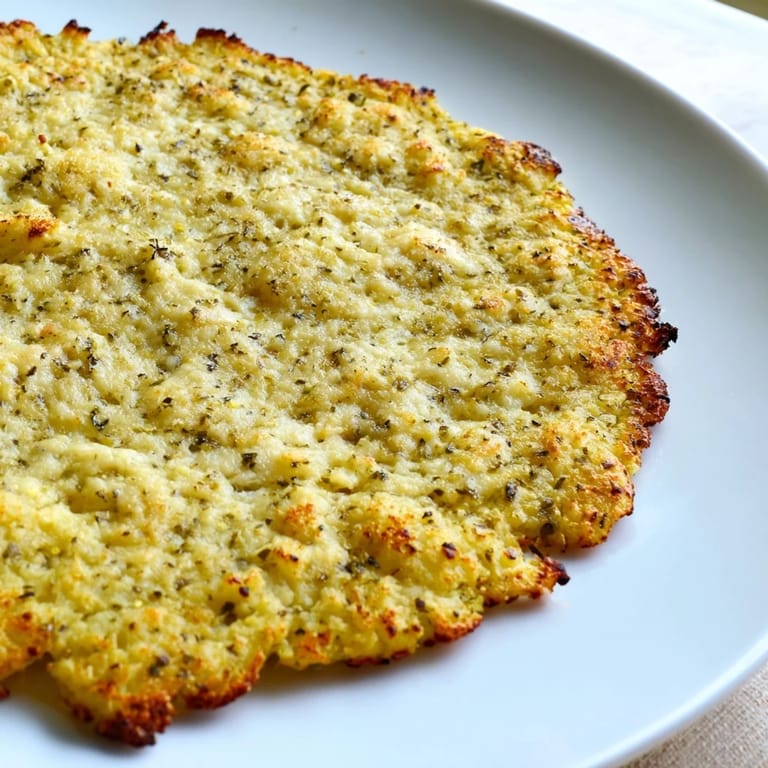
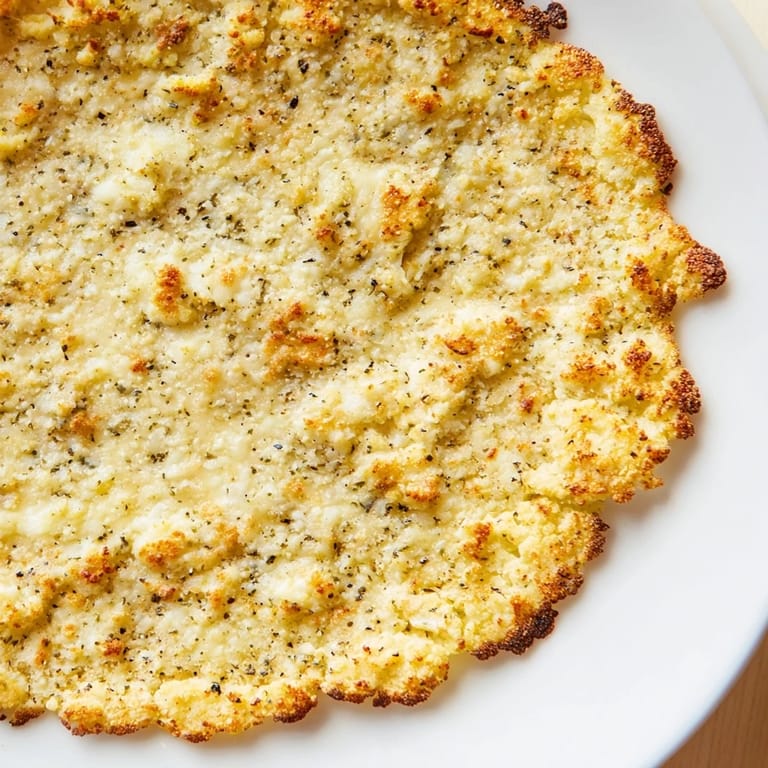
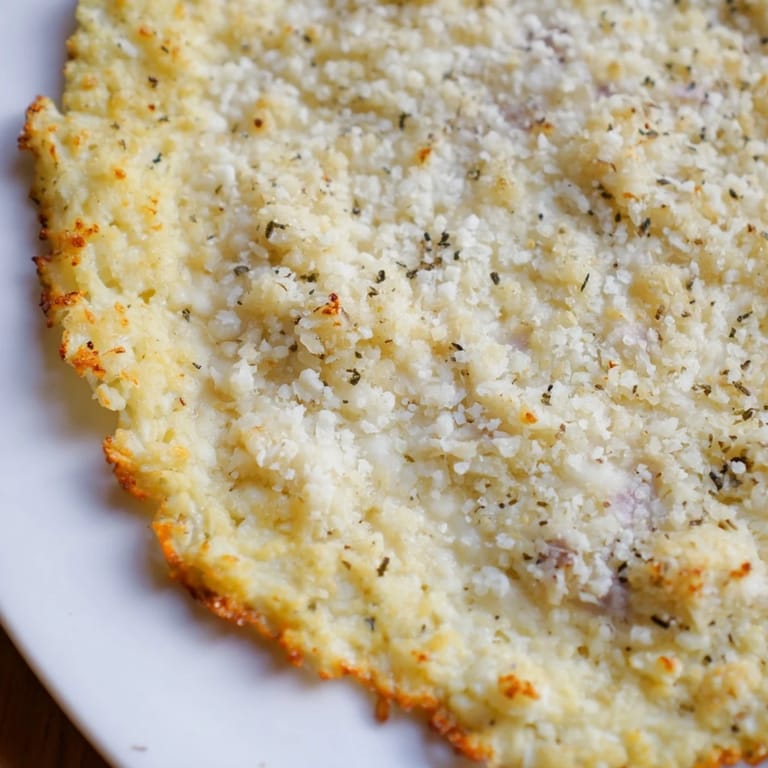
- Spread the mixture onto a parchment-lined baking sheet and pat it into a thin, even circle or rectangle about ½ cm thick. Bake at 220°C (425°F) for 20–25 minutes until it's golden brown and feels firm when you tap it gently.
- Add toppings and finish:
- Remove the crust from the oven, add your sauce and toppings of choice, then bake for another 5–8 minutes until the cheese is bubbling and everything's hot through. The second bake is brief because the crust is already cooked.
 Save to Pinterest
 There's something almost meditative about squeezing moisture out of that cauliflower in a kitchen towel—you're literally making something that tastes indulgent feel lighter and crisper. By the time it comes out of the oven golden and bubbly, you realize you've created something that doesn't taste like a substitute at all.
What Makes This Crust Different
Most pizza crusts rely on gluten and yeast to build structure, but this one works through moisture removal and cheese binding instead. The mozzarella melts and creates little pockets that crisp up in the oven, while the Parmesan adds depth and helps the edges brown. You're not trying to replicate traditional dough—you're building a completely different texture that happens to work beautifully as a pizza base. The result is crispy, not chewy, and that's exactly the point.
Topping Ideas That Actually Work
The beauty of this crust is that it's sturdy enough to handle traditional pizza toppings without getting soggy, even though it's lighter than bread. Keep toppings moderate—too much sauce or too many vegetables will overwhelm the delicate structure. I've had the best luck with classic combinations like tomato sauce, fresh mozzarella, and basil, or a white sauce with roasted vegetables and prosciutto. Sometimes I spread a thin layer of cream cheese mixed with garlic powder as the base instead of tomato sauce, which gives it a more sophisticated angle.
Making It Your Own
Once you understand how this crust works, you can experiment without fear. Add fresh herbs to the base mixture, use different cheese combinations, or swap the oregano for Italian seasoning. The foundation is forgiving as long as you respect the moisture-to-binder ratio. I've made it with cauliflower that's been roasted instead of microwaved, which adds a slightly deeper flavor if you have the time.
- For a vegan version, replace the egg with a flax egg (1 tbsp ground flaxseed mixed with 3 tbsp water) and use vegan cheese alternatives that melt well.
- If you want a thicker, breadier crust, press the mixture about ¾ cm thick instead, though it will need an extra few minutes of baking.
- Leftover cooked crust keeps in the fridge for three days and reheats beautifully in a 180°C oven for five minutes, so don't hesitate to make a double batch.
 Save to Pinterest
 This recipe is proof that the best kitchen discoveries aren't always about having more ingredients—they're about understanding what you already have and respecting its nature. Every time someone tells me they've made this crust, they always say the same thing: it actually tastes good, which might be the highest compliment a low-carb swap can receive.
Your Questions Answered
- → How do I ensure a crispy cauliflower base?
Thoroughly draining the cooked cauliflower by squeezing out moisture is essential to achieve a crisp crust when baked.
- → Can I customize the seasoning?
Yes, herbs like oregano and garlic powder add flavor, but you can adjust spices to suit your taste preferences.
- → Are there alternatives for egg and cheese?
Vegan substitutes such as flax eggs and dairy-free cheeses can replace traditional ingredients for a plant-based version.
- → What toppings pair well with this base?
Fresh vegetables, tomato sauce, and various cheeses or cooked meats complement the mild cauliflower crust nicely.
- → How long should the base bake before adding toppings?
Bake the base for 20-25 minutes until golden and firm, then add toppings and bake an additional 5-8 minutes.